Does PRP Work for Hair Loss - What the Research Shows
What meta-analyses report on PRP and hair density, how certain the evidence is, men versus women, the protocols studied, and how PRP relates to minoxidil and finasteride.
- Reading time
- 11 min read
- Author
- Estebien Editorial Team
In short
- According to a 2023 meta-analysis, PRP increased hair density in androgenetic alopecia by an average of 25.09 hairs per square centimetre compared with control, with no significant difference in hair thickness.
- A 2024 meta-analysis found a similar gain in density (27.55 hairs/cm²) but reported that the studies were highly heterogeneous, showed publication bias, and that the certainty of the evidence was low.
- The effect is clearer in trials made up mainly of men; in women the evidence rests on fewer and more varied studies.
- Most studies gave PRP once a month and their results rest on follow-up of 6 months or less; long-term data beyond 12 months are lacking.
- PRP is not an approved treatment for hair and carries no promise of results; a physician decides whether it is suitable and how it ranks against established options such as minoxidil or finasteride.
The short answer: meta-analyses show that PRP increases hair density in male and female pattern hair loss (androgenetic alopecia) compared with control groups, but the evidence rests on small studies that differ widely from one another. A 2023 meta-analysis found an average gain of 25.09 hairs per square centimetre and no significant difference in hair thickness; another analysis from 2024 rated the certainty of the evidence as low. PRP is not suitable for everyone and results vary from person to person; the decision is made with the physician who examines you.
What is androgenetic alopecia, and what does PRP aim to do?
Androgenetic alopecia, also known as male and female pattern hair loss, is a common and hard-to-treat type of hair loss. In men it progresses in a set pattern and often ends in complete baldness; in women it is usually a diffuse thinning. The other causes of hair loss are collected in our guide to the causes of hair loss; almost all the research in this article concerns androgenetic alopecia.
PRP is plasma with concentrated platelets, prepared by centrifuging the person's own blood; the steps of preparation and a session are in our guide to what PRP is. According to the ISHRS, the mechanism by which PRP acts on hair is unknown; the growth factors it contains are thought to lengthen the growth phase of hair and possibly increase shaft diameter. The ISHRS says that PRP, like other non-surgical hair loss treatments, may decrease shedding or result in thicker-looking hair, but that some patients see no benefit at all.
How do studies measure the effect of PRP?
Before reading a study's result, you need to know what was measured. According to the 2024 meta-analysis, most studies measured hair density with a trichoscan device and patient photographs. Eight of the 10 trials in the 2023 meta-analysis used a split-scalp design: PRP is given on one side of the scalp, placebo on the other, and the two sides are compared.
| Measure | What it shows | What to watch for |
|---|---|---|
| Hair density (hairs/cm²) | The number of hairs in a set area | Most reports do not say whether total or terminal hair density was measured |
| Hair thickness (diameter) | How thick individual hairs are | Results are inconsistent between meta-analyses |
| Hair count | Total hairs in the measured area | No significant difference found in studies of women |
| Pull test | How many hairs come out on a gentle pull | Used in only a few studies |
The split-scalp design has a limitation. The authors of the 2024 meta-analysis note that injected PRP may spread across the scalp and affect the placebo side, so studies with this design may show a smaller effect. The authors of the 2023 analysis likewise note that saline injections on the control side may set off a wound-healing response of their own.
What have meta-analyses found about PRP?
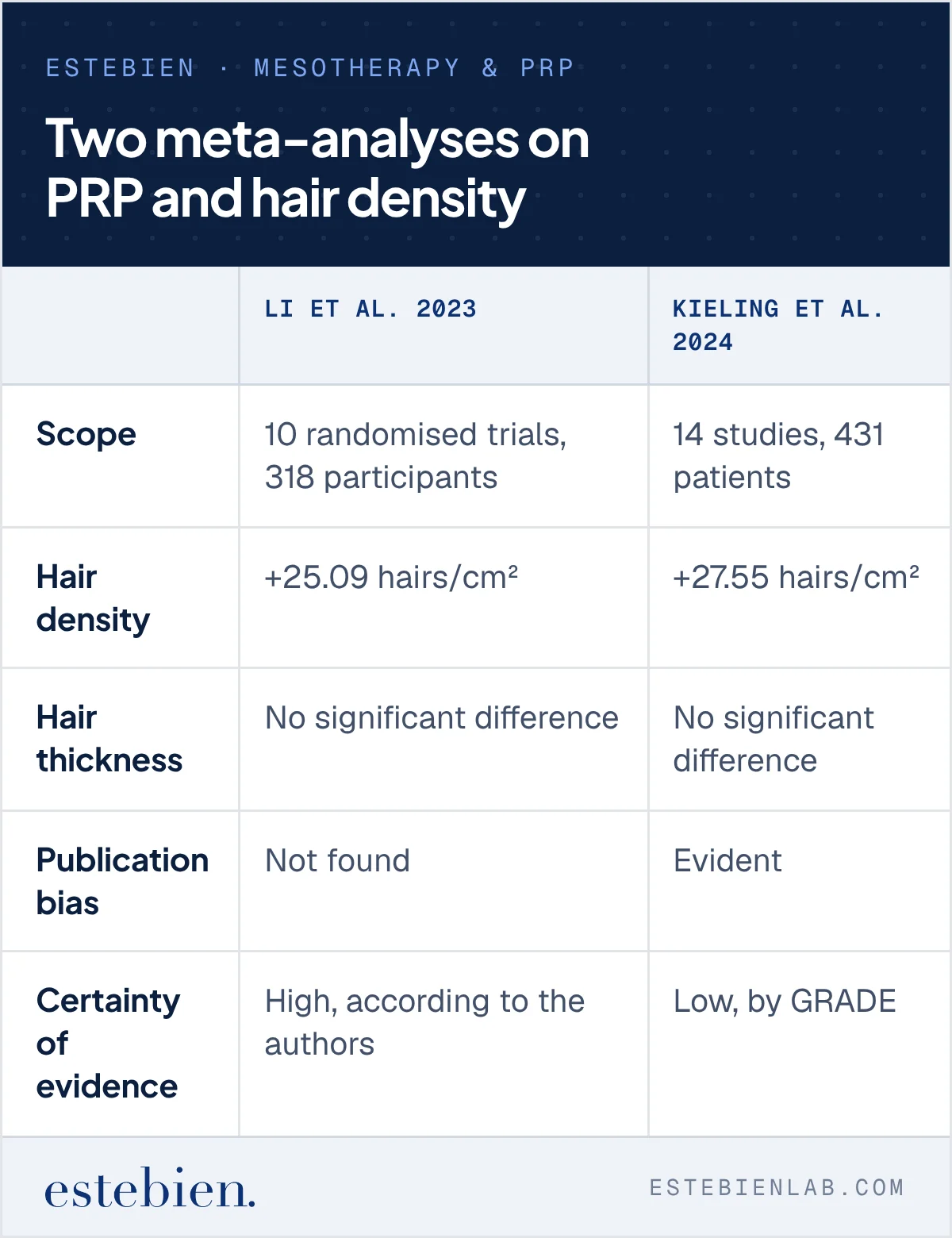
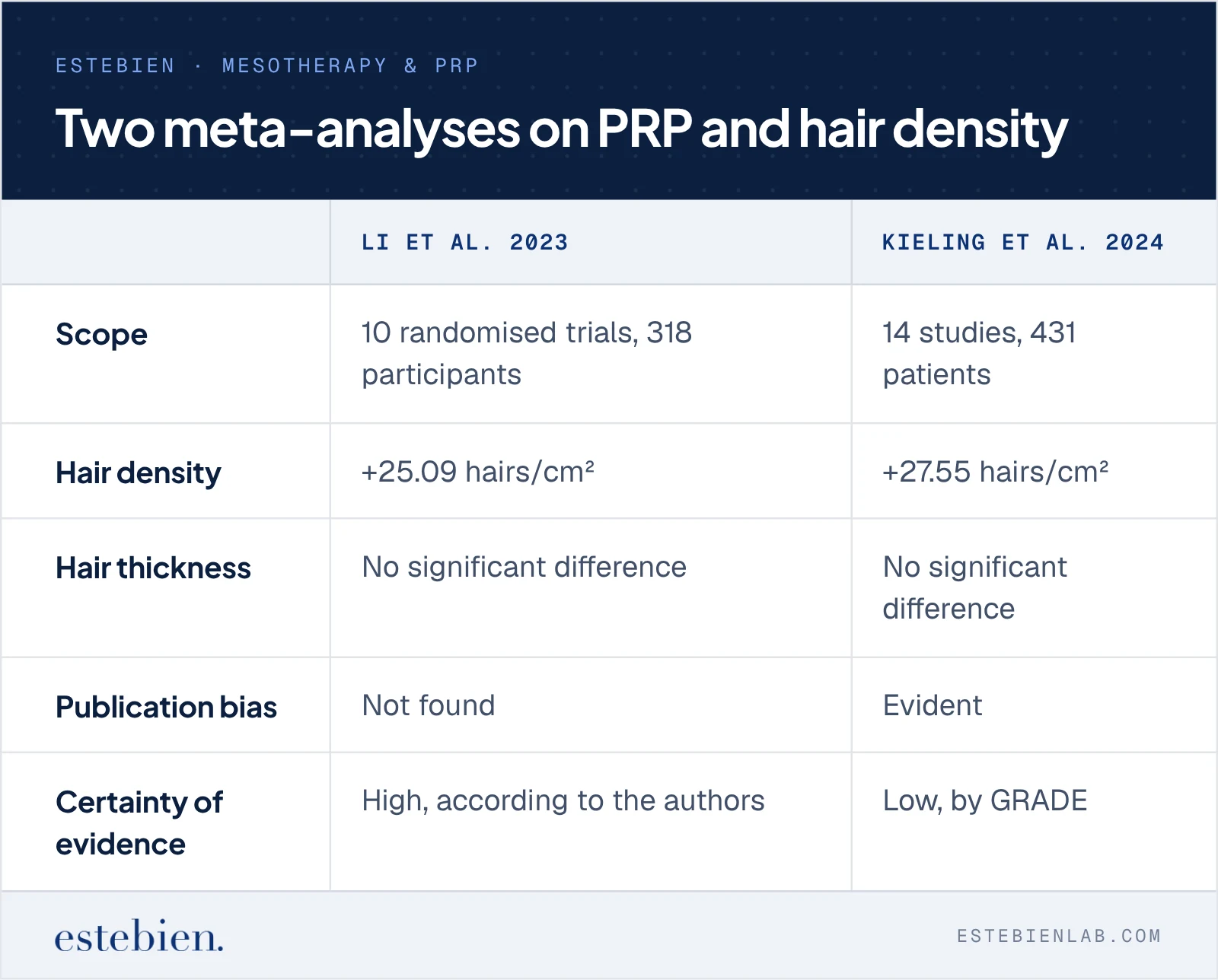
The meta-analysis published in Aesthetic Plastic Surgery in 2023 covers 10 randomised controlled trials that compared PRP alone with placebo, with 318 participants and 555 treatment units. According to this 2023 meta-analysis, hair density in the PRP group was on average 25.09 hairs per square centimetre higher (95% confidence interval 9.03-41.15). The same analysis found no significant difference in hair thickness.
The systematic review and meta-analysis published in Anais Brasileiros de Dermatologia in 2024 reviewed 14 studies with 431 patients and pooled 13 of them. According to this 2024 analysis, PRP increased hair density by an average of 27.55 hairs per square centimetre compared with placebo (95% confidence interval 14.04-41.06). However, the variation between studies is very high (I² 96%) and the 2.02 micrometre difference in hair thickness is not statistically significant.
| Study | Scope | Main finding | Authors' caution |
|---|---|---|---|
| Li et al., 2023 | 10 randomised trials, 318 participants, androgenetic alopecia | Density +25.09 hairs/cm²; no significant difference in thickness | 61% of participants male; no data beyond 12 months |
| Kieling et al., 2024 | 14 studies, 431 patients, androgenetic alopecia | Density +27.55 hairs/cm²; no significant difference in thickness | High heterogeneity, publication bias, low certainty |
| Yuan et al., 2024 | 21 studies, 628 women, several types of hair loss | Density and thickness increased; no significant difference in hair count | Very high heterogeneity and signs of publication bias |
How large is the effect, and how certain?
The average gain is not the gain every patient will see. In the 2023 analysis the confidence interval runs from 9 to 41 hairs, which means the true effect could be small or large. In the same analysis the effect was larger in trials with fewer than 30 participants; the authors note that small studies may overestimate the effect of PRP.
On the certainty of the evidence the sources diverge. The authors of the 2023 meta-analysis rate the quality of evidence for the primary outcome as high and find no publication bias. The 2024 analysis, using the GRADE method, rates the evidence on hair density as low quality and on hair thickness as very low quality, citing differences in preparation methods, patient selection and follow-up and clear publication bias. The ISHRS page likewise says some studies have shown benefits and others have not, and that available data suggest at least 30-50% of patients will experience some benefit.
Is the evidence for PRP different in women?
In the 2023 meta-analysis the gain in hair density was significantly larger in trials made up only of men than in mixed trials, although in both groups it was higher than control. The authors write that 61% of participants were men, that randomised trials in female androgenetic alopecia are few, and that the different effect by sex needs further study.
The only meta-analysis focused on women was published in Skin Research and Technology in 2024 and includes 21 studies with 628 women. According to this 2024 analysis, PRP significantly increased hair density and thickness and reduced the number of hairs lost in the pull test, but showed no significant difference in hair count. Three details matter when reading these findings: 12 of the studies concern chronic telogen effluvium, only 6 androgenetic alopecia and 3 female pattern hair loss; 13 of the studies were done in a single country; and heterogeneity in the analyses is very high (I² 97-99%), with signs of publication bias.
The conclusion of the same review calls PRP a superior alternative to minoxidil and finasteride. That view does not match the approach on the ISHRS page, whose author recommends PRP after minoxidil and finasteride have been tried. It is worth talking to your physician knowing that the sources diverge here.
How many sessions, and at what intervals, did studies use?
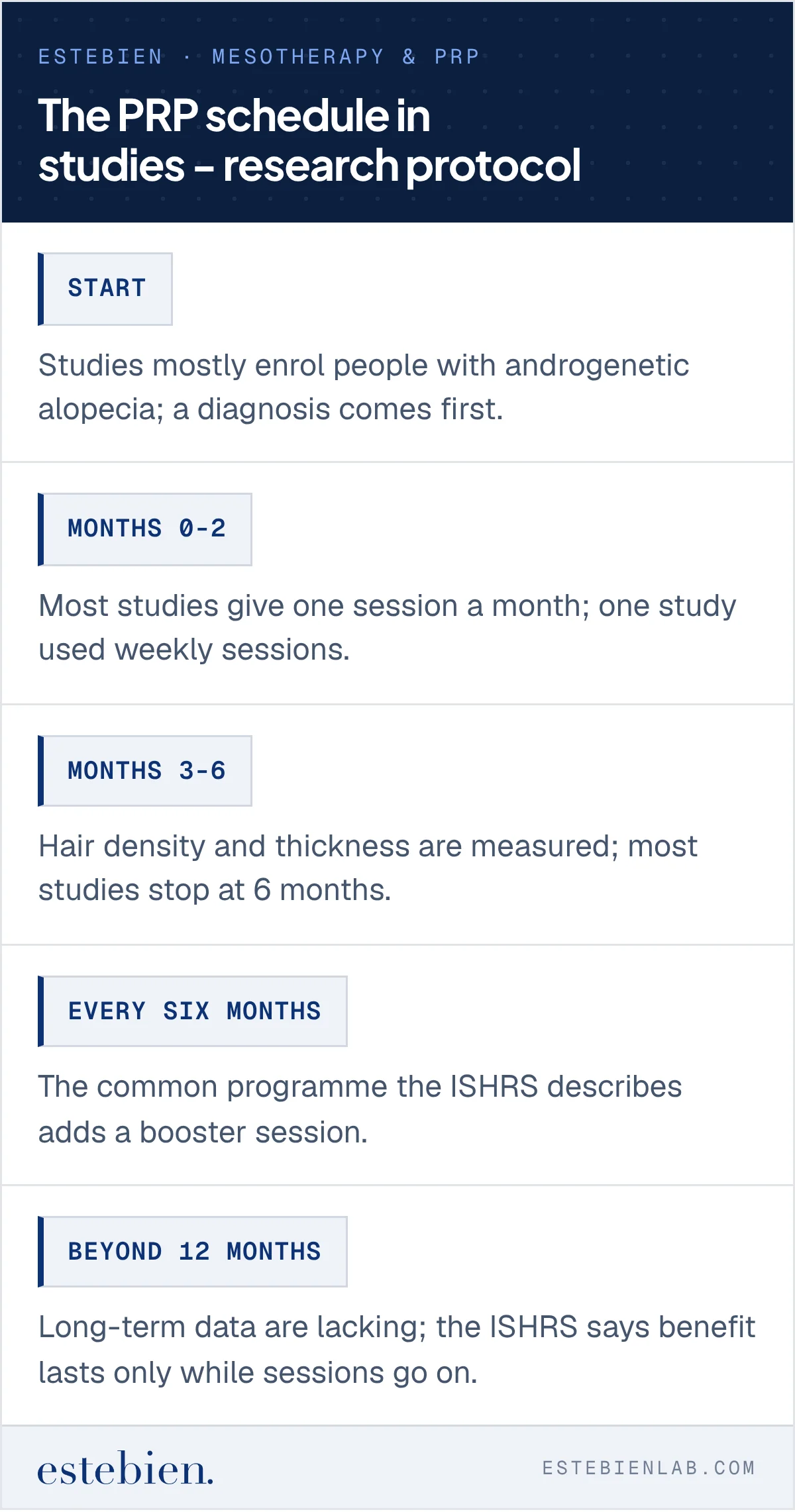
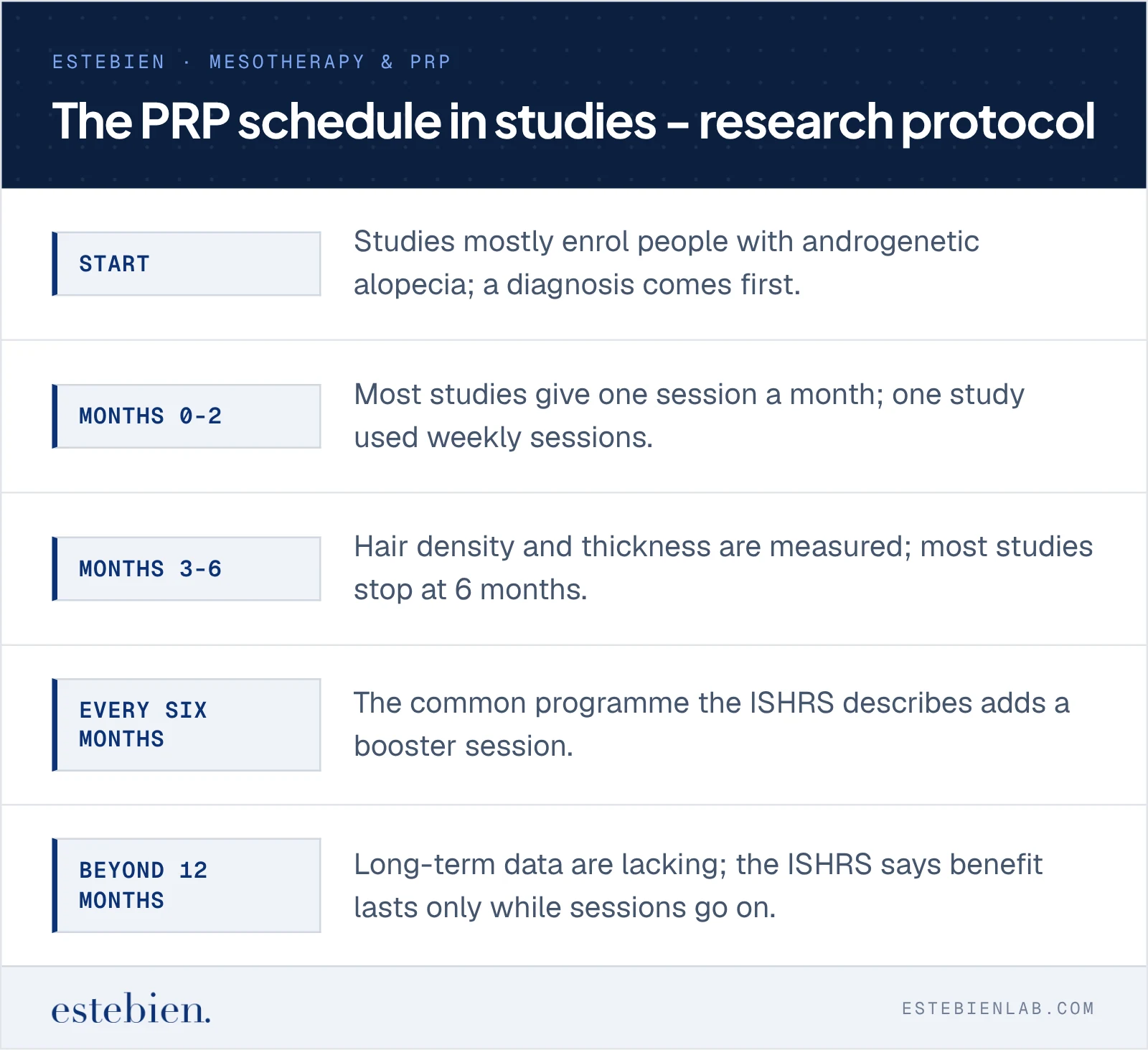
The information below describes protocols used in research, not a personal plan. In the 2024 meta-analysis of women, 19 of the 21 studies followed a monthly schedule and 20 had follow-up of 6 months or less. According to the 2024 analysis of androgenetic alopecia, most studies injected 0.1-0.2 mL of PRP per square centimetre once a month; one study achieved better results with weekly injections.
The long-term picture is unclear. The authors of the 2023 meta-analysis write that they could not assess effects beyond 12 months because the trials lacked enough time points. The ISHRS says PRP always needs to be repeated to be effective, that a common programme is one session a month for three months followed by a booster every six months, and that any benefit is maintained only while treatment continues. The session schedules the sources give are tabulated in our guide to what PRP is.
Who is PRP considered for, and who should not have it?
According to the ISHRS, the best candidates are people with thinning rather than complete baldness and whose hair loss is more recent; people with naturally high platelet levels have an advantage because they receive more growth factors. The sources give different lists of situations in which PRP is not suitable:
| Source | Situations considered unsuitable |
|---|---|
| ISHRS | Complete baldness in the area of concern; active skin conditions such as skin cancer or pre-cancer; certain systemic diseases |
| AAD | Hepatitis C, HIV or AIDS, any type of blood cancer, cardiovascular disease requiring a blood thinner, skin cancer in the area to be treated |
The American Academy of Dermatology (AAD) explains that these conditions affect the platelets and keep them from delivering the expected results. The lists vary from source to source; for pregnancy, breastfeeding, the medicines you take and your other conditions, the decision is your physician's.
What are the side effects of PRP?
In the 2024 analysis of androgenetic alopecia no intolerable or high-risk adverse effects were reported, and the most common effect was short-lived local pain. The meta-analysis in women reported headache, scalp tightness, swelling, redness, bleeding after injection and tingling; all were mild and resolved on their own within 24 hours. The same analysis found no difference in pain or discomfort between the PRP and control groups.
The ISHRS says that because PRP comes from the person's own body it eliminates the risk of blood-borne or tissue-borne pathogens, but that the surface of the scalp cannot be sterilised. According to the AAD, the biggest risk is how the blood is handled: it must be kept sterile and each person must receive only their own blood back. The authors of the 2024 analysis also point out that no reported adverse effects does not mean no risk. General advice for the days after a procedure is in our article on aftercare for PRP and mesotherapy.
How does PRP sit alongside minoxidil and finasteride?
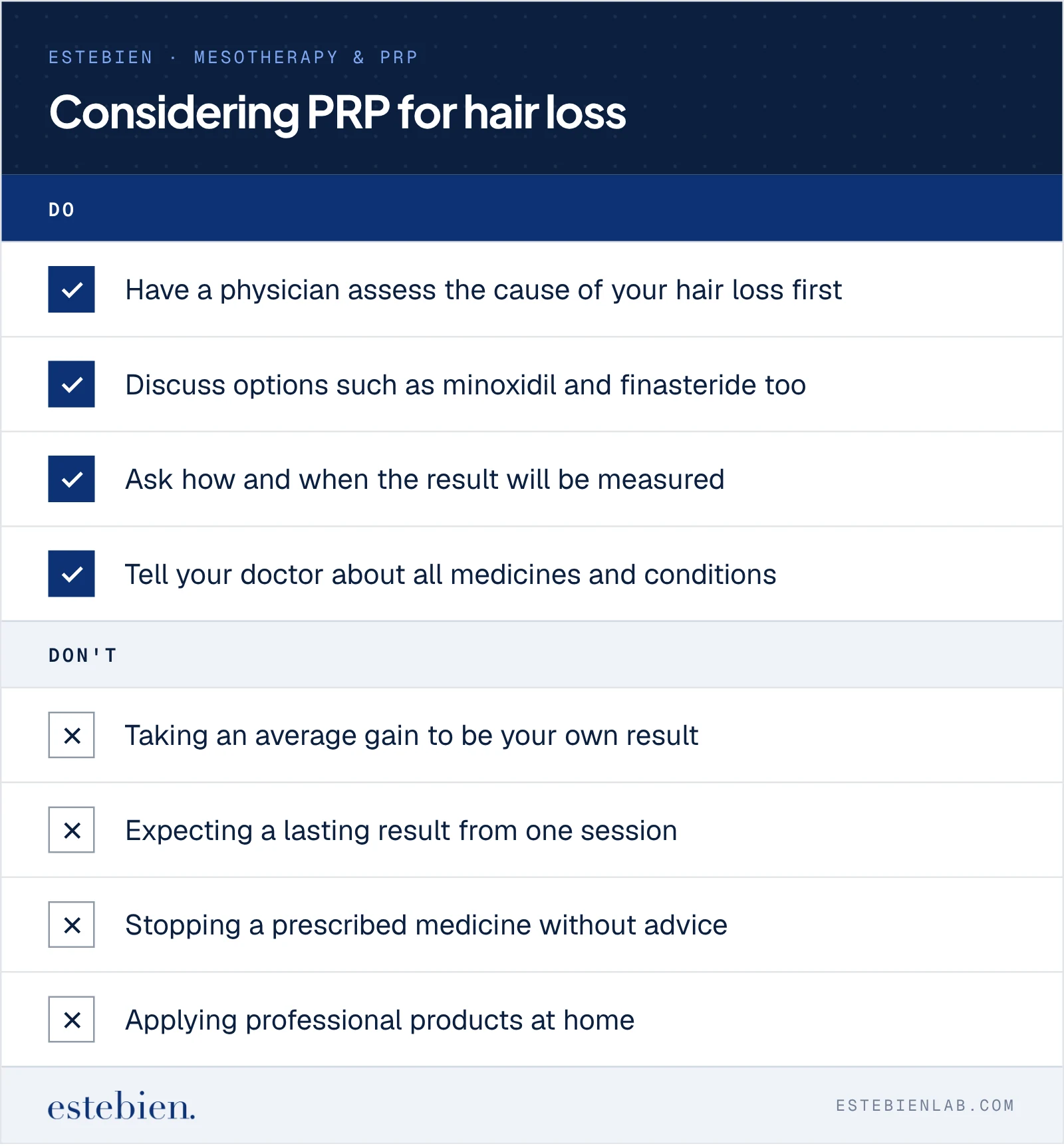
Minoxidil and finasteride are established options for androgenetic alopecia. According to the AAD, minoxidil can help early hair loss, results usually take 6-12 months, and the benefit is lost when it is stopped. The AAD says finasteride is FDA-approved for male pattern hair loss and may also be prescribed to a woman who cannot become pregnant. PRP, by contrast, is not FDA-cleared for hair: according to the ISHRS, preparation systems are cleared for orthopaedic use and use for hair is off-label.
Comparisons are mostly indirect. The authors of the 2024 meta-analysis set their findings beside an earlier meta-analysis, which reported gains of 18.37 hairs per square centimetre for finasteride 1 mg and 14.94 for 5% minoxidil. These figures come from different studies, are not a head-to-head comparison, and the authors themselves note high heterogeneity in both the PRP and the finasteride data. The ISHRS author, for his part, proposes a cost-centred approach: minoxidil and finasteride first, then PRP and other more expensive methods if those do not work.
Uncertainty also has a cost. The ISHRS describes PRP as an expensive, invasive and somewhat painful procedure that is not certain to work, and says that when it does work, sessions must continue to maintain the benefit. So the decision should rest not only on the average effect but on your diagnosis, the other treatments you use and whether you can keep up repeated sessions. How PRP differs from other injection methods such as mesotherapy is covered in PRP or mesotherapy and in our hair mesotherapy guide.

How can clinics use this evidence?
The shared caution of the meta-analyses is the variation in preparation methods: the authors of the 2023 analysis write that they could not identify an effective PRP preparation because the trials differed in platelet concentration and centrifugation details. It matters, then, that a clinic records the tube, the centrifuge protocol and the platelet concentration it obtains; what to look for is covered in choosing PRP tubes for a clinic, and the evidence for use alongside surgery in PRP after a hair transplant.
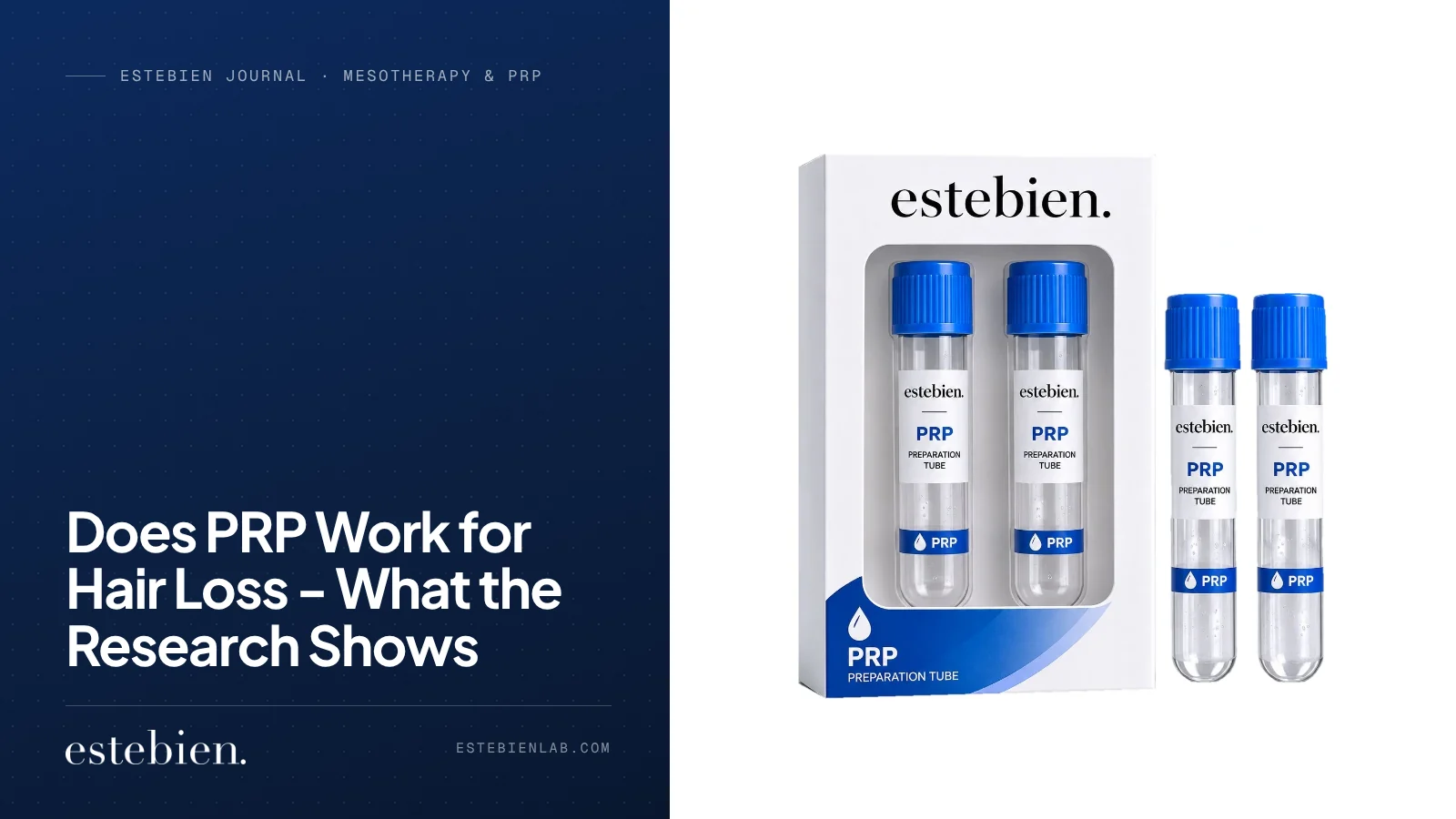
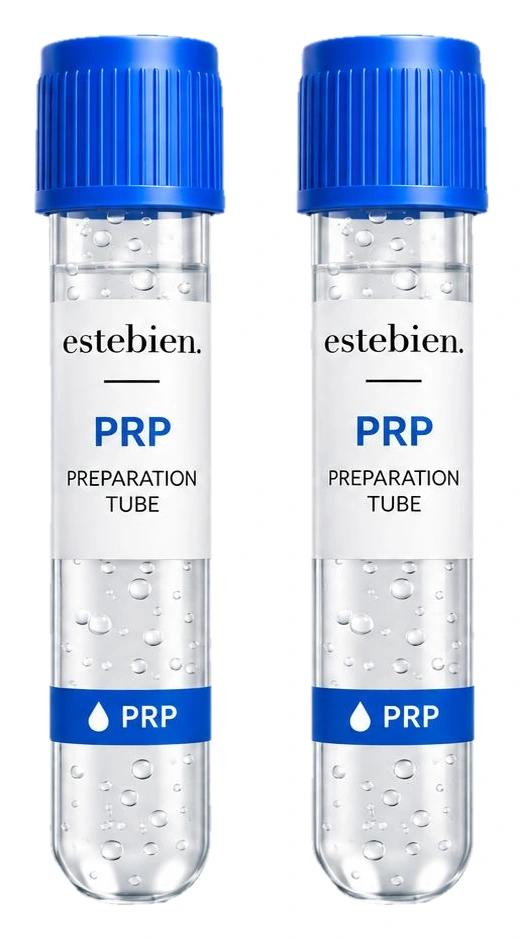
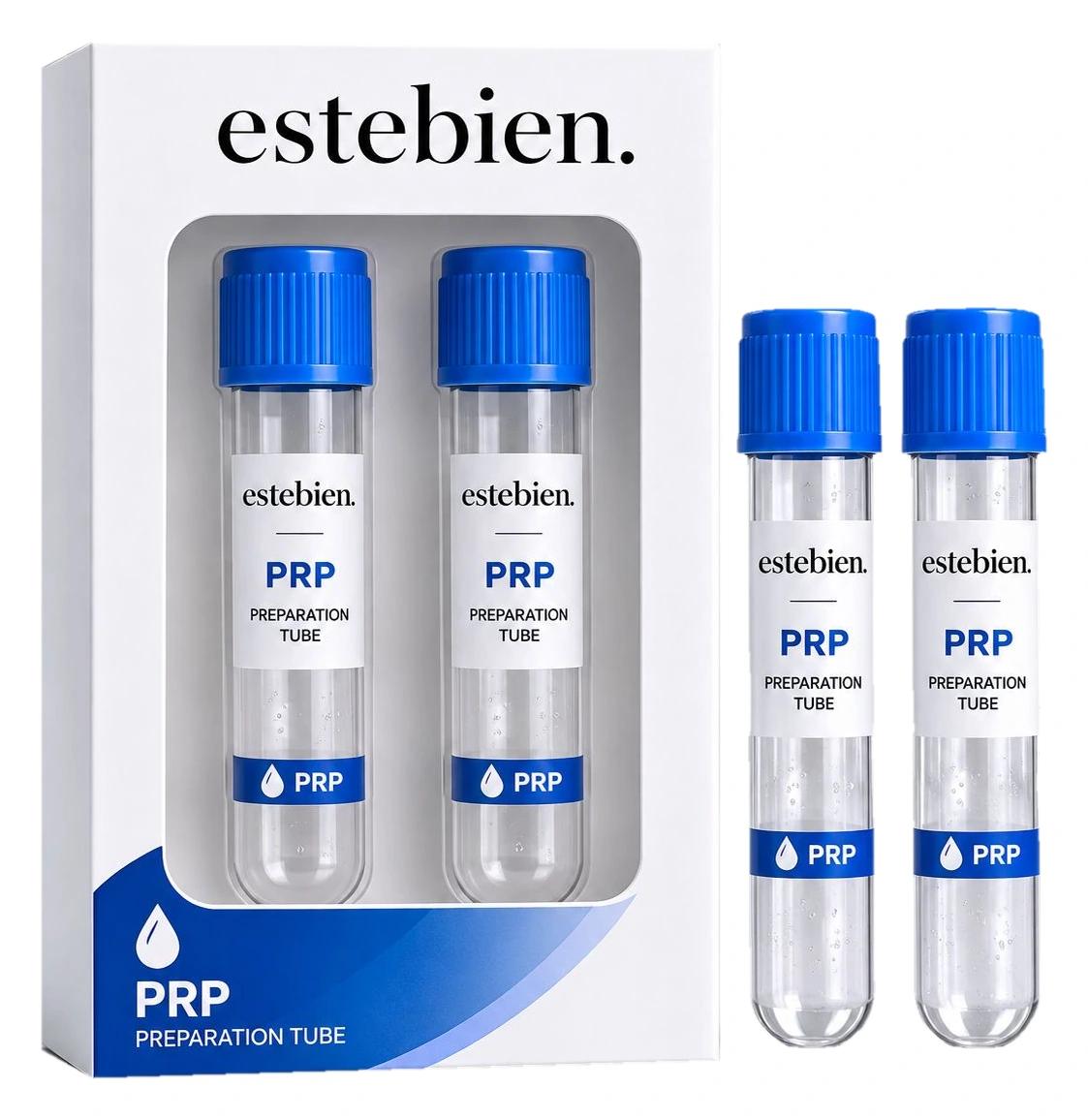
Estebien's Mesotherapy & PRP line is for clinics and healthcare professionals. The Estebien PRP Preparation Tube box holds two blue-capped PRP Preparation Tubes; the product is for professional use only, and directions for use, storage conditions and technical information are given on the packaging. The Meso Solution Tube box holds one PRP Preparation Tube and one green-capped Meso Solution Tube. The product pages make no claim of efficacy or results, and the research findings in this article should not be read as a statement of results for these products.
Estebien PRP Preparation TubeThe box contains two blue-capped PRP Preparation Tubes. Part of the Estebien Mesotherapy & PRP line; for professional use only.View product 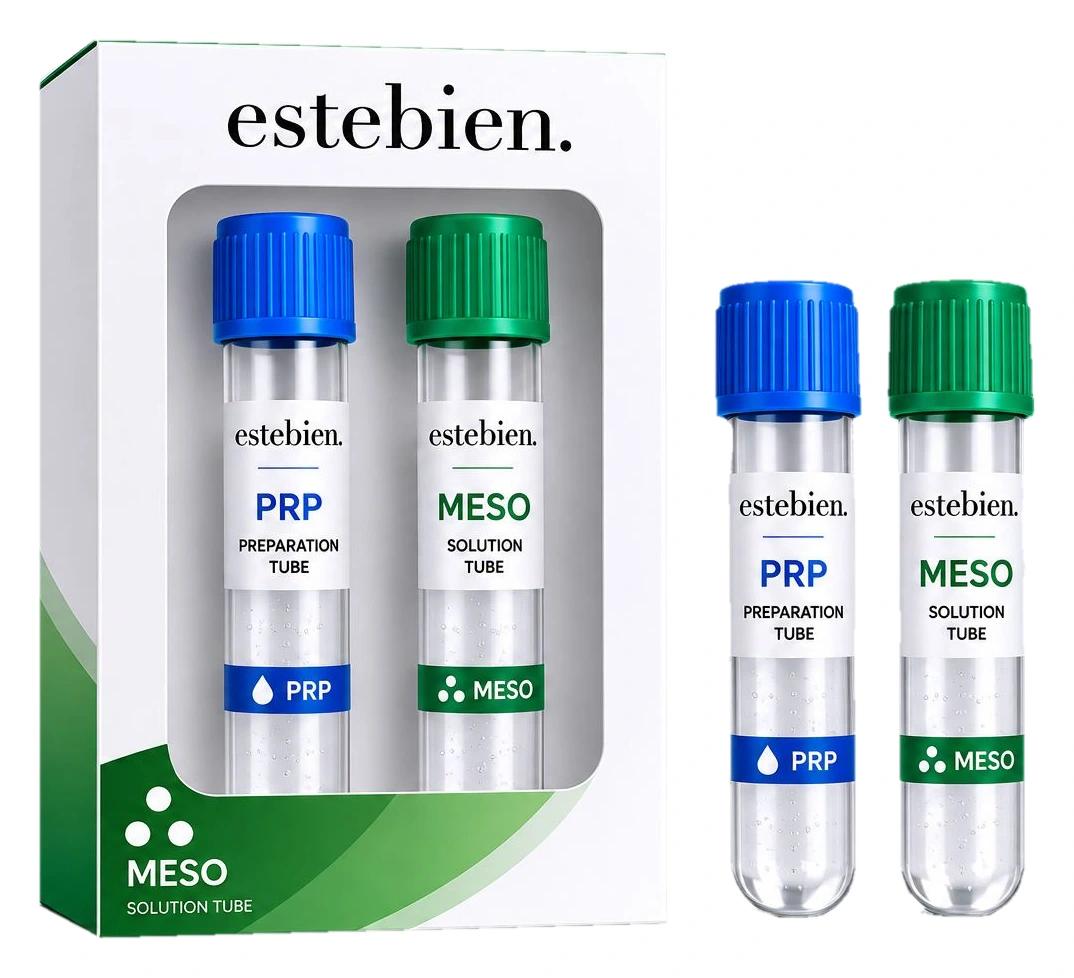
Frequently Asked Questions
- Does PRP really work for hair loss?
- Meta-analyses show that hair density increases with PRP compared with control in androgenetic alopecia; in a 2023 analysis the average gain was 25.09 hairs per square centimetre. But the studies are small and varied, a 2024 analysis rated the certainty of the evidence as low, and not everyone benefits.
- Does PRP make hair thicker?
- The evidence is inconsistent. Two meta-analyses on androgenetic alopecia from 2023 and 2024 found no significant difference in hair thickness, while a 2024 analysis focused on women reported an increase.
- When does PRP start to show an effect?
- According to the ISHRS, visible change can start at 1-2 months, but it can take as long as six months to see a benefit. Most studies measured results within 6 months.
- Does PRP work in women too?
- A 2024 meta-analysis focused on women reported gains in hair density and thickness, but most of its studies concern telogen effluvium rather than female pattern hair loss, and heterogeneity is very high. In a 2023 analysis the effect was clearer in studies of men.
- What happens if PRP is stopped?
- According to the ISHRS, as with all effective hair loss treatments, the benefit is lost when treatment stops. Long-term data are limited.
- Is PRP or minoxidil more effective?
- There is no strong head-to-head evidence; the comparison in a 2024 meta-analysis is an indirect one based on different studies. The ISHRS author recommends PRP after minoxidil and finasteride have been tried.
- Can PRP be done at home?
- No. PRP is a medical procedure involving a blood draw, centrifugation and injection, performed by a physician under sterile conditions. The Estebien PRP Preparation Tube is for professional use only.
Sources
- Effectiveness of Platelet-Rich Plasma in the Treatment of Androgenic Alopecia: A Meta-AnalysisAesthetic Plastic Surgery (PubMed Central)
- Is autologous platelet-rich plasma capable of increasing hair density in patients with androgenic alopecia? A systematic review and meta-analysis of randomized clinical trialsAnais Brasileiros de Dermatologia (PubMed Central)
- Effectiveness of platelet-rich plasma in treating female hair loss: A systematic review and meta-analysis of randomized controlled trialsSkin Research and Technology (PubMed Central)
- PRP for Hair Loss: Procedure, Benefits & CostsInternational Society of Hair Restoration Surgery (ISHRS)
- Hair loss: Diagnosis and treatmentAmerican Academy of Dermatology (AAD)
- Is platelet-rich plasma the secret to younger-looking skin?American Academy of Dermatology (AAD)
This article is for general information only and is not a substitute for medical advice. For decisions about your health, consult your doctor or dentist.
Products in this article