PRP After a Hair Transplant - When, Why and the Evidence
When and why PRP is used with a hair transplant, what studies have found and what they have not yet shown, and why the timing is your surgeon's decision.
- Reading time
- 10 min read
- Author
- Estebien Editorial Team
In short
- In hair transplantation PRP has been used in the graft storage solution, during surgery or in the weeks after surgery, with the aim of preserving graft viability, supporting healing and supporting growth.
- A 2025 systematic review found that all 3 controlled studies, covering 217 patients, reported better results in the PRP group, but no meta-analysis was possible because the studies differed too much.
- The evidence specific to hair transplantation is weaker than the evidence for PRP alone in androgenetic alopecia; a 2026 review classes this use as emerging.
- The sources give no standard timing; whether PRP is done, and when, is decided by the surgeon who performed the transplant.
PRP after a hair transplant means applying platelet-rich plasma, prepared from the person's own blood, to the scalp during surgery or in the following weeks, with the aim of supporting graft survival and healing. A 2025 systematic review found only 3 controlled studies on this; all reported positive results, but the studies are small, short and differ from one another. There is no standard timing; the surgeon who performed your transplant decides whether PRP suits you and when it would be done.
Why is PRP used in hair transplantation?
A hair transplant redistributes hair; it does not create new hair. In a four-year follow-up cited by the 2025 systematic review, density in the transplanted area stayed stable in only 8.92% of 112 men who had a single transplant session and fell moderately in 55.35%. Mayo Clinic likewise says hereditary hair loss will eventually progress despite surgery. So after a transplant both graft survival and the preservation of existing hair come into question.
The page on PRP in hair transplantation from the International Society of Hair Restoration Surgery (ISHRS) groups its potential here into three aims: preserving graft viability during and after transplantation, supporting tissue repair and healing after surgery, and reactivating dormant hair follicles. The ISHRS adds that this third use is still regarded as experimental. A general definition of PRP and how it is prepared is in our guide to what PRP is.
At which stage of a transplant is PRP applied?
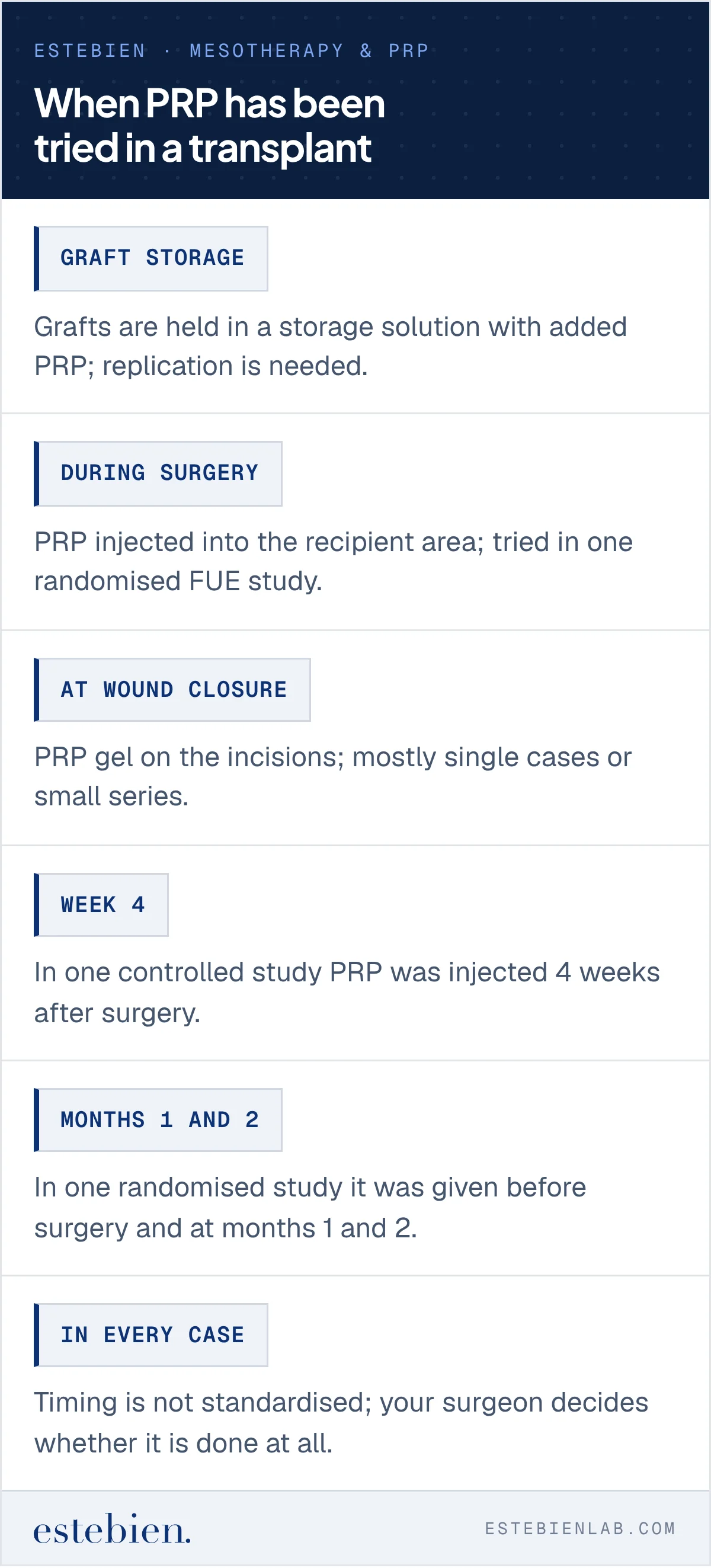
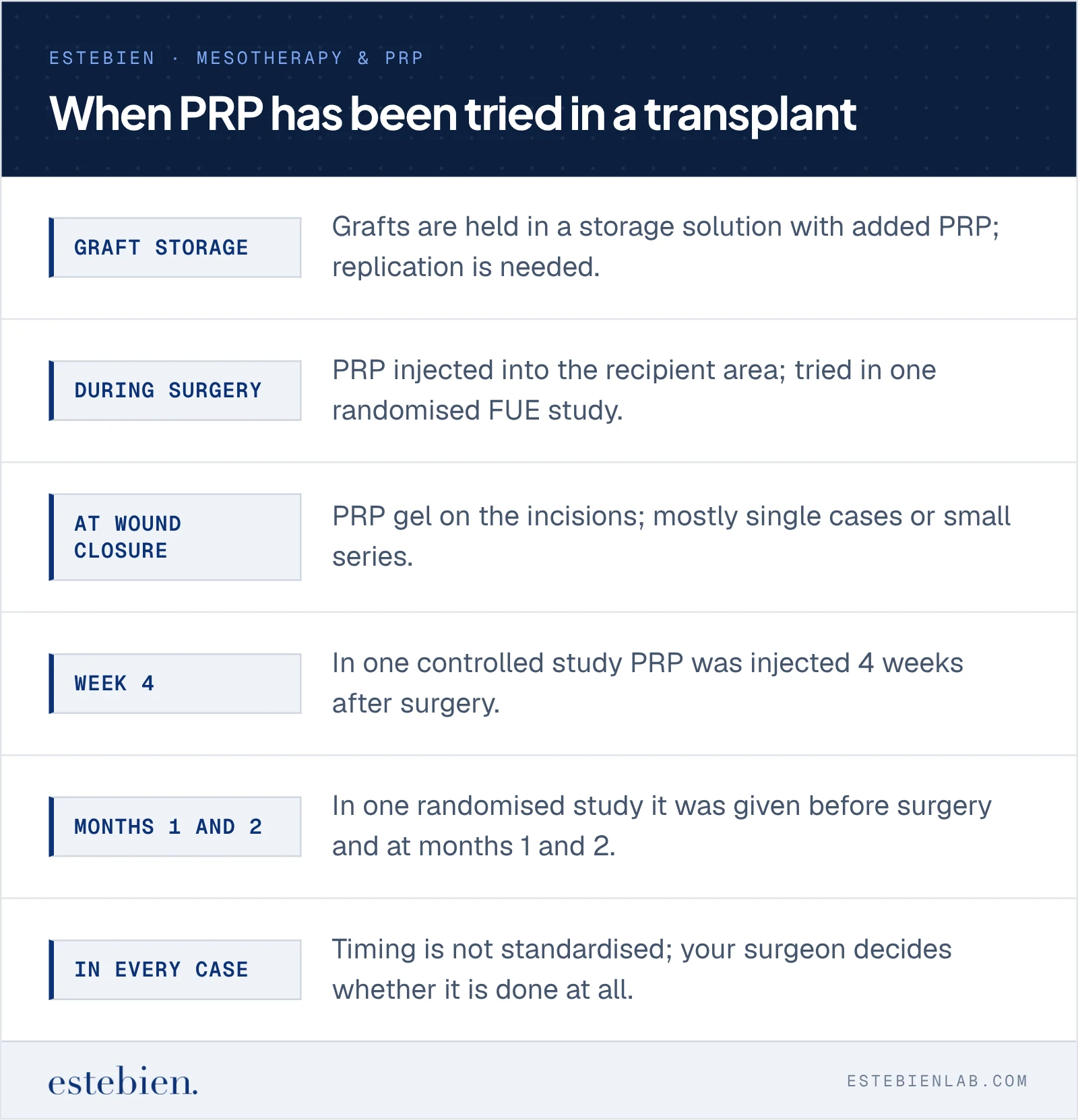
According to a review published in Frontiers in Medicine in 2026, PRP has been tried at several stages of a hair transplant: graft handling and storage, preparation of the recipient site, injection into the area during surgery, and injection into the scalp after surgery. The same review says the timing of PRP relative to surgery (before, during, after) is not standardised and that this adds to the variation in results.
| Stage | What is done | What the sources say |
|---|---|---|
| Graft storage | Grafts are held in a storage solution with added PRP | Randomised data promising, replication needed (Frontiers 2026) |
| During surgery | PRP injected into the recipient area | Better follicle growth at 6 months in one randomised FUE study (Cureus 2025) |
| At wound closure | PRP gel is applied to the incisions | Mostly single cases or small series (ISHRS) |
| Weeks after surgery | PRP injected into the scalp | Given at week 4 or at months 1 and 2 in studies (Cureus 2025) |
On graft storage, the ISHRS says research has indicated that adding PRP to the storage solution improves graft viability, and that some investigators advocate bathing grafts in activated PRP just before implantation. The 2026 review, however, notes that experimental data point to the storage solution and temperature as the main co-determinants of graft preservation. So PRP is not seen as the deciding factor in graft storage on its own.
How long after a hair transplant is PRP done?
The sources give no standard day or week for PRP after a hair transplant. The three studies in the 2025 review used three different timings: in the randomised study from India, PRP was injected during the FUE transplant; in the controlled study from China, 4 weeks after surgery; and in the other randomised study from China, before the transplant and 1 and 2 months after it. The review's authors name the timing of administration (intraoperative or delayed) as one of the important differences between the studies.
The 2026 review likewise says that in clinical practice PRP injections may be given in the weeks after a transplant to support wound healing and early graft recovery, but that transplant-specific evidence is limited. So the answer to the timing question is not in a calendar but in the assessment of the team that performed your surgery: how the transplanted area is healing, the donor area, the medicines you take and the surgeon's own protocol decide it.
What does research show about PRP after a hair transplant?
The systematic review published in Cureus in October 2025 searched for prospective studies comparing PRP used alongside a hair transplant with a control group, and found only 3 that met its criteria: two randomised controlled trials and one non-randomised controlled study, with 217 patients in total. According to this 2025 review, adding PRP was associated with better outcomes in all three studies, such as hair density, graft survival or earlier growth.
| Study | Design and participants | When PRP was given | Reported result |
|---|---|---|---|
| Garg, 2016 (India) | Randomised, 40 men, FUE, 6 months' follow-up | Injected during the transplant | At 6 months, over 75% follicle growth in all of the PRP group and 20% of controls |
| Zhao, 2023 (China) | Non-randomised, 147 patients, 8 weeks' follow-up | 4 weeks after surgery | Better scores for hair loss area, pull test and regeneration; no adverse events reported |
| Xue, 2025 (China) | Randomised, 30 patients, FUE | Before the transplant and at months 1 and 2 | Follicle survival 82.2% vs 74.0%; growth began at 17.7 vs 20.1 days |
The review's limitations matter at least as much as its findings. The authors did not pool the data in a meta-analysis because outcome measures, data formats and follow-up periods differed too much. None of the studies used a standardised assessment scale or trichoscopy; follow-up ranged from 8 weeks to 6 months, and the authors recommend at least 12 months to assess long-term effect. Risk of bias was rated as some concerns in the randomised trials and serious in the non-randomised study. The review's conclusion is cautious: PRP may offer clinical benefit as an adjunct to hair transplantation, but saying so with more confidence requires high-quality randomised trials with standardised protocols and long follow-up.
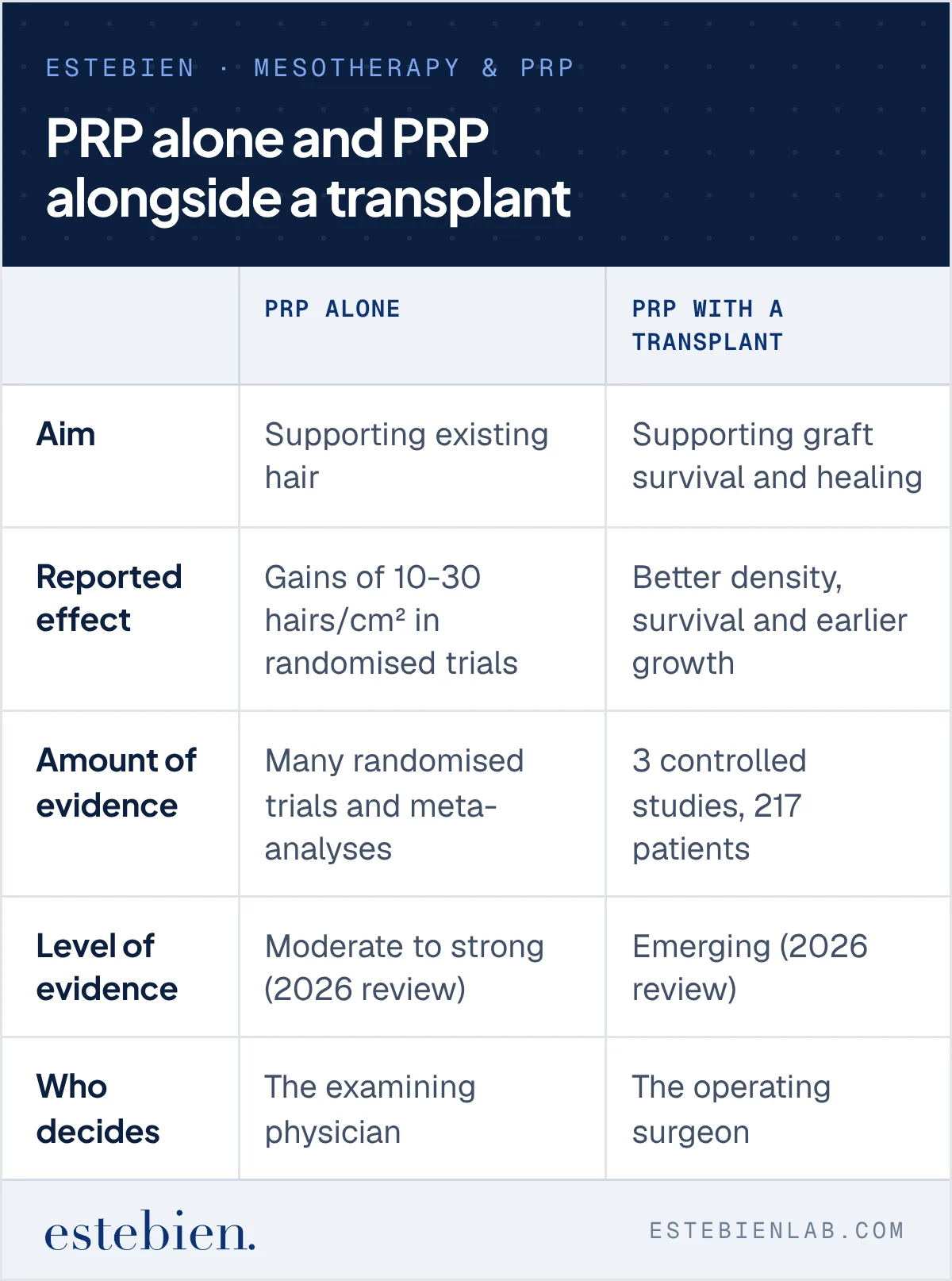
The 2026 review draws the same picture. According to this review, in randomised trials PRP increased hair density in androgenetic alopecia by about 10-30 hairs per square centimetre and the evidence for this use is moderate to strong, while the evidence for use specific to hair transplantation is limited, heterogeneous and emerging. The review says transplant-specific outcomes such as graft survival rate, hair yield, shock loss and long-term durability are reported inconsistently, and notes that in one study of FUE for cicatricial alopecia PRP did not significantly affect graft survival. The evidence for PRP on its own is covered in detail in does PRP work for hair loss.
Does everyone need PRP after a hair transplant?
The sources do not describe PRP as a required part of a hair transplant. The ISHRS page on PRP in hair transplantation reports that some investigators think PRP should not be used routinely to promote healing, but might help patients who have had previous injury or scarring at the transplant site. Those who oppose routine use cite the need for more data from well-designed clinical trials.
The 2026 review likewise says PRP does not reverse advanced follicular miniaturisation and does not replace surgery in suitable patients, but can be considered a supportive adjunct as part of a comprehensive plan. According to the review, realistic expectations and an open discussion of the limits of the evidence are essential to avoid overtreatment and disappointment. The general ISHRS PRP page also says no procedure produces hair in the recipient zone as dense as surgical hair restoration, and that PRP can be an effective adjunctive treatment for patients undergoing surgery or using medication.
Preserving existing hair after a transplant is a separate question. The introduction of the 2025 review says that because a transplant does not change the progression of androgenetic alopecia, long-term treatment with medicines such as minoxidil and finasteride remains essential. Those decisions also belong to your surgeon and physician. The general care calendar for the first months after a transplant is in our post hair transplant care guide.
What are the risks of PRP alongside a hair transplant?
The ISHRS says that because PRP comes from the person's own body it poses no danger of allergic, hypersensitivity or foreign-body reactions, and stresses that sterile technique must be used at every stage of preparation and application, especially in patients prone to infection. A brief period of inflammation may occur at wound sites after a PRP gel is applied. Some medical conditions may be a contraindication; the ISHRS says many of these vary from patient to patient and should be raised with a hair restoration physician.
According to the 2026 review, reported side effects are generally transient injection-site discomfort, redness or swelling, and serious complications are rare under sterile conditions; however, safety reporting is inconsistent and long-term data after repeated applications are limited. A note on painkillers: the general ISHRS PRP page advises avoiding certain anti-inflammatory drugs for up to 14 days after a procedure, but after a hair transplant the surgeon who operated decides which medicines you take. General advice is in our article on aftercare for PRP and mesotherapy.
Where do exosomes and other new methods stand in hair transplantation?
The 2026 review describes PRP as the most evidence-supported adjunct in hair transplantation. For exosome-based approaches, it says clinical evidence is limited, there are no high-quality randomised trials of exosomes as an adjunct to hair transplantation, and these treatments should for now be considered investigational. The review also recommends that patient information clearly separate established autologous procedures from investigational exosome treatments. What exosomes are and how they differ from PRP is covered in our guide to exosome treatment for hair.
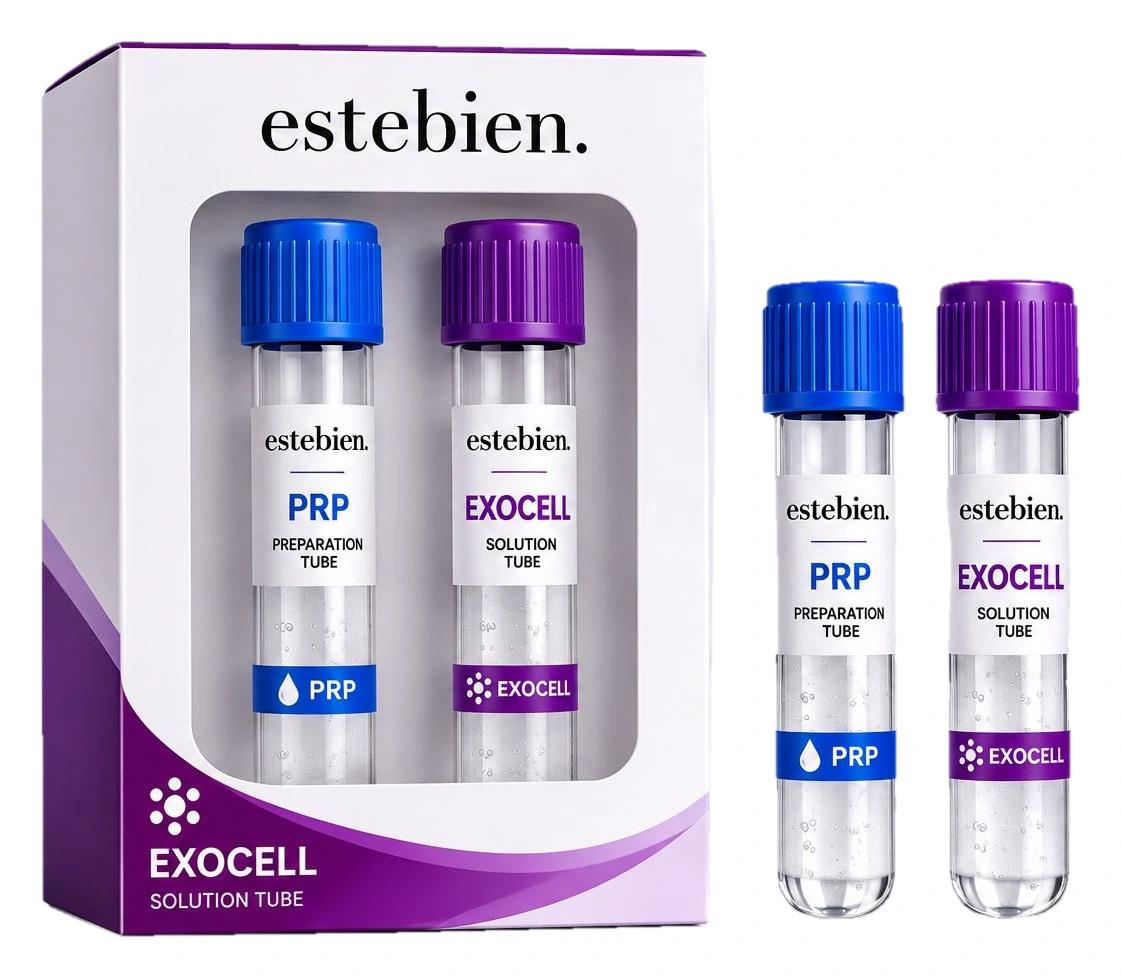
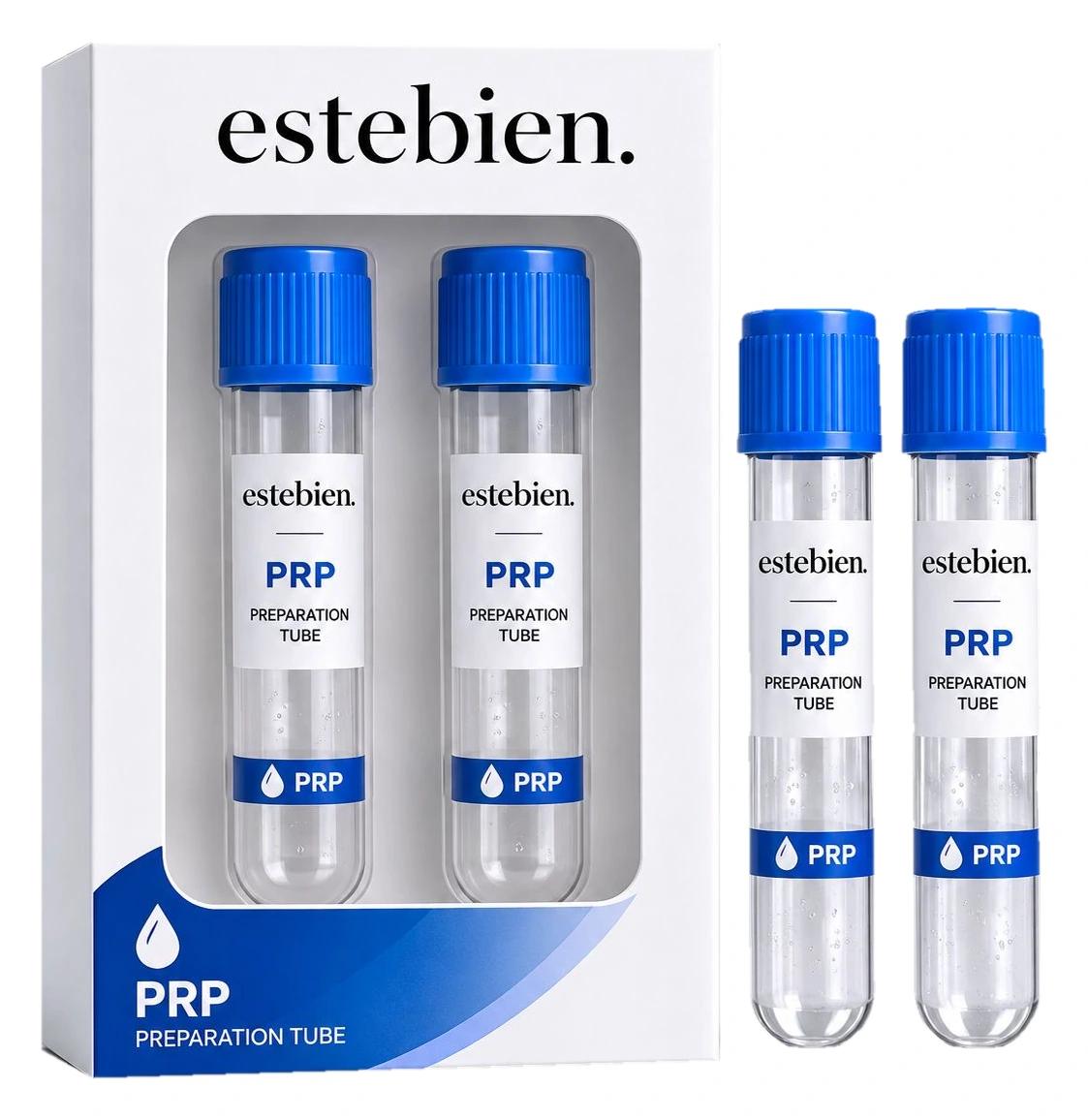
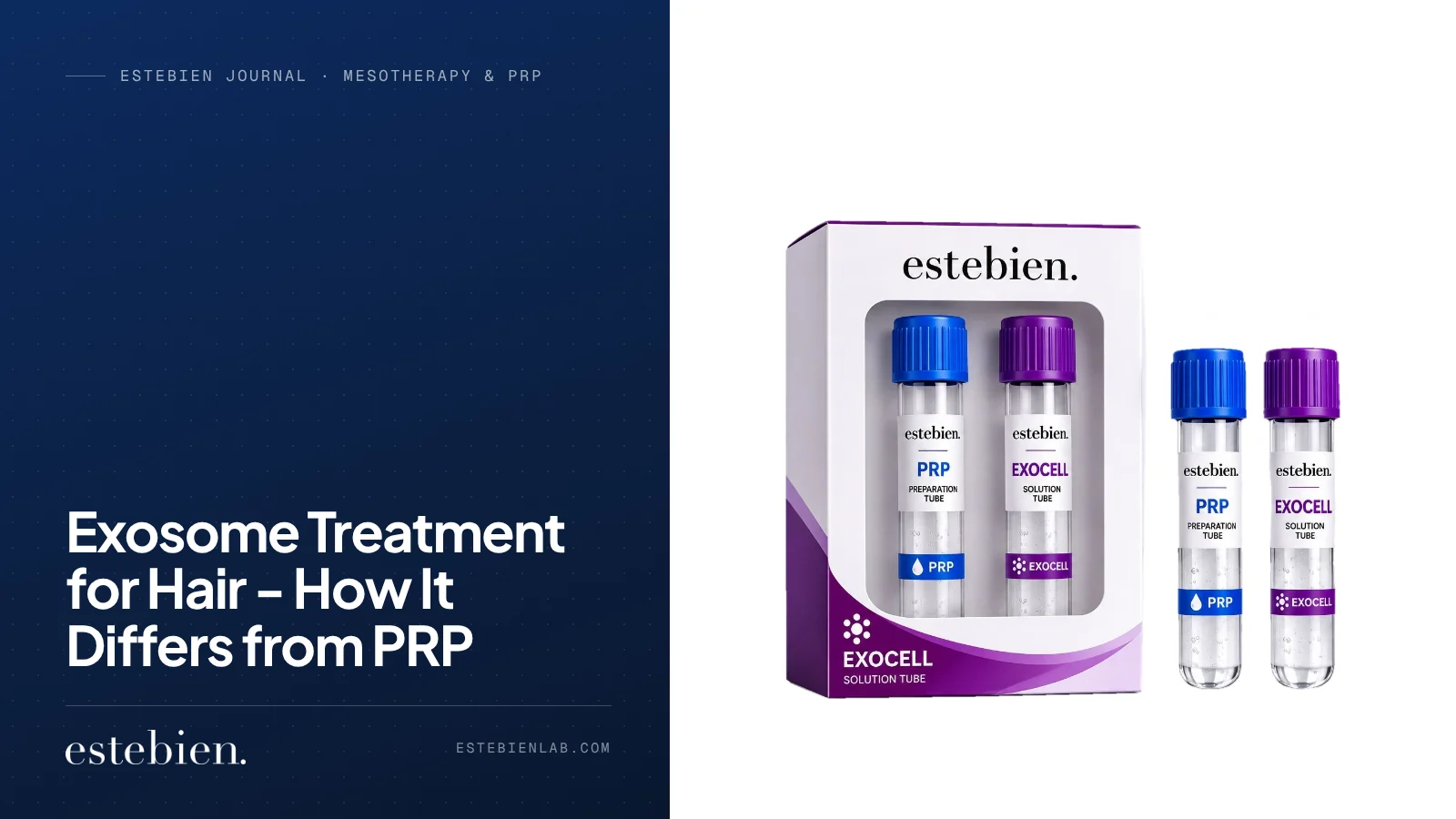
This paragraph is for clinics and healthcare professionals. In Estebien's Mesotherapy & PRP line, the PRP Preparation Tube box holds two blue-capped PRP Preparation Tubes, and the Exocell Solution Tube box holds one PRP Preparation Tube and one purple-capped Exocell Solution Tube. The products are for professional use only and are to be used only by qualified healthcare professionals, following the directions on the packaging. The product pages do not state the composition of the solution, the technical properties of the tubes or any indication for use with hair transplantation; directions for use, storage conditions and technical information are on the packaging. Clinics can find what to look for when choosing tubes in choosing PRP tubes for a clinic.
Estebien Exocell Solution TubeThe box contains one PRP Preparation Tube and one purple-capped Exocell Solution Tube. Part of the Estebien Mesotherapy & PRP line; for professional use only.View product 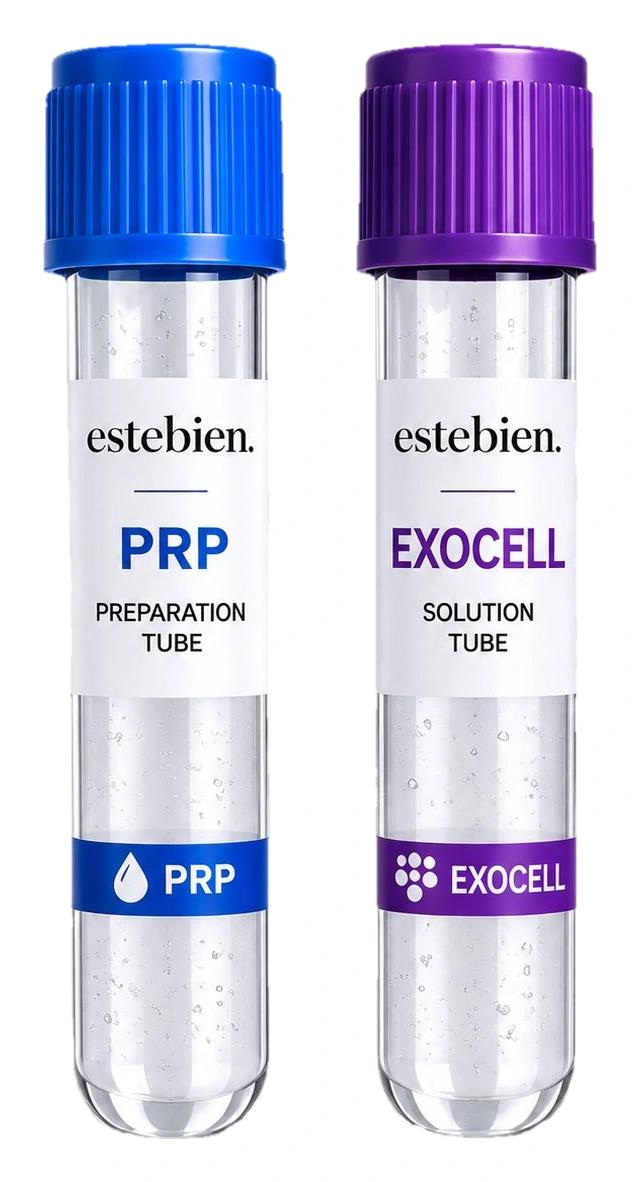
What should you ask your surgeon?
If PRP is suggested at the consultation before your transplant or at a follow-up, these questions help you decide on an informed basis:
- For what purpose do you recommend PRP in my case: graft storage, healing, or supporting existing hair?
- At which stage of the surgery, how many times and at what intervals will it be done?
- With which system and which centrifuge protocol will the PRP be prepared?
- How and when will the result be assessed; will it be followed with photographs?
- Do my instructions on medicines, washing and care change after PRP?
- Apart from PRP, what options are there for preserving my existing hair?
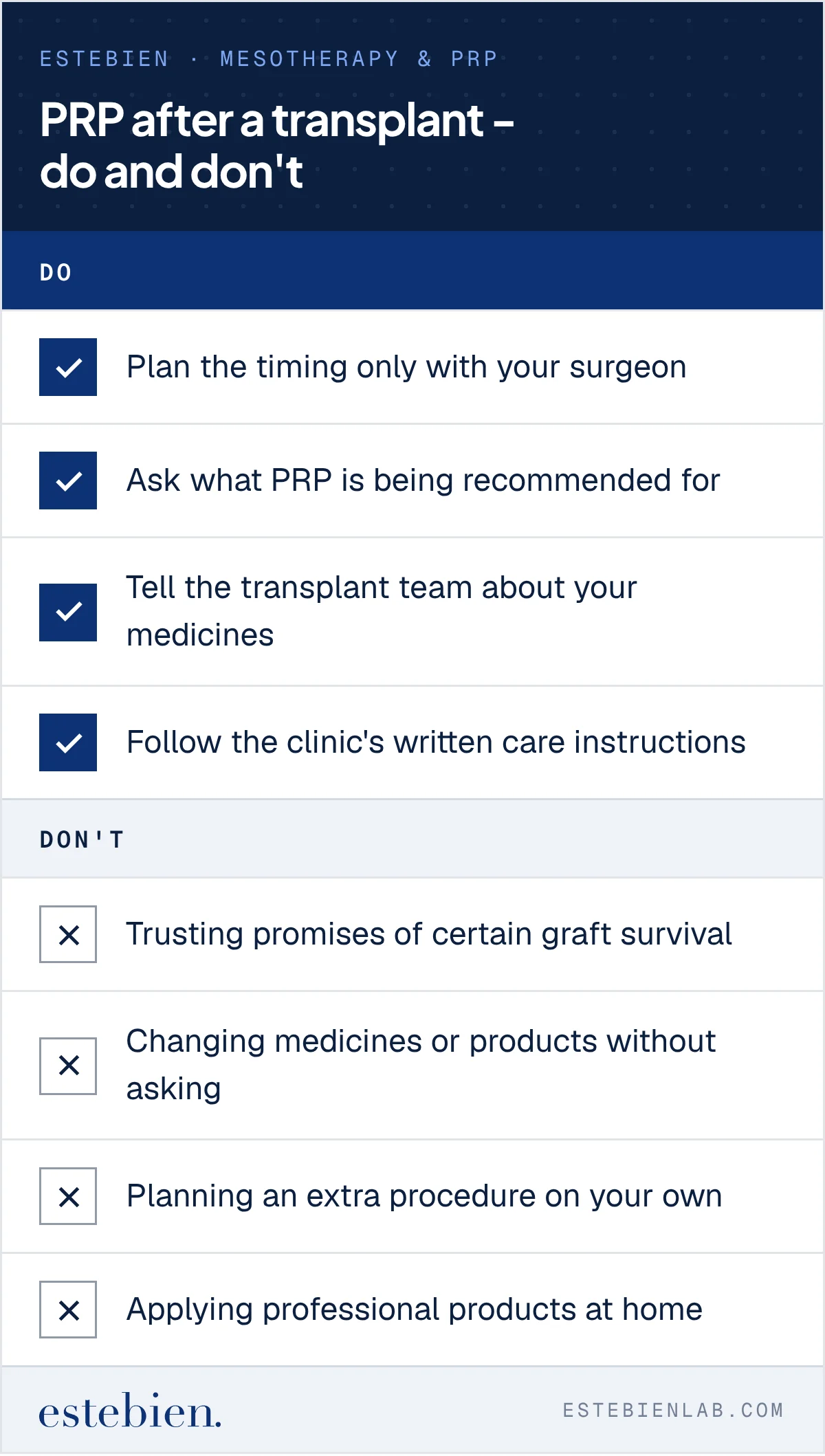
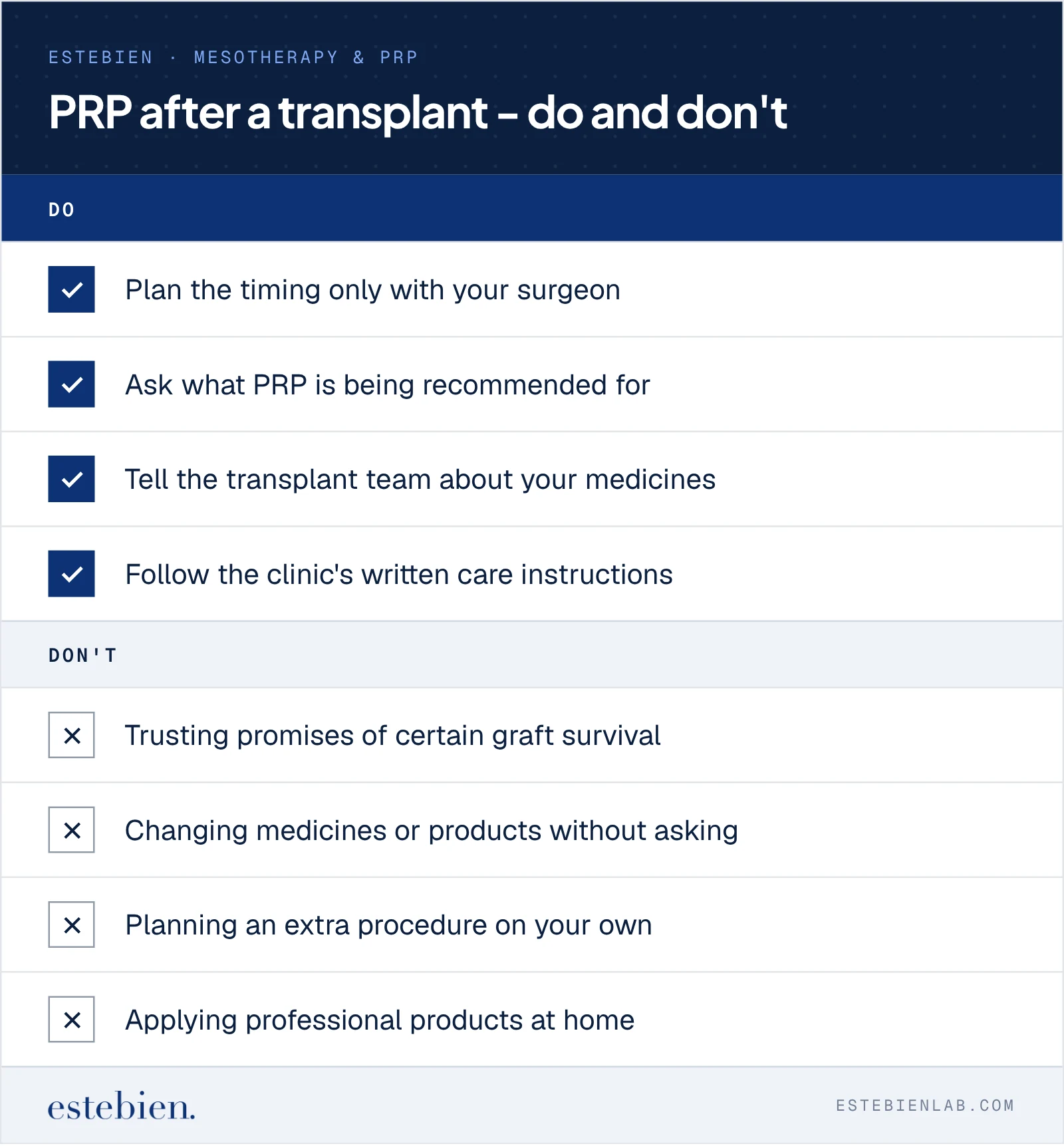
In short, PRP after a hair transplant is an adjunct whose evidence is promising but still limited. If you are curious how PRP differs from mesotherapy, see PRP or mesotherapy. Make the decision with your surgeon, asking about its purpose, its timing and what it is based on.
Frequently Asked Questions
- How many days after a hair transplant is PRP done?
- There is no standard interval. In the studies in a 2025 systematic review, PRP was given during the transplant, 4 weeks after surgery or at months 1 and 2; your surgeon sets the timing for you.
- Is PRP necessary after a hair transplant?
- No, the sources do not describe PRP as a required step. According to the ISHRS, some investigators oppose routine use and say better-designed studies are needed.
- Does PRP improve graft survival?
- In one small randomised study, follicle survival was 82.2% in the PRP group and 74.0% in the control group. But the 2025 review rests on only 3 studies and says larger studies with longer follow-up are needed for a firm conclusion.
- Does PRP prevent shock loss after a transplant?
- There is not enough evidence to show this. A 2026 review says transplant-specific outcomes such as shock loss are reported inconsistently in studies.
- After a transplant, PRP or exosomes?
- A 2026 review describes PRP as the most evidence-supported adjunct in hair transplantation and exosome treatments as investigational. Your surgeon decides which, if either, suits you.
- Can PRP be done at home after a transplant?
- No. PRP is a medical procedure involving a blood draw, centrifugation and injection, performed by a physician under sterile conditions. The Estebien PRP Preparation Tube is for professional use only.
Sources
- Efficacy of Platelet-Rich Plasma as an Adjunct to Hair Transplantation: A Systematic ReviewCureus (PubMed Central)
- Adjunctive regenerative therapies in hair transplantation: a comprehensive review of platelet-rich plasma, exosomes, and emerging methodsFrontiers in Medicine (PubMed Central)
- Platelet-Rich Plasma in Hair TransplantationInternational Society of Hair Restoration Surgery (ISHRS)
- PRP for Hair Loss: Procedure, Benefits & CostsInternational Society of Hair Restoration Surgery (ISHRS)
- Hair loss - Diagnosis and treatmentMayo Clinic
This article is for general information only and is not a substitute for medical advice. For decisions about your health, consult your doctor or dentist.
Products in this article