What Is PRP and How Is It Done - A Guide for Hair and Skin
PRP is platelet-rich plasma prepared from your own blood. We explain the steps of a session, who should perform it and what to ask the clinic, in plain terms.
- Reading time
- 10 min read
- Author
- Estebien Editorial Team
In short
- PRP (platelet-rich plasma) is plasma with a raised concentration of platelets, obtained by separating a sample of your own blood in a centrifuge.
- A session has three basic steps: blood is drawn from your arm, it is separated in a centrifuge, and the platelet-rich part is injected into the scalp or skin.
- According to the American Academy of Dermatology (AAD), most hair loss patients return once a month for three months and then every three to six months; the physician sets the plan.
- The sources are clear that results vary from person to person, that preparation methods are not standardised and that not everyone benefits.
- PRP is a medical procedure; only the qualified physician who examines you can decide whether you are a suitable candidate and which protocol to use.
PRP, short for platelet-rich plasma, is made by separating a small sample of your own blood in a centrifuge; the plasma in which the platelets are concentrated is then injected into the scalp or the skin. The procedure is completed in a single clinic visit, but it is not a one-off. This guide explains what PRP is, how a session goes and what to ask the clinic, based on information published by dermatology societies and hospitals. Only the physician who examines you can decide whether PRP suits you and how it should be done.
What is PRP?
PRP stands for platelet-rich plasma. The Cleveland Clinic page on PRP explains the idea like this: platelets are a component of your blood and contain special proteins called growth factors, while plasma is the liquid part of your blood. Healthcare providers process a blood sample in a machine that separates the platelets and concentrates them in the plasma. According to the same source, a PRP injection has five to ten times as many platelets as a normal blood sample would.
That ratio differs from one source to the next, which shows that the field is not yet standardised. On its page about PRP for hair loss, the International Society of Hair Restoration Surgery (ISHRS) writes that the goal is to concentrate the platelet level 2 to 6 times higher than the starting level and that there is no consensus on the ideal concentration. PRP is autologous, meaning it comes from the person's own body. Johns Hopkins Medicine notes that clinicians first used PRP to speed up healing after jaw or plastic surgery, and that the mechanism behind it is not completely understood.
How is PRP prepared?
Preparation starts with a blood draw. In its article on PRP for the skin, the American Academy of Dermatology (AAD) says that about 2 to 4 tablespoons of blood are drawn from your arm; ISHRS adds that the exact amount depends on the system the office uses. The tube of blood is placed in a device called a centrifuge. It spins the blood at speed so that its components separate into layers by weight, and one of those layers contains a high concentration of platelets.
According to ISHRS, the sample is processed with the protocol specific to the system in use, with a single or a double spin, and three products result: red blood cells, platelet-poor plasma (PPP) and platelet-rich plasma (PRP). The DermNet page on PRP stresses two points: the speed and duration of centrifugation are very important so that the platelets are not damaged, and sterile technique must be used at every stage of preparation and application.
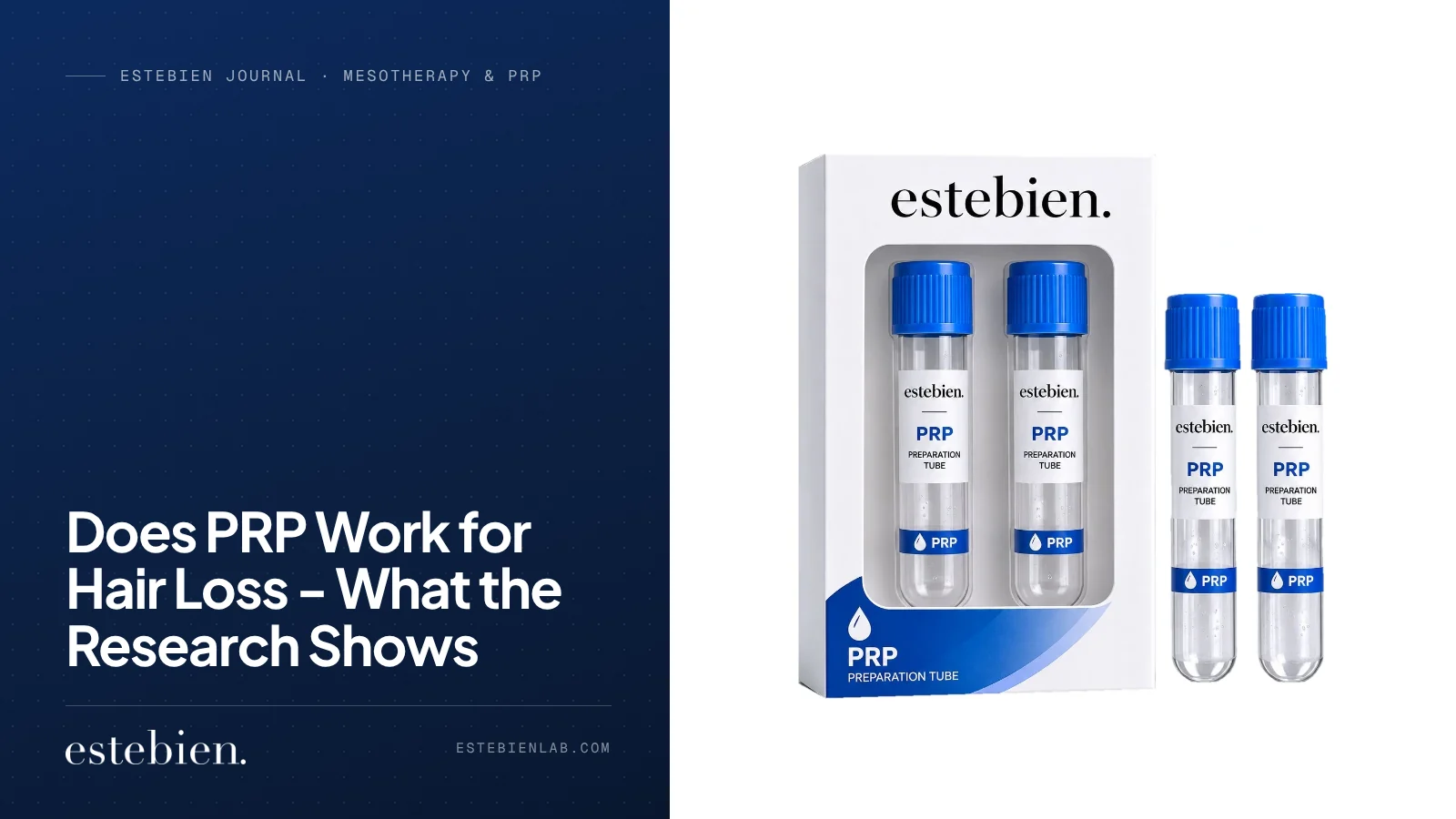
Blood collection tubes and preparation systems differ between manufacturers; the physician sets the preparation protocol according to the directions of the system in use. In Estebien's Mesotherapy & PRP line for professional use, the Estebien PRP Preparation Tube box holds two blue-capped PRP Preparation Tubes. The product is for professional use only; directions for use, storage conditions and technical information are given on the packaging. It is offered to clinics and healthcare professionals on a quotation basis.
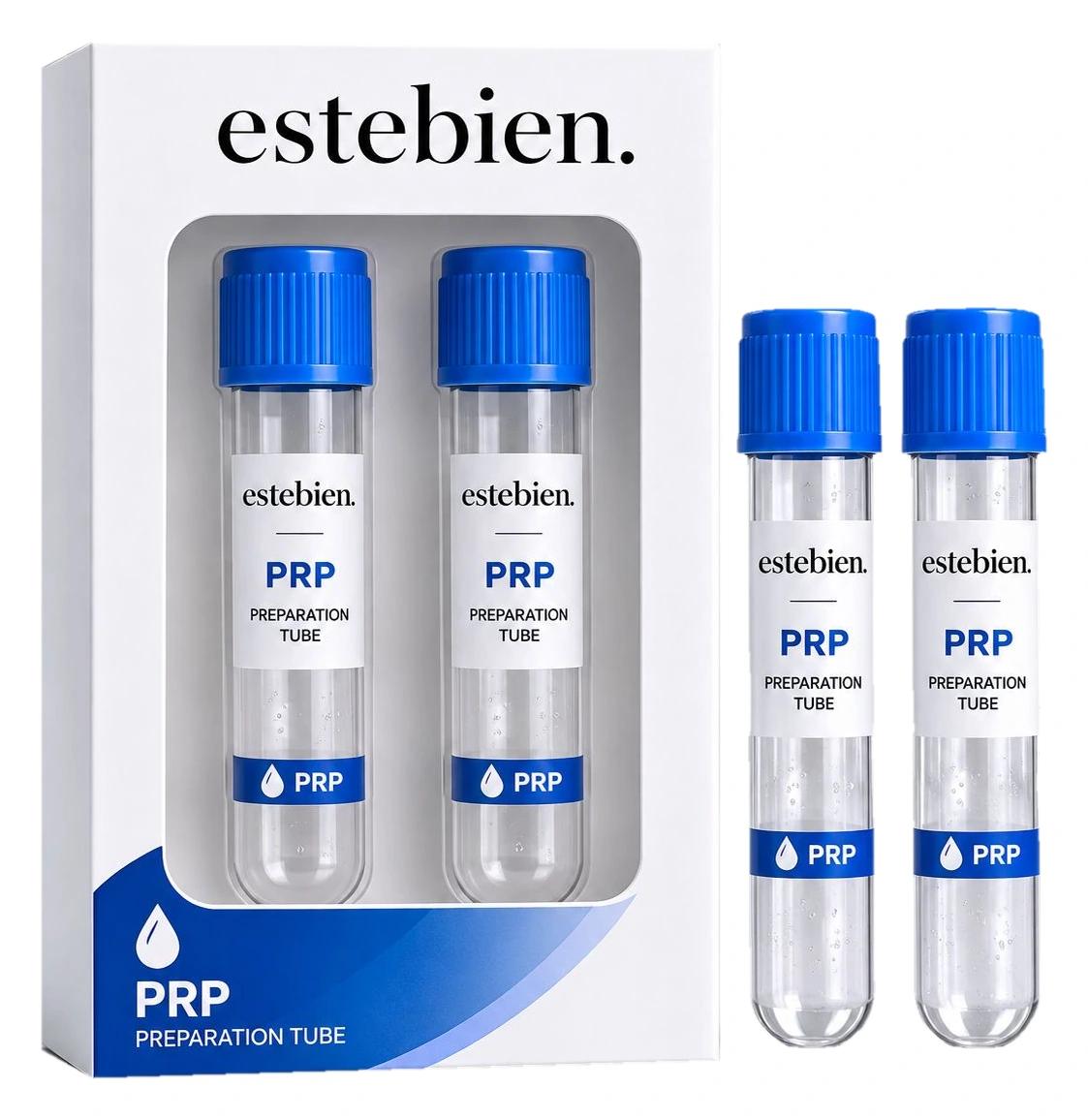 Estebien PRP Preparation TubeThe box contains two blue-capped PRP Preparation Tubes. Part of the Estebien Mesotherapy & PRP line; for professional use only.View product
How does a PRP session for hair go?
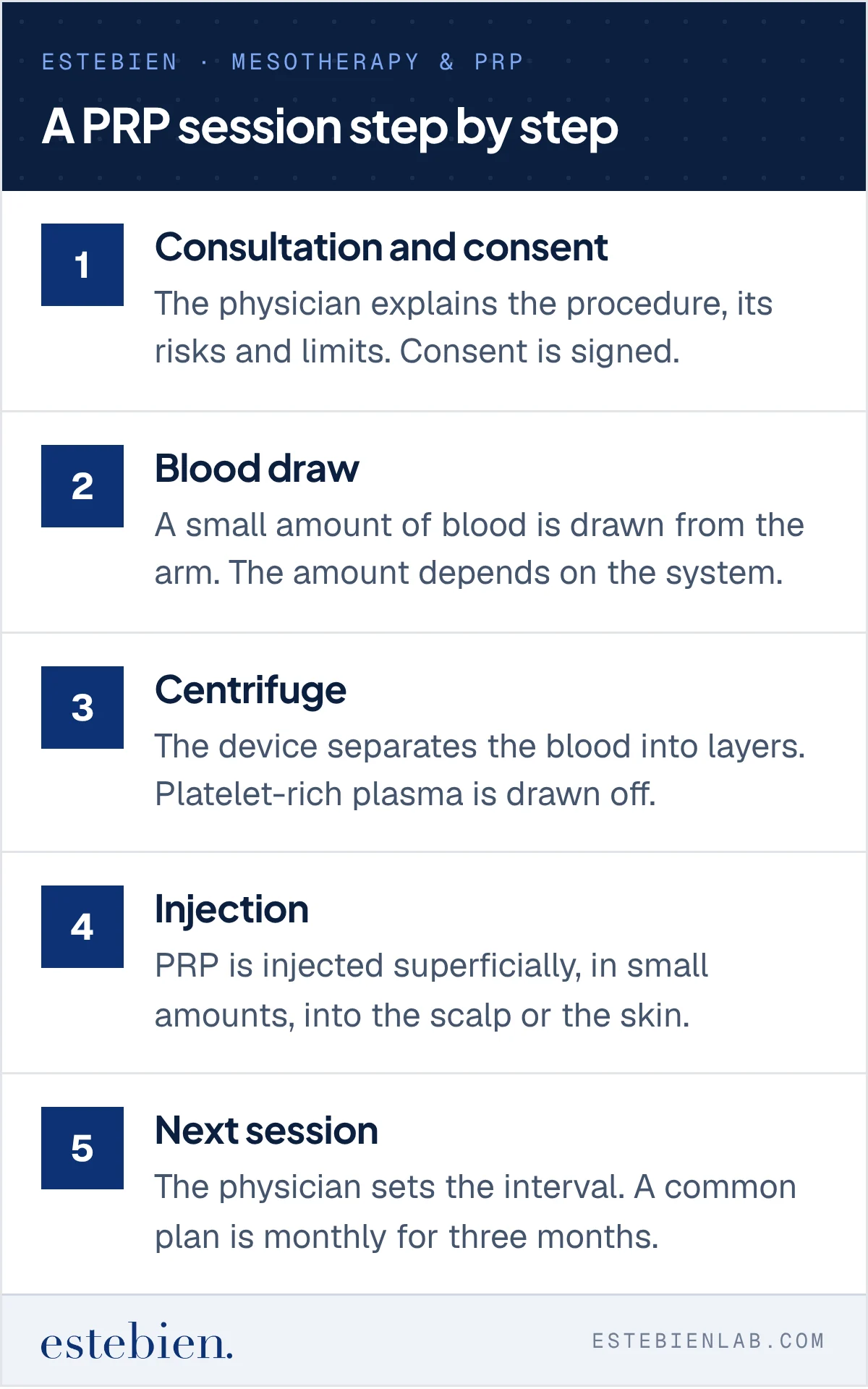
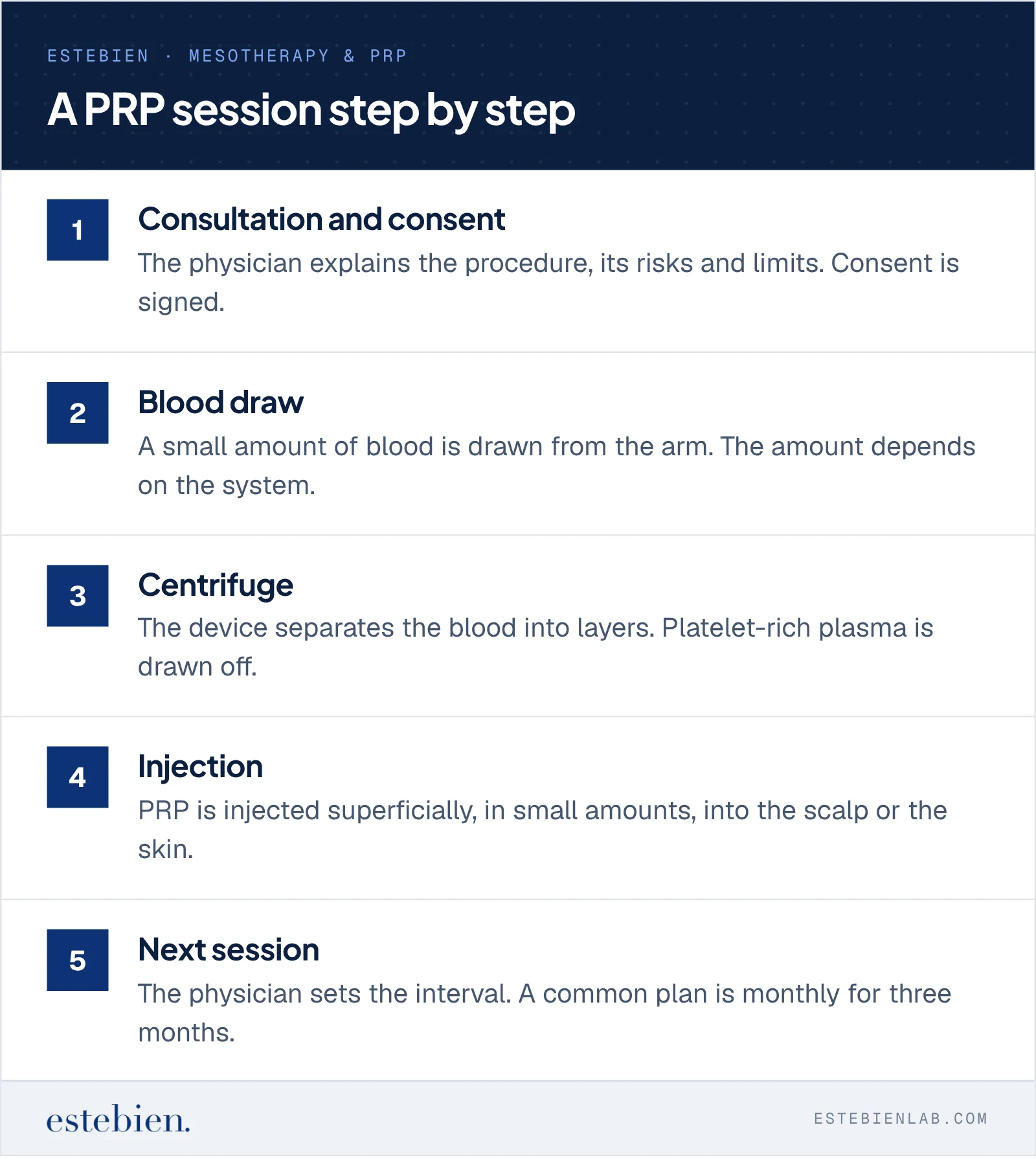
ISHRS describes a PRP visit for hair step by step. The order can differ slightly between clinics, but the general flow is as follows:
- The physician explains the procedure and an informed consent form is signed. Signing means you understand the risks, benefits, limitations and alternatives.
- Blood is drawn from your arm. While the PRP is prepared you move to a treatment room, where local anaesthesia is given if appropriate.
- The blood sample is centrifuged and the platelet-rich plasma is separated.
- The PRP is injected very superficially, in small quantities, into the scalp in the areas of hair loss. According to ISHRS the quantity can be as little as 0.05 ml per site, allowing as many as 120 injection sites in one procedure.
- In some clinics microneedling follows the injections. The date of the next session is set.
The sources give different figures for the length of a visit. On its page about hair loss treatments, the AAD writes that the entire procedure takes about 10 minutes and usually does not require any downtime. Cleveland Clinic notes that for cosmetic procedures such as a hair loss treatment, extra steps may make the visit longer. Your clinic is the best source for how long your own appointment will take.
How many PRP sessions are needed?
PRP is not a single-session procedure. ISHRS states that PRP always needs to be repeated to be effective, yet there is no standard treatment interval. The common plans resemble one another: three sessions about a month apart at the start, followed by maintenance sessions at longer intervals. Harvard Health describes the usual treatment plan in the same way.
| Source | Initial phase | Afterwards |
|---|---|---|
| AAD | Once a month for three months | Once every three to six months |
| ISHRS | Three sessions one month apart | A booster session every six months |
| Harvard Health | Three sessions about a month apart | Maintenance every three to six months |
How is PRP used on the skin?
For the skin the preparation steps are the same and the way it is applied changes. According to the AAD, the dermatologist applies the part with a high concentration of platelets to the face with a syringe or a microneedling device, and the entire procedure takes about 45 minutes to one hour. Most patients who get results have three or more treatments; if you get results, the full effects appear within a few weeks to months.
The same article also sets clear limits on expectations: the AAD says there is little evidence to show that PRP for the skin works or does not work, and that questions such as how many treatments to have, how much PRP to inject and which equipment to use remain unanswered. Johns Hopkins Medicine likewise notes that there is little evidence that PRP reduces wrinkles and other signs of ageing. In the AAD's words, this is still an unproven treatment.
What should you expect from PRP, and what not?
What the reliable sources share is caution. Cleveland Clinic writes that some people experience benefits from PRP while others do not, and that healthcare providers cannot predict the outcome with certainty. According to the same source, one possible reason is that there is no single standardised process for preparing PRP, so PRP prepared in different ways has a different composition. ISHRS also notes that some published studies have demonstrated benefits while others have not.
- The possible benefit is limited. According to ISHRS, PRP may decrease shedding or result in thicker-looking hair; some patients see no benefit at all and there are no guarantees of success.
- It takes patience. ISHRS says visible change can start as early as 1 to 2 months but that it can take as long as six months to see a benefit. Johns Hopkins Medicine also notes that results are most noticeable after six months for scalp injections.
- It is not permanent. Johns Hopkins Medicine writes that the results are not permanent and that additional injections may be needed at the direction of your doctor.
- The evidence is not the same for every type of hair loss. According to Harvard Health, most research has focused on androgenetic alopecia; there is not enough evidence to draw conclusions about effectiveness for other types of hair loss.
That is why the first step is a diagnosis, not a procedure. The AAD stresses that effective treatment for hair loss begins with finding the cause and that no one treatment works for everyone. If you would like to compare PRP with another injection method, see the article on PRP or mesotherapy.
What are the side effects of PRP, and who may not be suitable?
The sources describe PRP as a low-risk procedure when performed by a trained medical provider. According to the AAD, you may have a bit of pain, bruising and swelling afterwards, and these tend to go away within a few days. Harvard Health lists pain, redness, headaches and temporary hair shedding among the mild risks. Johns Hopkins Medicine lists bleeding, tissue damage, infection and nerve injuries as less common risks.
The AAD notes that the biggest risk comes from the way the blood is handled: the blood removed from your body must be kept sterile, otherwise an infection could develop. The facility should also follow a process that makes sure only your own blood is injected back into you. Nor is PRP suitable for everyone. In its article on PRP for the skin, the AAD does not recommend it for anyone with hepatitis C, HIV or AIDS, any type of blood cancer, cardiovascular disease that requires taking a blood thinner, or skin cancer in the area to be treated. Harvard Health adds that it may not be appropriate for those with a history of bleeding disorders or autoimmune disease. These lists differ from source to source; the assessment belongs to the physician who knows your medical history.
Who performs PRP, and what should you ask the clinic?
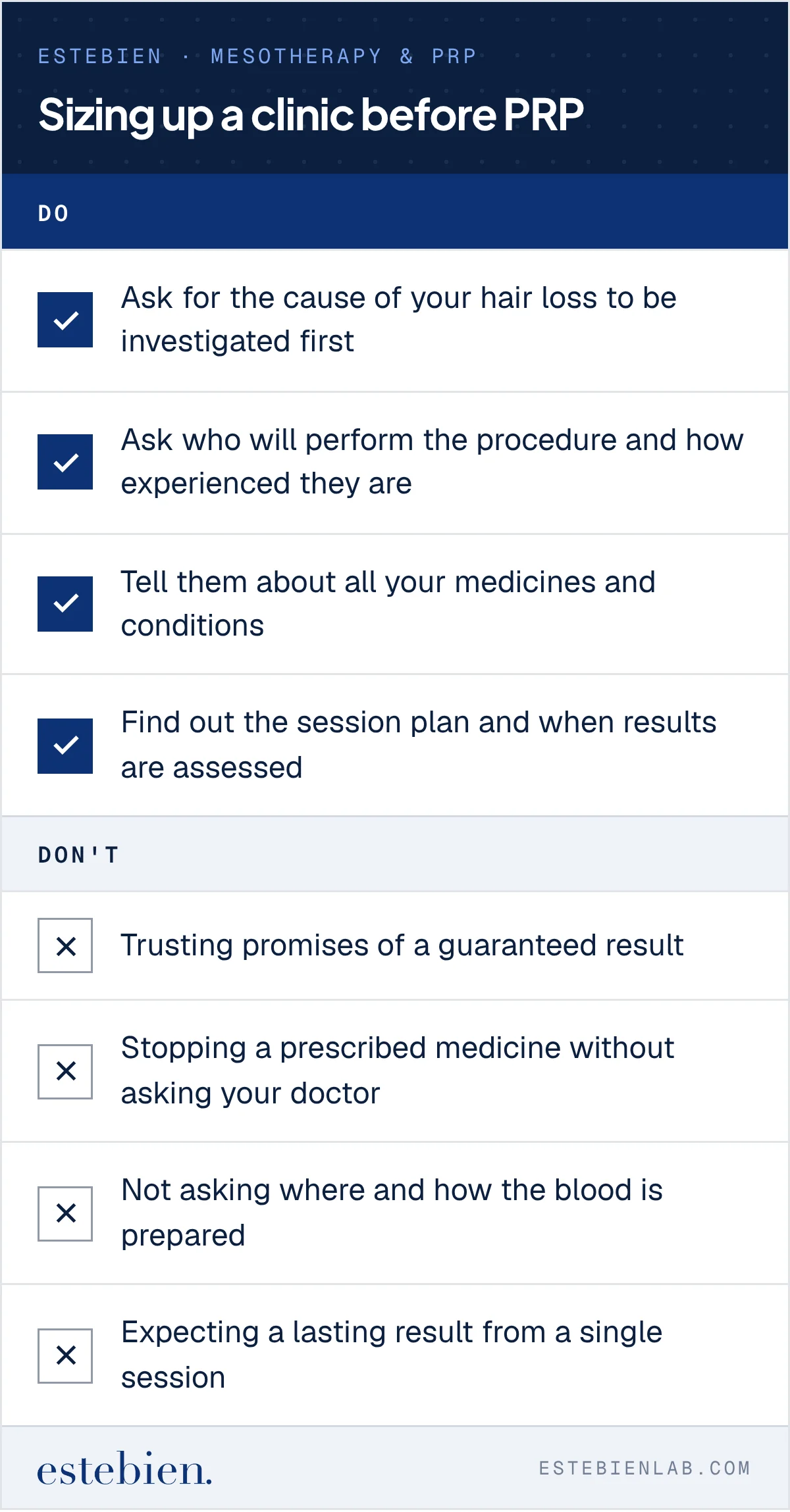
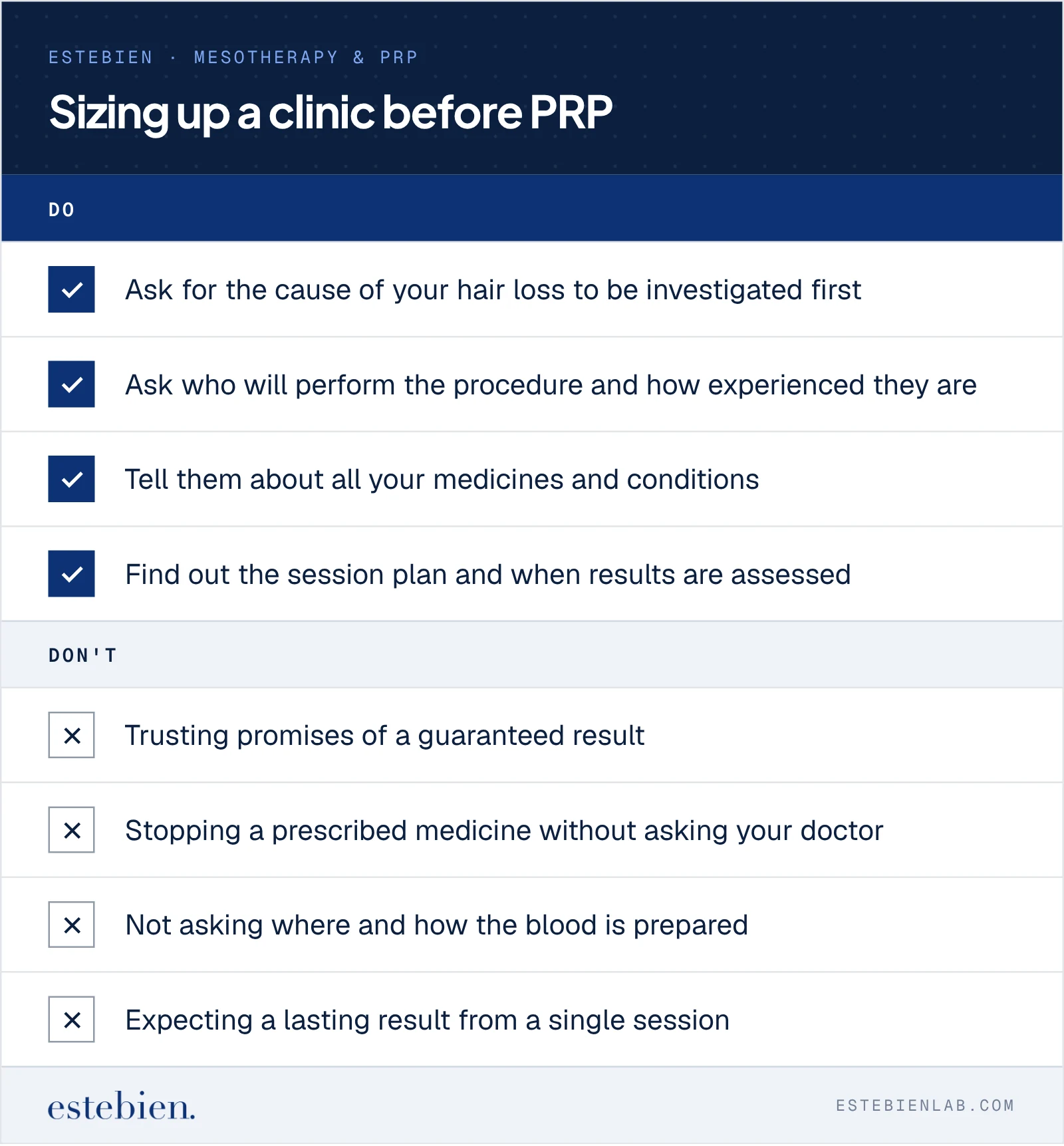
PRP is a medical procedure that involves drawing blood, processing it and injecting it; it should be performed by a physician in a healthcare facility where sterile conditions are assured. The AAD advises anyone thinking about PRP to see a board-certified dermatologist first. When choosing a provider, ISHRS advises looking at experience and reputation rather than at the cheapest or the most expensive office, and meeting the provider in person where possible. At the first consultation you could ask:
- What is causing my hair loss, and is PRP a suitable option for this type of hair loss?
- Who will perform the procedure, and where and under what conditions will the blood be prepared?
- Which preparation system is used, and is it a single or a double spin?
- How many sessions and what intervals do you foresee for me, and when will the result be assessed?
- Do my medicines or my health make the procedure unsuitable?
- What should I do before and after the procedure? For the general advice, see the article on PRP and mesotherapy aftercare.
How does PRP sit alongside other approaches?
Cleveland Clinic writes that providers who offer PRP generally offer it as an adjunct therapy, meaning it might be a helpful addition but should not be your only treatment. Harvard Health also points to evidence that, for androgenetic alopecia, PRP may work best when it is combined with other treatments. For anyone who has had a hair transplant the decision belongs to the surgeon; the general calendar of recovery is in the post hair transplant care guide. The method in which mixtures of vitamins, minerals or medicines are injected is covered in the article on hair mesotherapy.
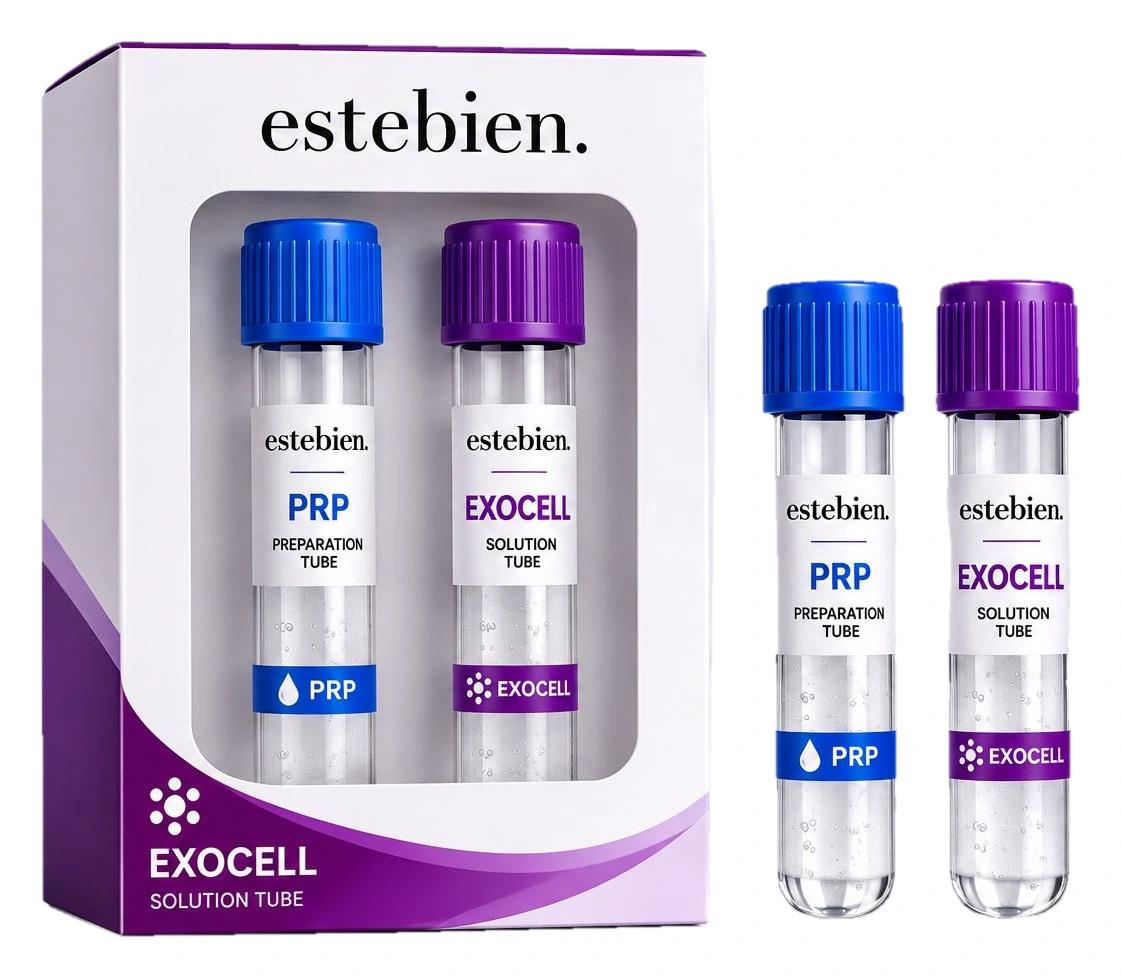
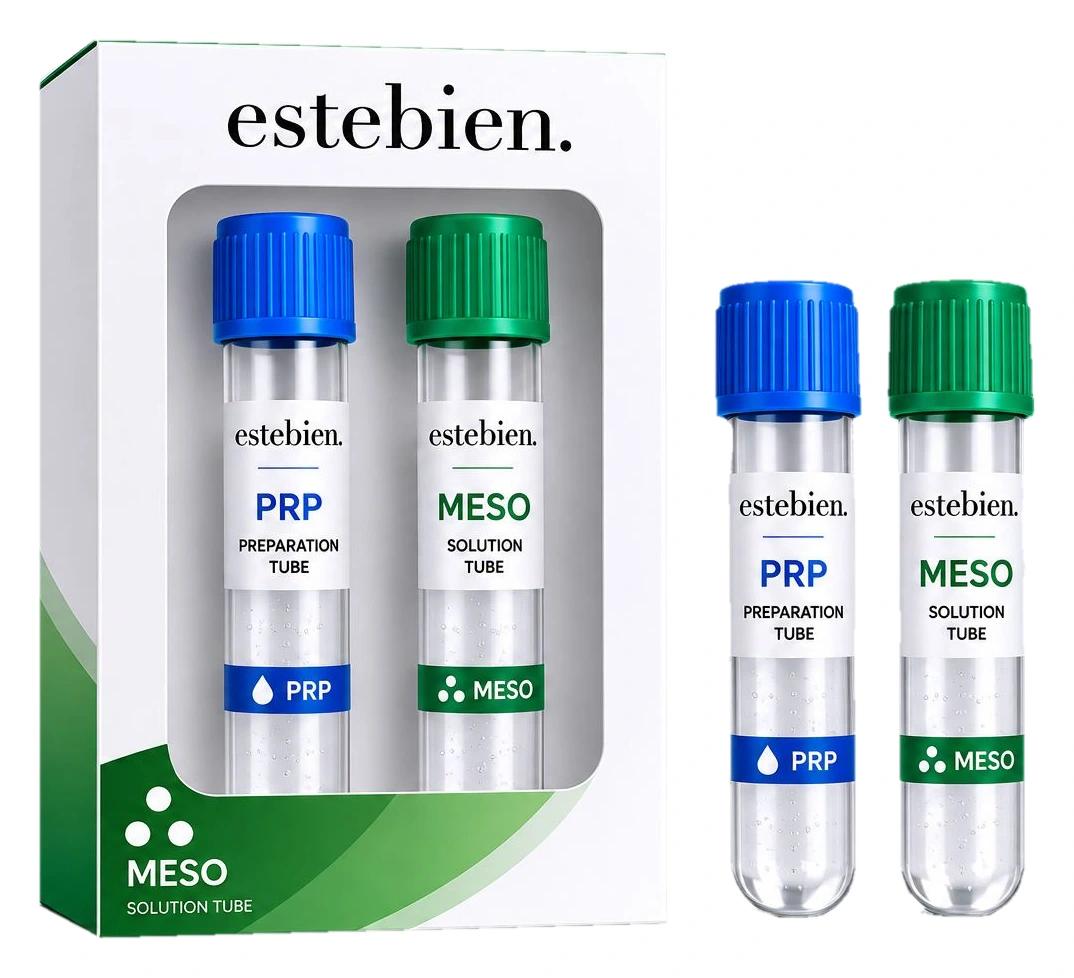
Everyday care at home is a separate matter. Products such as shampoo, serum or supplements support the care of the hair and scalp; they do not replace a medical procedure or the treatment your doctor recommends. The hair vitamins guide and the derma roller guide cover that ground. The AAD is a reminder that, although microneedling devices are sold without a prescription, they can worsen some conditions and it is best to check with your dermatologist first. For clinics, the Estebien line also includes the Exocell Solution Tube and Meso Solution Tube boxes alongside the PRP tube; what each box holds is stated on its product page.
Frequently Asked Questions
- What does PRP stand for?
- PRP stands for platelet-rich plasma. It is prepared from the person's own blood using a centrifuge.
- How many PRP sessions are needed for hair?
- According to the AAD, most patients return once a month for three months and then once every three to six months. ISHRS notes there is no standard interval; your physician sets the plan.
- Does PRP hurt?
- According to ISHRS, local anaesthesia is given if appropriate and the principal risk is local, temporary pain at the injection sites. Discuss any concern about pain with your physician beforehand.
- How long does PRP take to show an effect?
- ISHRS says visible change can start in 1 to 2 months and that it can take as long as six months to see a benefit. Some people see no benefit at all; there are no guarantees of success.
- Is PRP permanent?
- No. Johns Hopkins Medicine states that the results are not permanent, and ISHRS notes that any benefit is only maintained if ongoing treatments continue.
- Can anyone have PRP?
- No. The AAD does not recommend PRP for people with hepatitis C, HIV or AIDS, any type of blood cancer, cardiovascular disease that requires a blood thinner, or skin cancer in the area to be treated. Your physician decides whether you are suitable.
- Can PRP tubes be used at home?
- No. PRP is a medical procedure that requires a blood draw and preparation under sterile conditions. Estebien PRP Preparation Tube is for professional use only and is intended for clinics and healthcare professionals.
Sources
- Hair loss: Diagnosis and treatmentAmerican Academy of Dermatology (AAD)
- Is platelet-rich plasma the secret to younger-looking skin?American Academy of Dermatology (AAD)
- Platelet-Rich Plasma (PRP Injection)Cleveland Clinic
- PRP for Hair Loss: Procedure, Benefits & CostsInternational Society of Hair Restoration Surgery (ISHRS)
- Platelet-Rich Plasma (PRP) InjectionsJohns Hopkins Medicine
- Platelet-rich plasma: Does the cure for hair loss lie within our blood?Harvard Health Publishing
- Platelet-rich plasmaDermNet
This article is for general information only and is not a substitute for medical advice. For decisions about your health, consult your doctor or dentist.