Hair Mesotherapy Explained - Sessions, Expectations and Risks
What hair mesotherapy is, how sessions are planned, what the research says and how it differs from care at home. A plain guide that puts the physician's decision first.
- Reading time
- 9 min read
- Author
- Estebien Editorial Team
In short
- Hair mesotherapy is a procedure in which mixtures chosen by the physician, containing vitamins, nutrients or medicines, are injected into the scalp in small amounts with very fine needles.
- There is no standard practice for the mixture injected, the quantities or the frequency of sessions, so mesotherapy at one clinic may not be the same as at another.
- A 2022 systematic review reported a positive result to some extent in all 12 studies it covered, but stressed that the samples were small and more research is needed.
- Reported side effects are mostly local, such as redness, pain, itching, headache and bruising; more serious events such as infection and allergic reactions have also been described.
- Mesotherapy is a medical procedure; only a qualified physician decides whether to do it, what to inject and how to plan the sessions.
Hair mesotherapy is a procedure in which mixtures containing vitamins, nutrients or medicines are injected in small amounts into the middle layer of the scalp with very fine needles. Which mixture is used, how many sessions are given and how far apart they are is not standardised; the physician decides these after an examination. This article explains what the method is, how sessions are planned, what research does and does not show, and how it differs from care at home. It is not a treatment recommendation; the decision and the protocol belong to your physician.
What is hair mesotherapy?
The word mesotherapy comes from meso, meaning the middle layer of the skin, and therapy. According to the DermNet page on mesotherapy, the method was first developed in France in 1952 to treat vascular and lymphatic disorders, and depending on the substances injected it later came to be used in other areas, including hair loss. The injections are used on different sites such as the face, scalp, neck and hands; this article is about the scalp only.
For hair loss, the thinking behind the method is that the active substance is delivered directly to the area where the hair follicles are, instead of being taken by mouth or applied to the skin. A systematic review published in the journal Cureus in 2024 defines mesotherapy as the microinjection of medications and vitamins into the middle layer of the skin and writes that the aim is to lower systemic exposure. The same review notes that mesotherapy has not been approved by the US Food and Drug Administration (FDA) for the treatment of androgenetic alopecia.
What is injected in hair mesotherapy?
There is no single mesotherapy mixture. DermNet writes that the combination of substances injected depends on what the practitioner prepares and that it may contain minute quantities of plant extracts, vitamins, enzymes, nutrients, hormones and medications. Clinical studies have looked at solutions containing prescription medicines as well as mixtures of vitamins and nutrients. Whether a mixture containing a medicine is used is entirely the physician's decision, and such mixtures carry risks of their own.
That variety is the most criticised aspect of the method. DermNet notes that there appears to be no standardisation within the practice in terms of what substances are used, in what quantities and how often they are injected. So what one clinic offers as mesotherapy may not be the same as what another clinic offers. Asking your physician which mixture they have chosen and why is entirely reasonable.
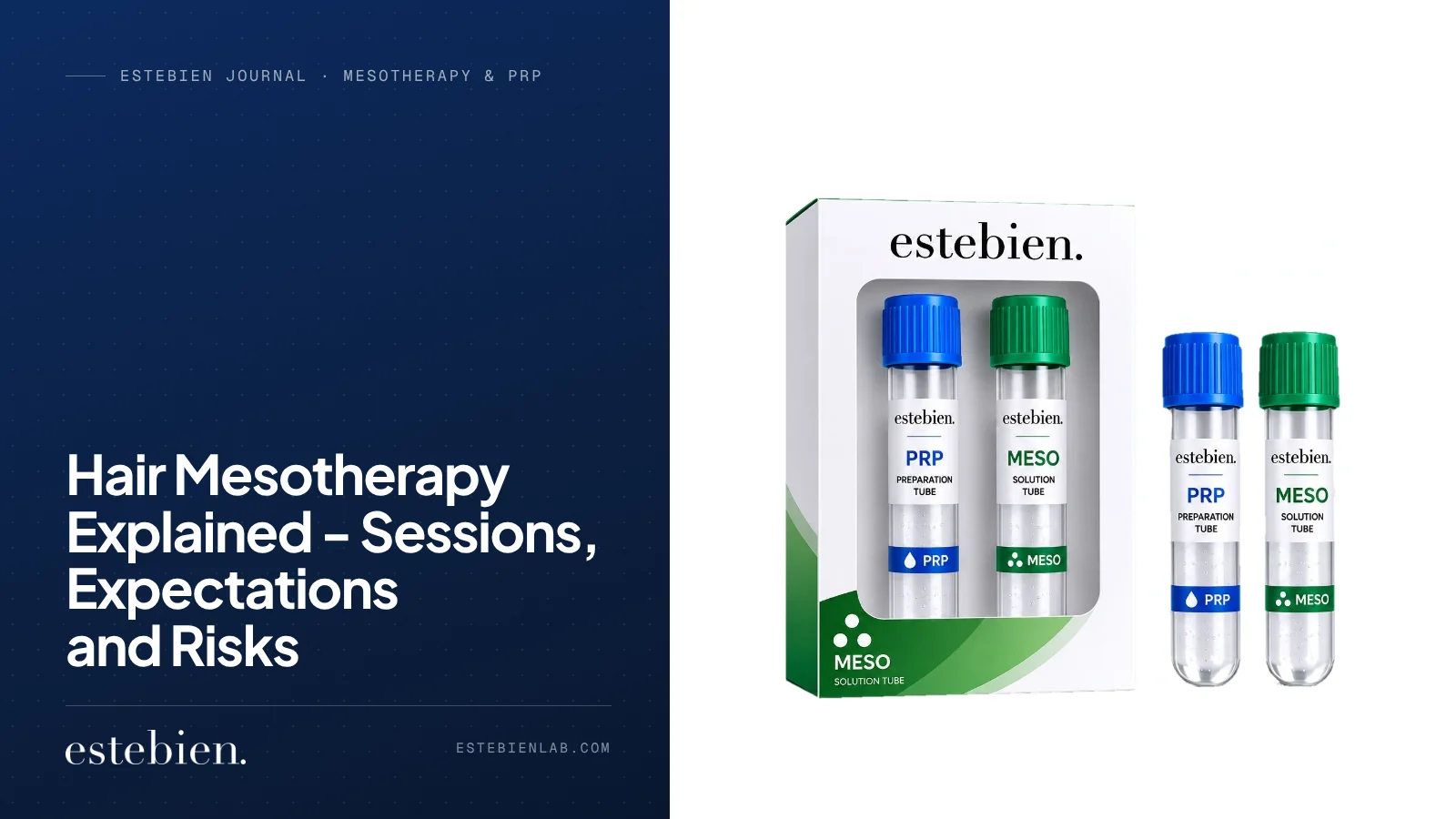
For clinics and healthcare professionals, the Estebien Meso Solution Tube box in Estebien's Mesotherapy & PRP line holds one PRP Preparation Tube and one green-capped Meso Solution Tube. The product is for professional use only; directions for use, storage conditions and technical information are given on the packaging, and it is offered on a quotation basis.
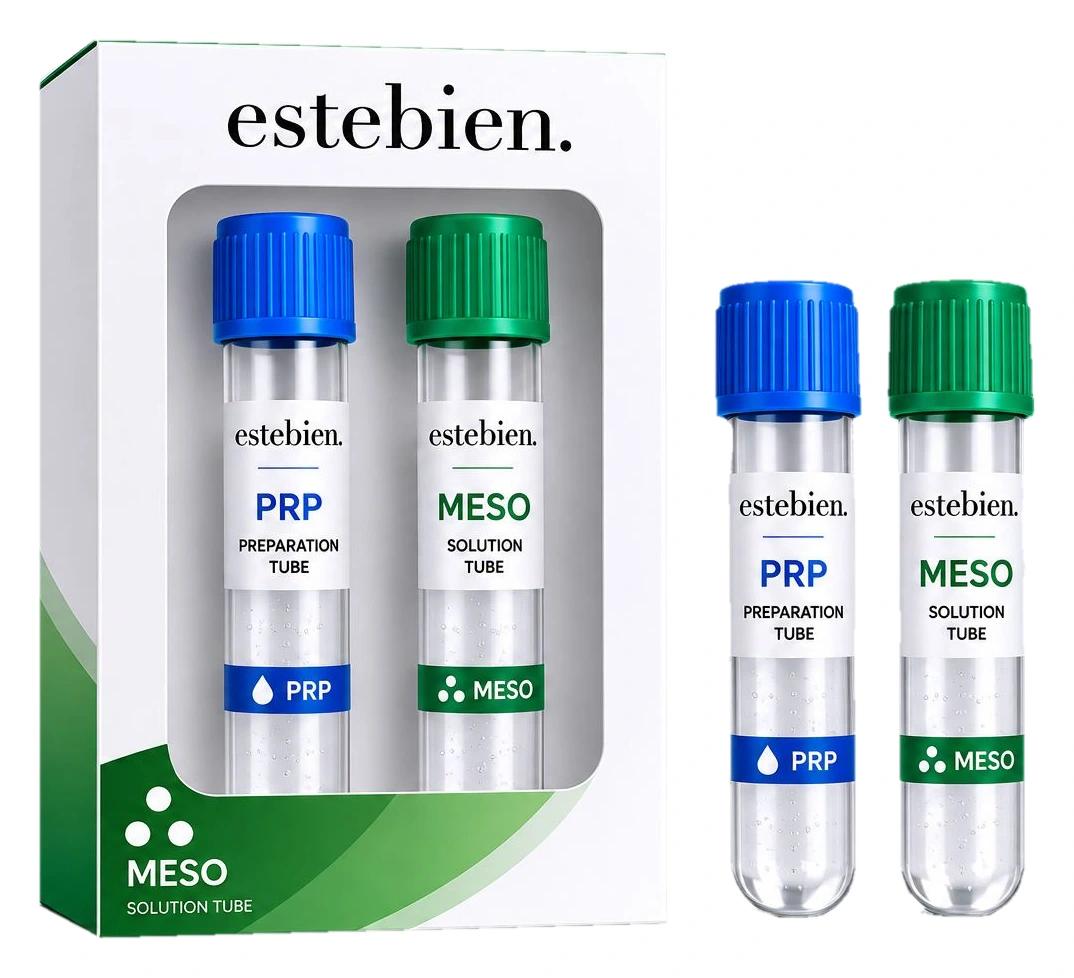 Estebien Meso Solution TubeThe box contains one PRP Preparation Tube and one green-capped Meso Solution Tube. Part of the Estebien Mesotherapy & PRP line; for professional use only.View product
How is a hair mesotherapy session done?
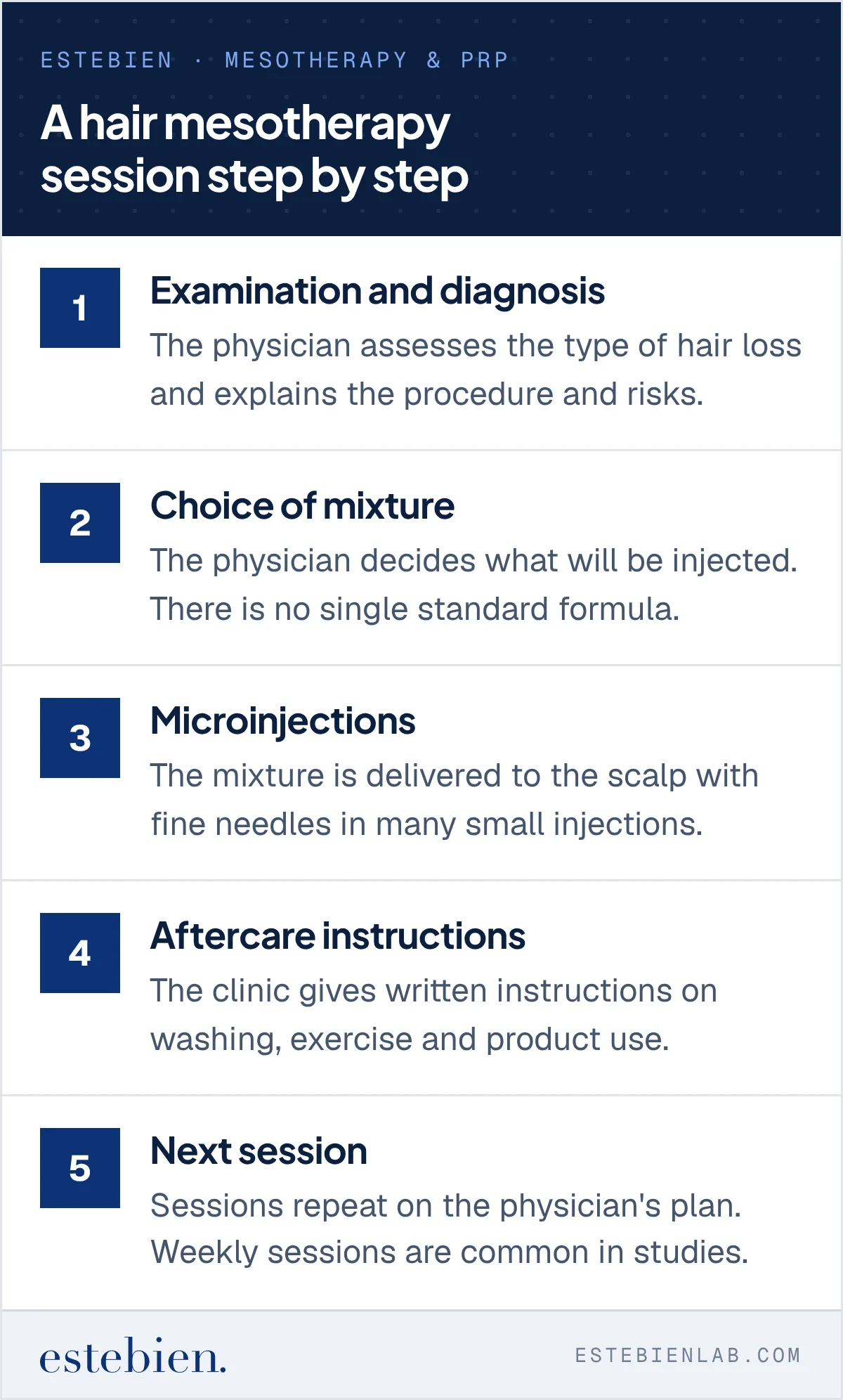
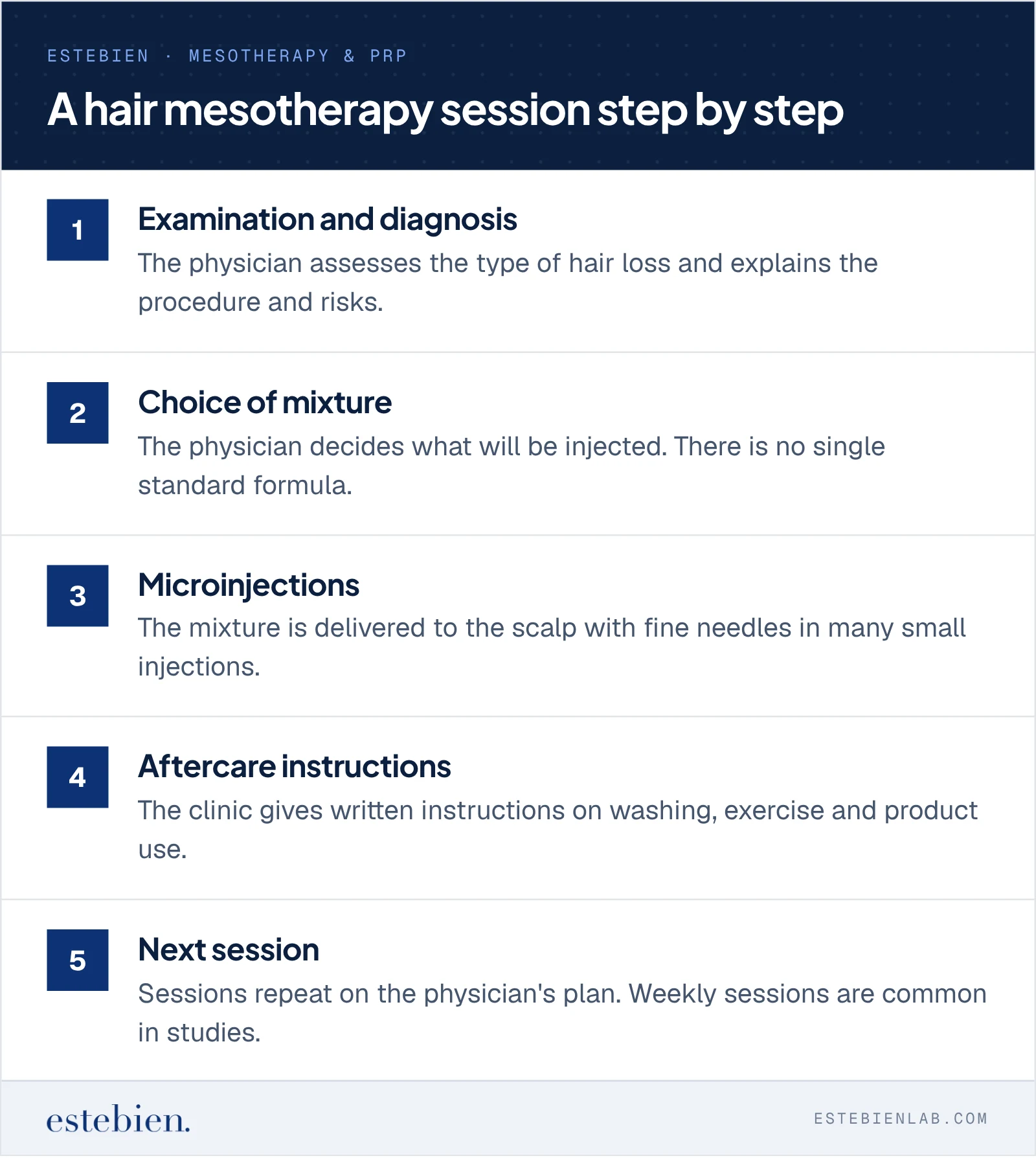
A session starts with a consultation: the physician assesses the type of hair loss and explains the procedure and its risks. The mixture is then delivered to the chosen area of the scalp through many small injections placed close together. As the Cureus review reports, the injections are given with fine 28 to 30 gauge needles 4 mm long, by hand or with a device called a mesogun, and the needle depth ranges from about 1 to 4 mm depending on the technique.
The same review describes several injection techniques. In the nappage technique, widely used on the scalp, the needle is held at a 30 to 60 degree angle and many superficial injections are made, leaving one drop of solution at each site. In the point-by-point technique, 0.02 to 0.05 ml of solution is delivered perpendicularly into the dermis at sites 1 to 2 cm apart. According to the review, the nappage technique may cause more discomfort than the others. The choice of technique is the physician's.
How many sessions does hair mesotherapy take, and how are they planned?
Mesotherapy is not completed in one session, yet there is no single accepted timetable either. DermNet states that mesotherapy usually requires a series of 3 to 15 treatment sessions given at 2-week intervals; that figure covers all uses of the method, not hair alone. In clinical studies on hair loss, weekly sessions are more common. The table below summarises the plans used in the studies reported by the Cureus review.
| Source | Frequency | Duration |
|---|---|---|
| DermNet (mesotherapy in general) | Every two weeks | 3 to 15 sessions |
| Uzel et al. (hair loss in women) | Once a week | 10 weeks |
| Hunter et al. | Once a week | 12 weeks |
| Gajjar et al. | Once a week | Four months of follow-up |
What does the research say about hair mesotherapy?
The evidence is promising but limited. A systematic review published in the Journal of Cosmetic Dermatology in 2022 assessed 12 studies of mesotherapy in male and female pattern hair loss. A total of 253 men and 274 women took part in them. The authors report that mesotherapy showed positive efficacy in all studies to a certain extent and that no significant side effect occurred. They add that the sample size is not big enough, that studies comparing mesotherapy with other treatments are insufficient and that future research is required.
The Cureus review paints a similar picture. In two randomised trials with 95 patients in total that compared mesotherapy with minoxidil applied to the skin, no statistically significant difference was found between the two groups. The authors of the review list the small numbers of participants and the short duration of the studies among its limitations. DermNet is more cautious, writing that although mesotherapy has been used for decades in Europe, there is very little scientific or clinical evidence to support the technique.
What can be taken from these findings is this: mesotherapy may help some people, but current evidence cannot predict for whom, with which mixture or over what period it will work. No result is guaranteed, and nothing in this article should be read as a promise of one.
What are the side effects and risks of hair mesotherapy?
According to the Cureus review, mesotherapy can cause redness, pain, itching, swelling, bruising and inflamed hair follicles at the injection site, as well as headaches. In one case series it reports, two patients developed swelling of the forehead after the first sessions, which lasted four days. The authors note that inflammatory reactions, damage to fatty tissue and, paradoxically, hair loss have also been reported in rare circumstances; some of those rare cases were linked to solutions containing a medicine.
The side effects DermNet reports for mesotherapy include an immediate or delayed allergic reaction to the injected solutions, skin infections, pigmentation and bruising at the injection site and, less often, ulceration, scarring and deformity. It also stresses that further research is needed into the long-term effects of the injected substances on the body. The risk depends on the mixture injected and on the conditions in which the procedure is done, which is why it matters that it is performed under sterile conditions by a physician.
How does hair mesotherapy differ from topical care at home?
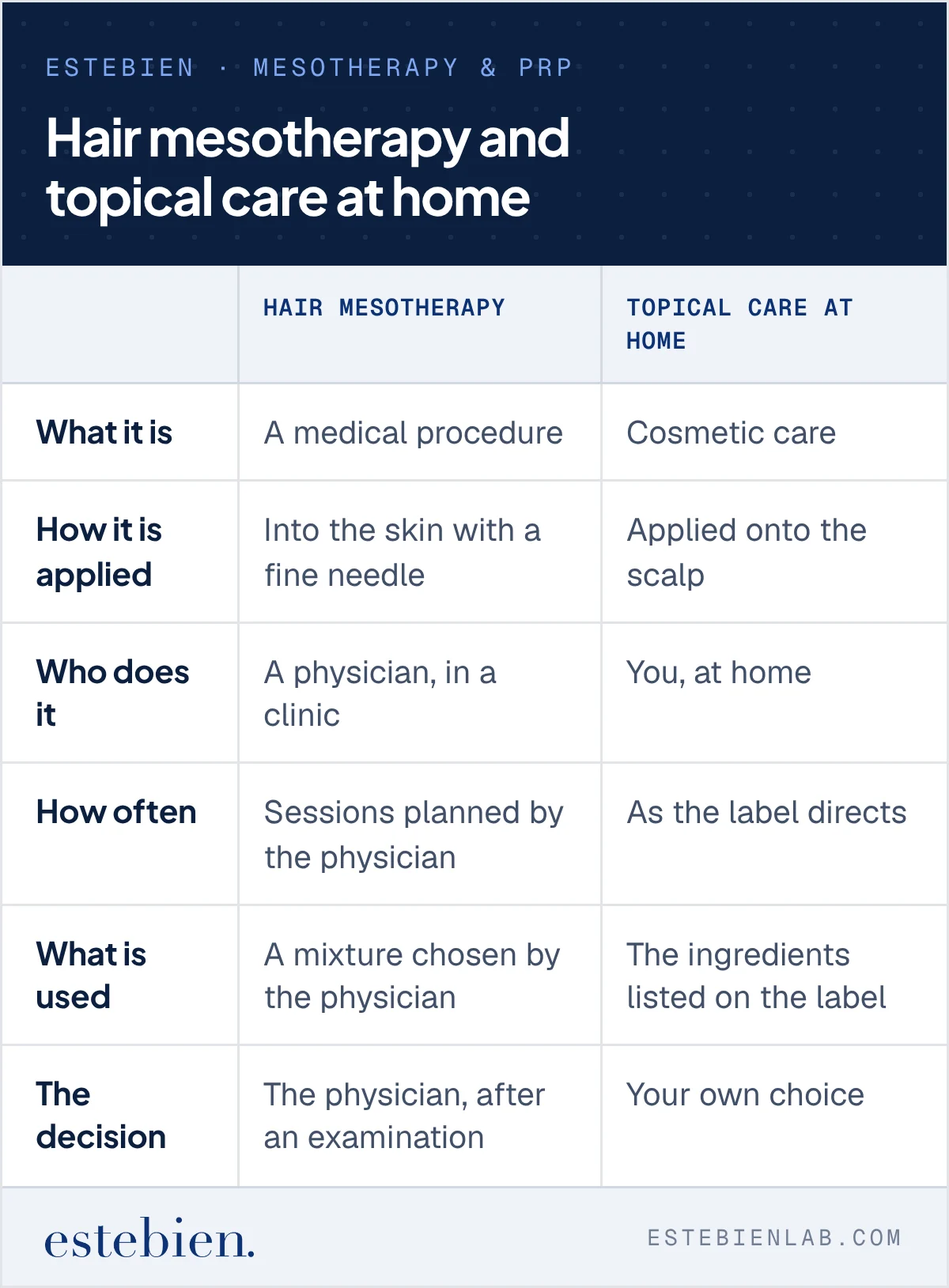
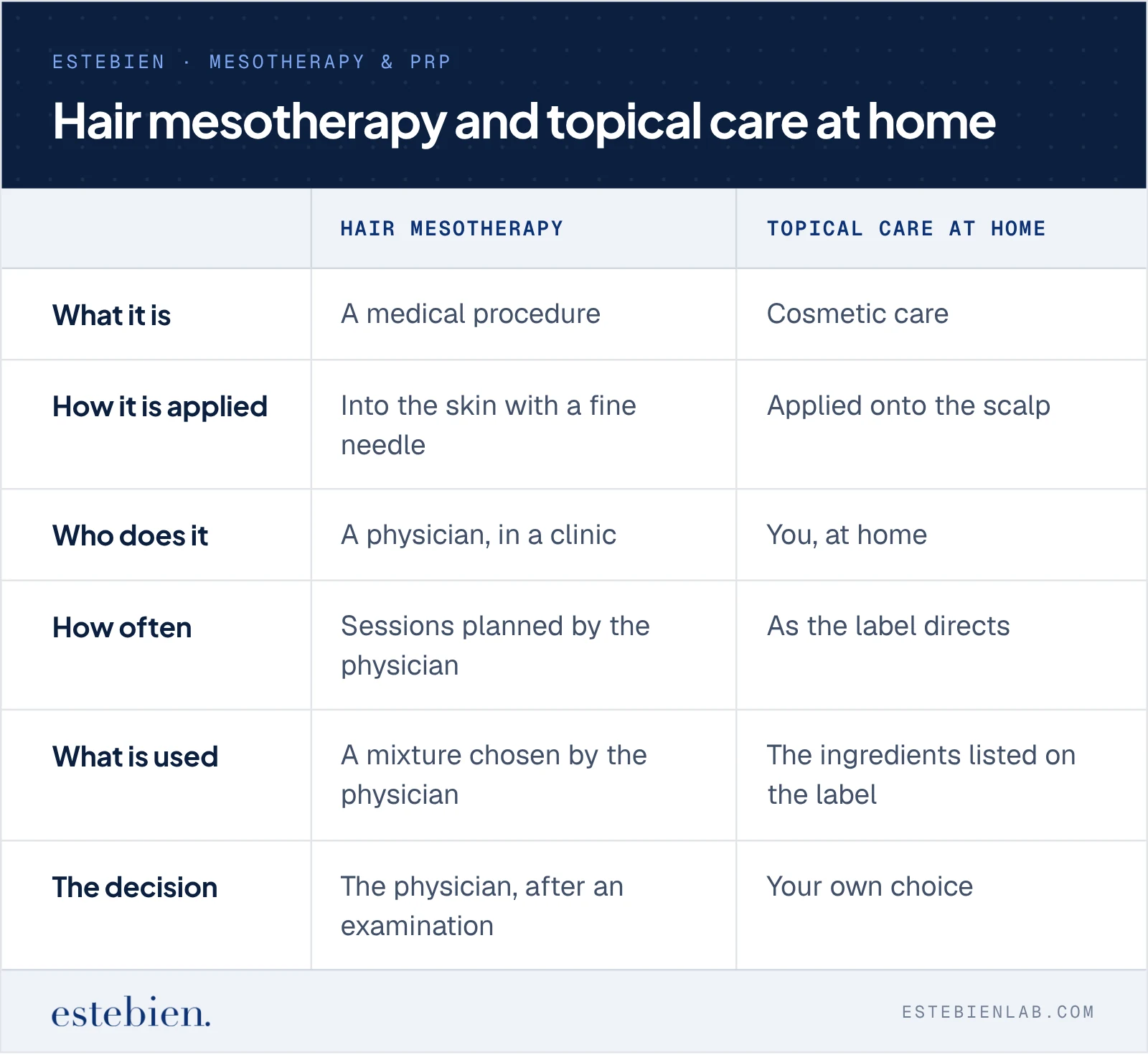
The two are often confused, yet they are different in kind. Topical care means applying products such as shampoo, serum, spray or oil to the scalp; you do it yourself at home, following the directions on the label. In mesotherapy the mixture is delivered into the skin with a needle. That makes mesotherapy a medical procedure carried out by a physician, not a cosmetic care step. Cosmetic products support the care of the hair and scalp; they do not replace a treatment and cannot be claimed to change the outcome of a procedure.
If you would like to read more about care at home, the hair serum and hair spray comparison, the scalp care guide and the hair vitamins guide cover it. Microneedle rollers can also be confused with mesotherapy: a derma roller does not inject anything into the skin, and its use at home follows separate rules. The details are in the derma roller guide. Ask your clinic when you may return to these products after a mesotherapy session; the general advice is collected in the aftercare article.
Who is hair mesotherapy considered for, and what should you ask?
Hair loss has many causes, and they do not all call for the same approach. On its page about hair loss treatments, the American Academy of Dermatology (AAD) stresses that effective treatment begins with finding the cause, that in some situations hair regrows on its own and that no one treatment works for everyone. Most mesotherapy research concerns male and female pattern hair loss. A diagnosis therefore needs to come before any procedure is planned. At the consultation you could ask:
- What type of hair loss do I have, and why is mesotherapy suggested for it?
- What is in the mixture to be injected, and does it contain a medicine?
- How many sessions and what intervals do you foresee, and when and how will the result be assessed?
- Given my medical history, which side effects should I watch for?
- What are the alternatives? You can read about the method that uses plasma prepared from your own blood in the PRP guide, and a comparison of the two in the article on PRP or mesotherapy.
If you have had a hair transplant, your surgeon decides the timing of any procedure on the transplanted area; the general calendar of recovery is set out in the post hair transplant care guide. Alongside the Meso Solution Tube, Estebien's professional line also includes the PRP Preparation Tube and Exocell Solution Tube boxes; what each box holds is stated on its product page.
Frequently Asked Questions
- How many sessions does hair mesotherapy take?
- There is no standard number. DermNet speaks in general of 3 to 15 sessions at two-week intervals; in hair loss studies, weekly sessions were given for 10 to 12 weeks. Your physician sets the plan.
- Does hair mesotherapy hurt?
- The procedure is done with fine needles and the sensation depends on the technique. According to the review we read, the nappage technique may cause more discomfort than the others. Ask your physician about options for reducing pain.
- Does hair mesotherapy have side effects?
- Yes. The most commonly reported are redness, pain, itching, swelling, bruising and headache. More serious events such as allergic reactions and skin infections have also been described; contact your clinic about any unexpected symptom.
- Does hair mesotherapy work?
- A 2022 systematic review reported a positive effect to some extent in all 12 studies it assessed, but stressed that the samples were small. DermNet writes that there is very little evidence. No result is guaranteed.
- Are mesotherapy and PRP the same thing?
- No. In PRP, platelet-rich plasma prepared from your own blood is injected; in mesotherapy, a mixture chosen by the physician. The differences are set out in the article on PRP or mesotherapy.
- Can hair mesotherapy be done at home?
- No. Mesotherapy is a medical procedure that involves injections into the skin and should be performed by a physician under sterile conditions. Estebien Meso Solution Tube is for professional use only.
Sources
- MesotherapyDermNet
- Current application of mesotherapy in pattern hair loss: A systematic reviewJournal of Cosmetic Dermatology (PubMed)
- Mesotherapy as a Promising Alternative to Minoxidil for Androgenetic Alopecia: A Systematic ReviewCureus (PubMed Central)
- Hair loss: Diagnosis and treatmentAmerican Academy of Dermatology (AAD)
This article is for general information only and is not a substitute for medical advice. For decisions about your health, consult your doctor or dentist.