Bad Breath - Common Causes and Practical Daily Solutions
What causes bad breath, what daily care involves, where an oral spray or mouthwash fits in and when to see a dentist.
- Reading time
- 6 min read
- Author
- Estebien Editorial Team
In short
- The most common causes of bad breath are strong-smelling food, tooth and gum problems, dry mouth, crash dieting and smoking.
- The core solution is cleaning: brushing at least twice a day for 2 minutes and cleaning between the teeth and the tongue every day.
- An oral spray and mouthwash are for freshness during the day; they complement brushing and do not replace it.
- See a dentist if bad breath does not go away after a few weeks of careful self-care.
Bad breath (halitosis) is most often linked to causes inside the mouth: residue on the teeth, gums and tongue, strong-smelling food, a dry mouth and smoking. The daily solution starts there too: brush at least twice a day, clean between your teeth and your tongue, and keep your mouth moist. If the smell does not go away after a few weeks of careful care, see a dentist.
What causes bad breath?
Bad breath is very common. The American Dental Association's (ADA) MouthHealthy page reports that, according to studies, 50 percent of adults have had bad breath at some point. It explains that bacteria living naturally in the mouth feed on leftover food and leave a foul-smelling waste product. So anywhere residue collects, between the teeth, along the gum line and on the tongue, can be the source.
The NHS page on bad breath lists these causes: strong-smelling or spicy food and drink; tooth or gum problems such as gum disease, holes in the teeth or an infection; fasting and crash dieting; medical conditions such as dry mouth, tonsillitis and acid reflux; and smoking. The table below shows how each tends to appear and the first step to take.
| Cause | How it shows | First step |
|---|---|---|
| Strong-smelling food and drink | Appears after garlic, onions or coffee and is temporary | Sugar-free gum or mints, then brushing |
| Tooth and gum problems | A smell that does not go away, a constant bad taste, bleeding or swollen gums | A dental examination |
| Dry mouth | A dry feeling in the mouth; certain medicines or mouth breathing may be involved | Water and sugar-free gum; ask a professional if it continues |
| Smoking | The smell is constant; the smoker may not notice it | Get support to quit |
| Fasting and crash dieting | Appears during long fasts or strict diets | Review your eating pattern |
| Other medical conditions | A smell that continues although oral care is good | A dentist first, then a doctor if needed |
What should daily care against bad breath look like?
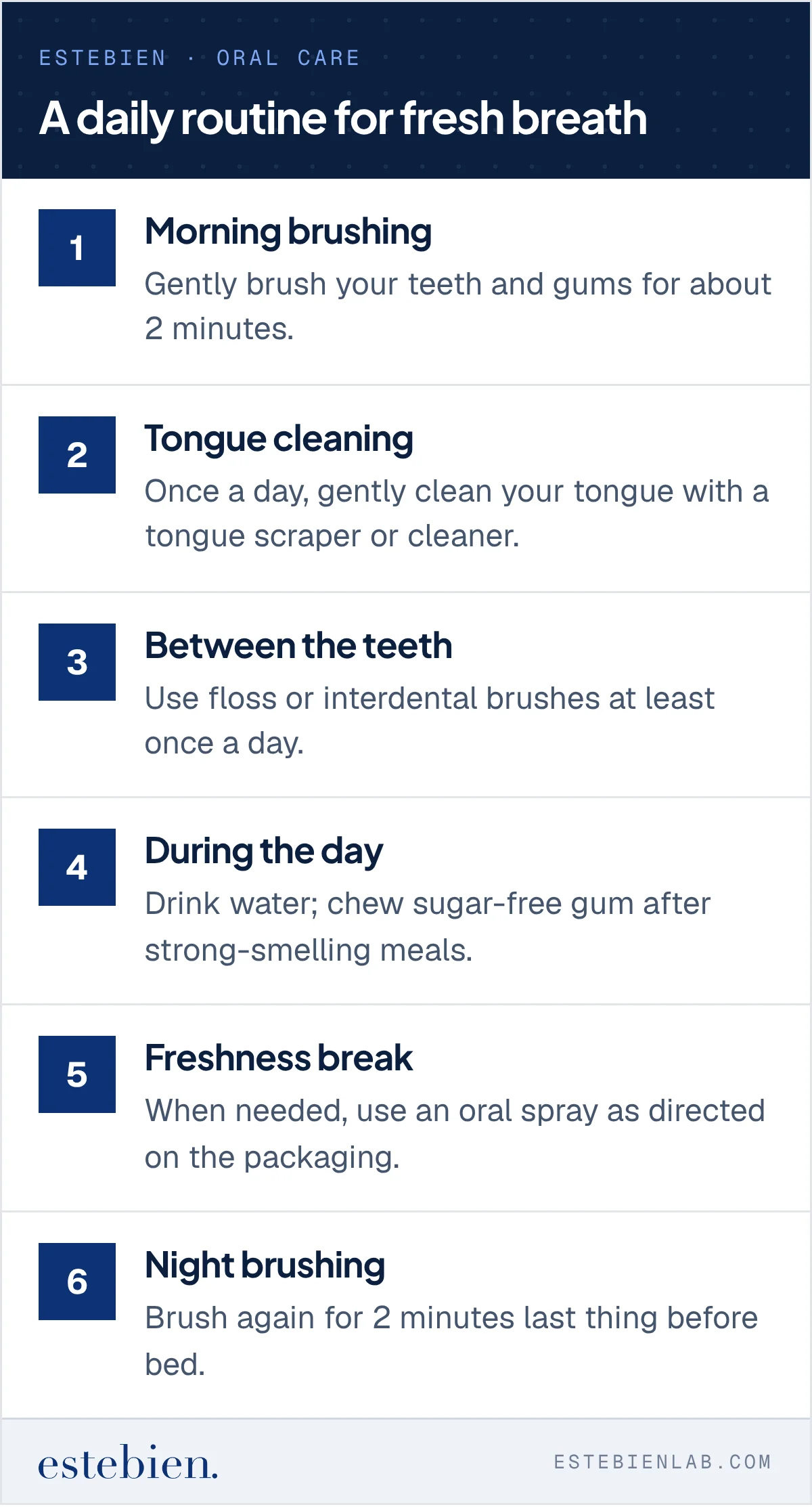
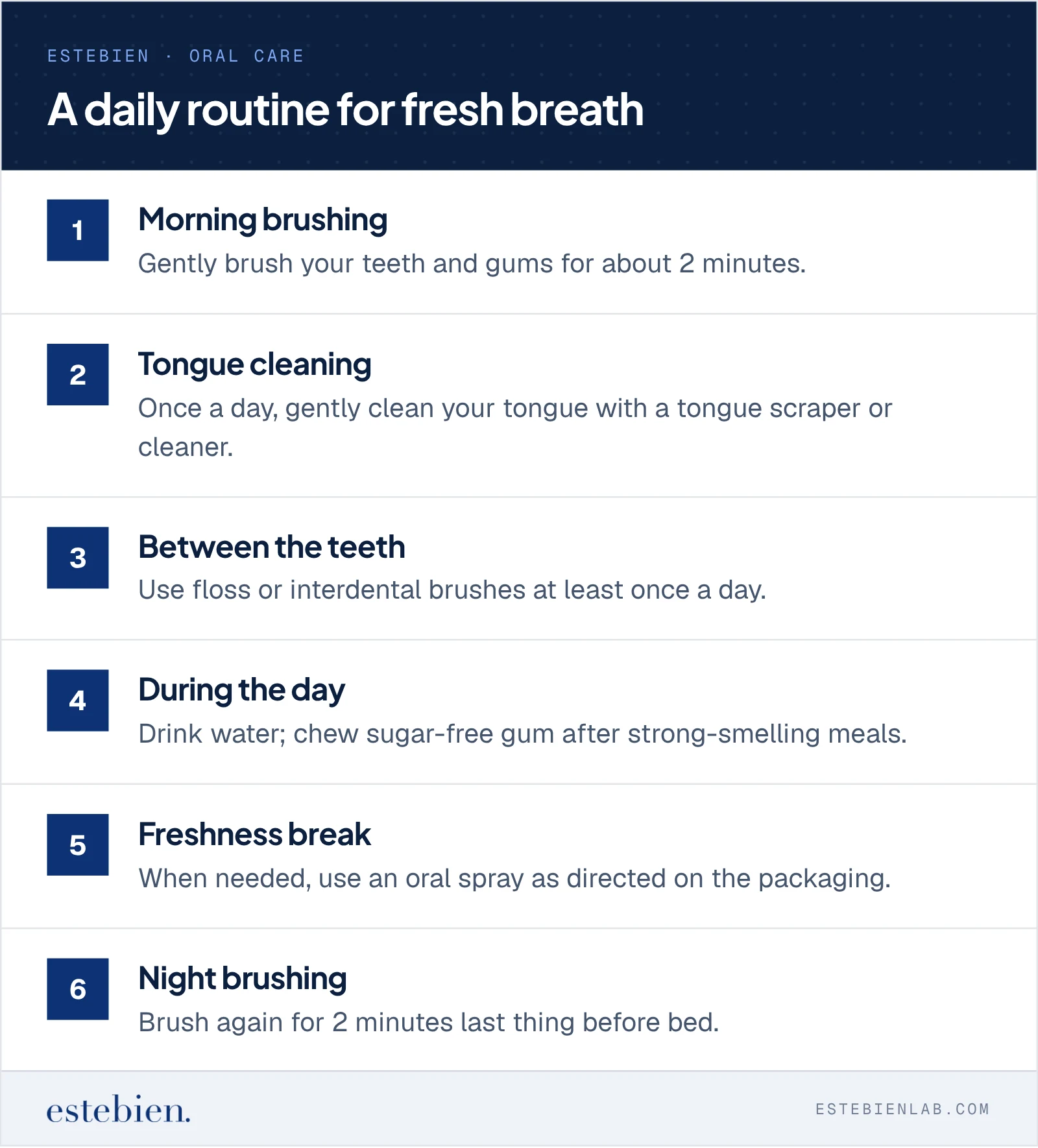
According to the NHS, the best way to avoid bad breath is to keep your teeth, tongue and mouth clean. That takes a few simple daily steps, not a single product: gently brush your teeth and gums at least twice a day for 2 minutes, use a fluoride toothpaste, gently clean your tongue once a day with a tongue scraper or cleaner, and clean between your teeth with floss or interdental brushes at least once a day. For dentures, the NHS advice is to keep them clean and take them out at night.
A practical way to spread these steps across the day could look like this.
If you are unsure of your technique, our article on how to brush your teeth properly covers timing, movement and brush choice. For the morning and evening steps in one flow, see the daily oral care routine.
What should you do, and what should you avoid?
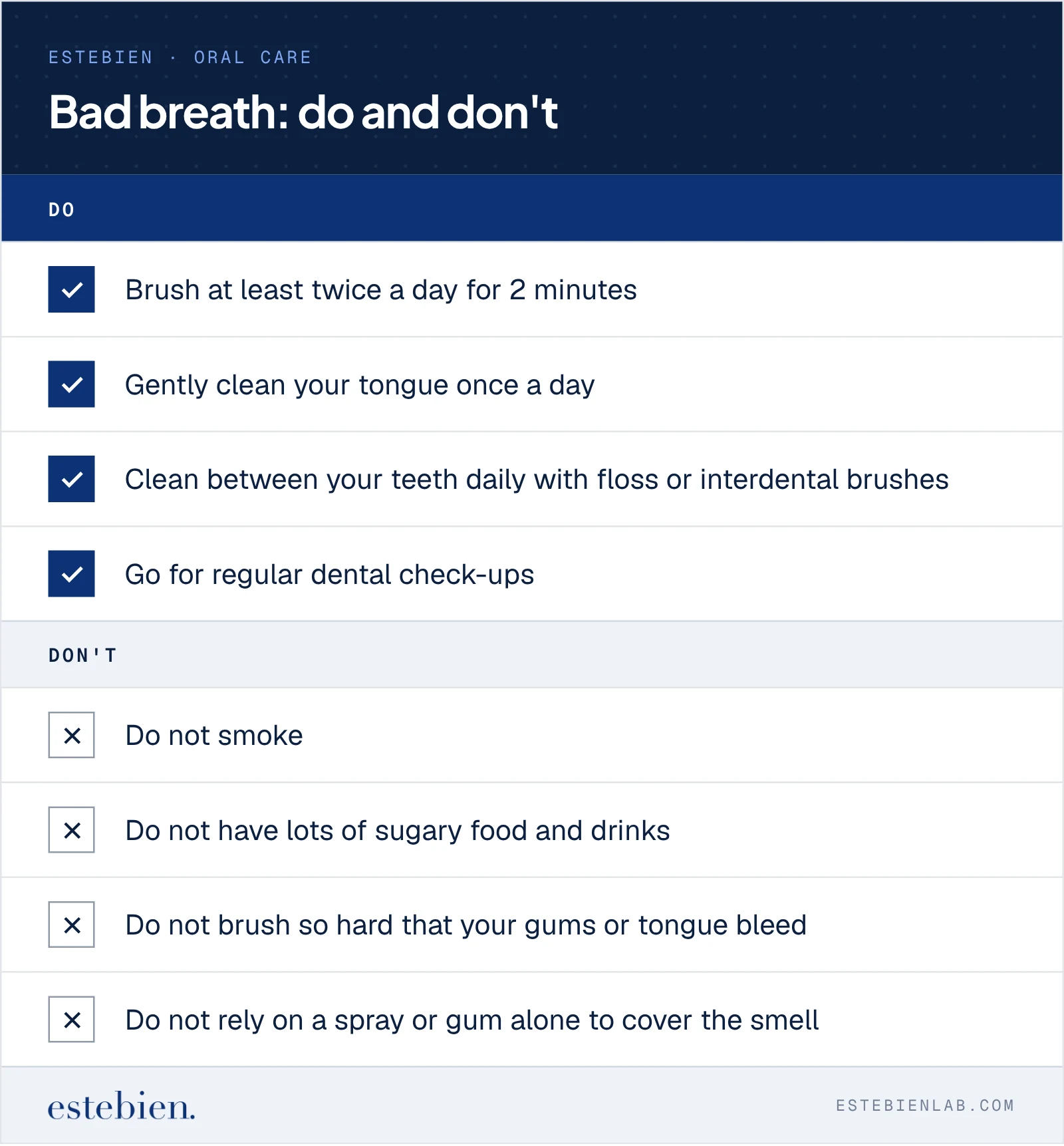
On the same page the NHS also lists what to avoid: smoking, drinking too much alcohol, having lots of sugary food and drinks, and brushing so hard that your gums or tongue bleed. The list below shows what to do and what to avoid side by side.
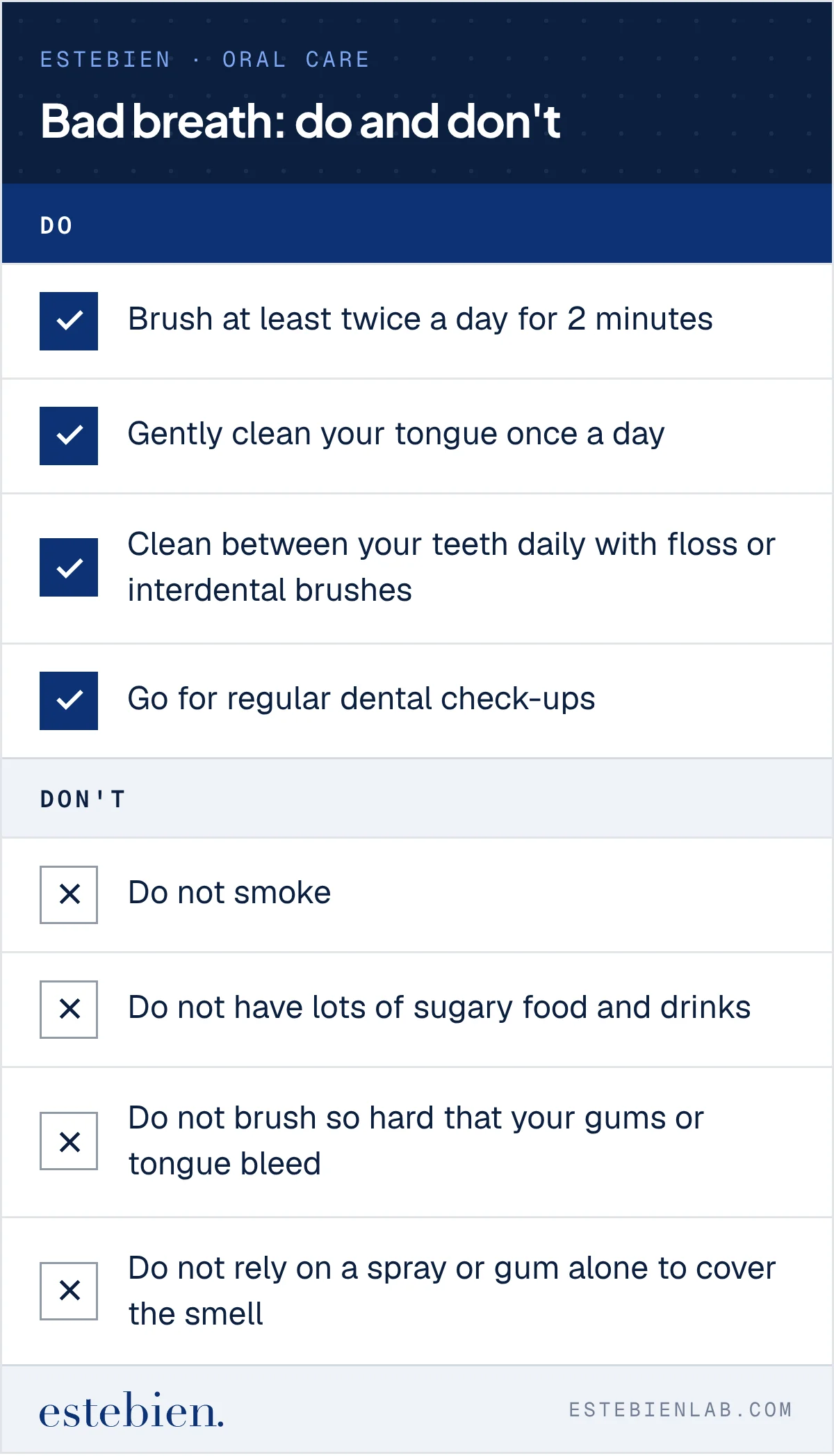
The last item is our own addition and sums up this article: covering a smell is not the same as removing its cause. Gum, mints or a spray give freshness during the day; if the source sits between the teeth, on the tongue or at the gum line, brush and floss do the real work.
When is an oral spray useful?
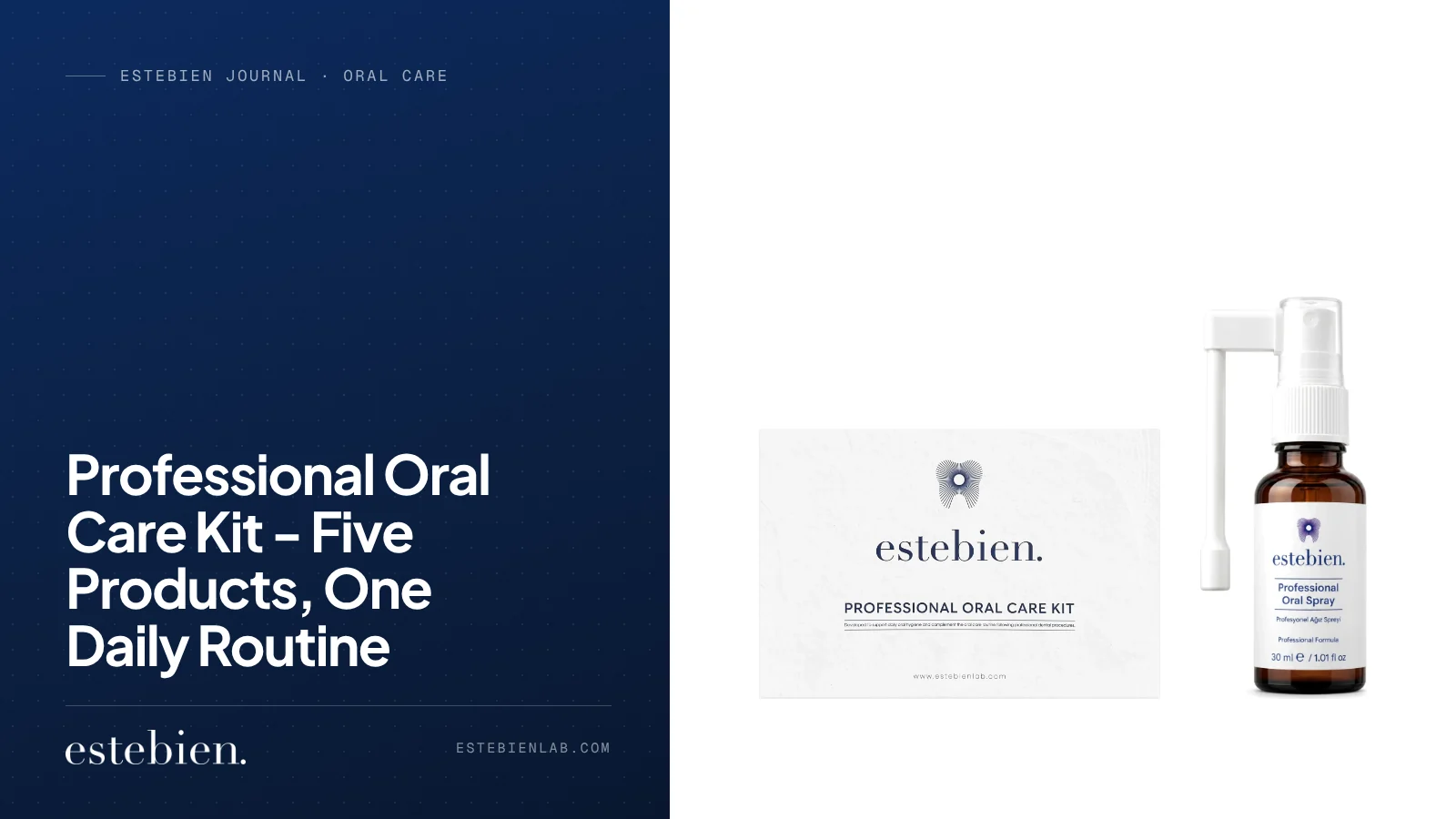
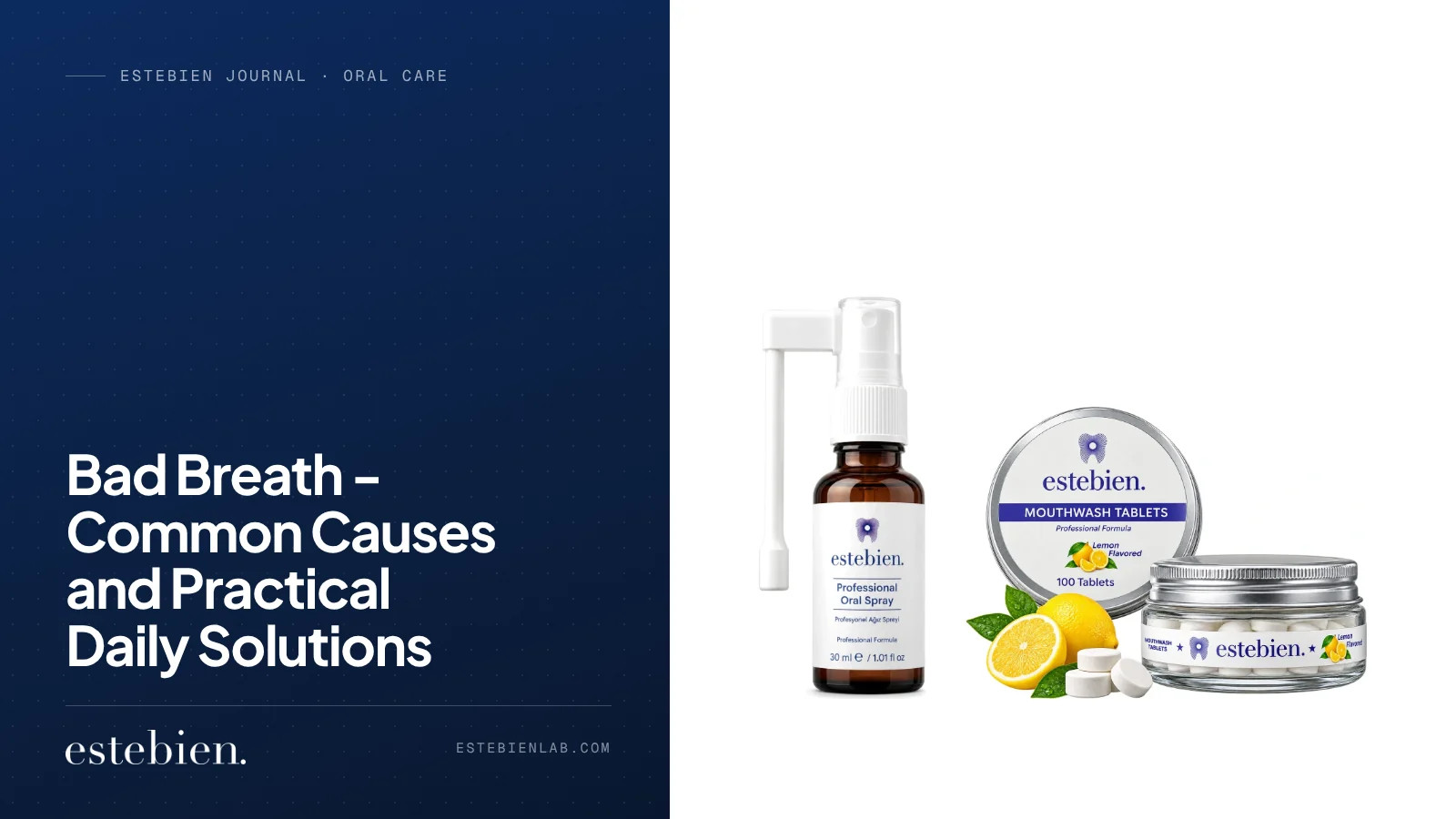
Before a meeting, after a meal or on the road, when brushing is not possible, what you usually need is quick freshness. Estebien Professional Oral Spray is designed for exactly that: a mint-fresh oral spray with a professional formula, made for fresh breath throughout the day. Its 30 ml amber glass bottle travels in a bag, and the long spray nozzle makes it practical to use.
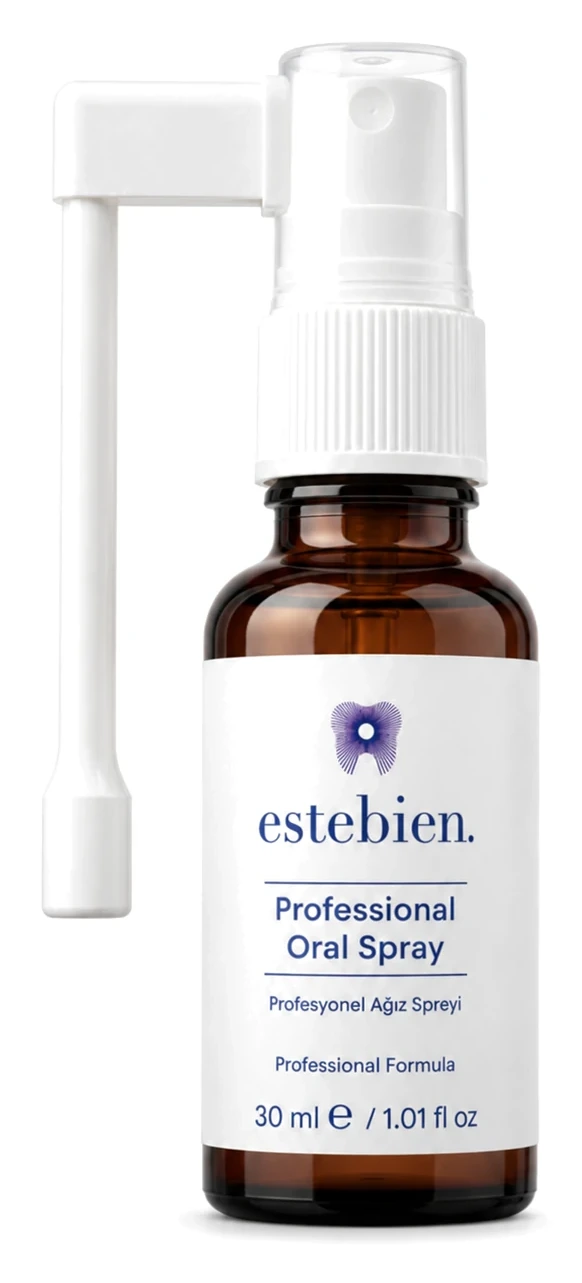
The directions are short: point the nozzle into the mouth and spray, and follow the packaging for the amount and frequency of use. Avoid contact with the eyes and keep the product out of reach of children. The full ingredient list and warnings are on the pack. To be clear: an oral spray is a freshness product. It does not replace brushing or cleaning between the teeth, and it does not solve a tooth or gum problem that may lie behind the smell.
Estebien Professional Oral Spray 30 mlA professional oral spray with natural mint freshness for fresh breath, with a long nozzle for practical use.View product How much does mouthwash help with bad breath?
The ADA notes that mouthwashes can neutralise or temporarily mask bad breath, but that this is only a temporary solution: the smell returns unless food residue is removed with a brush and floss. The NHS guide to keeping your teeth clean adds that mouthwash should not be used straight after brushing but at a different time of day, for example after lunch.
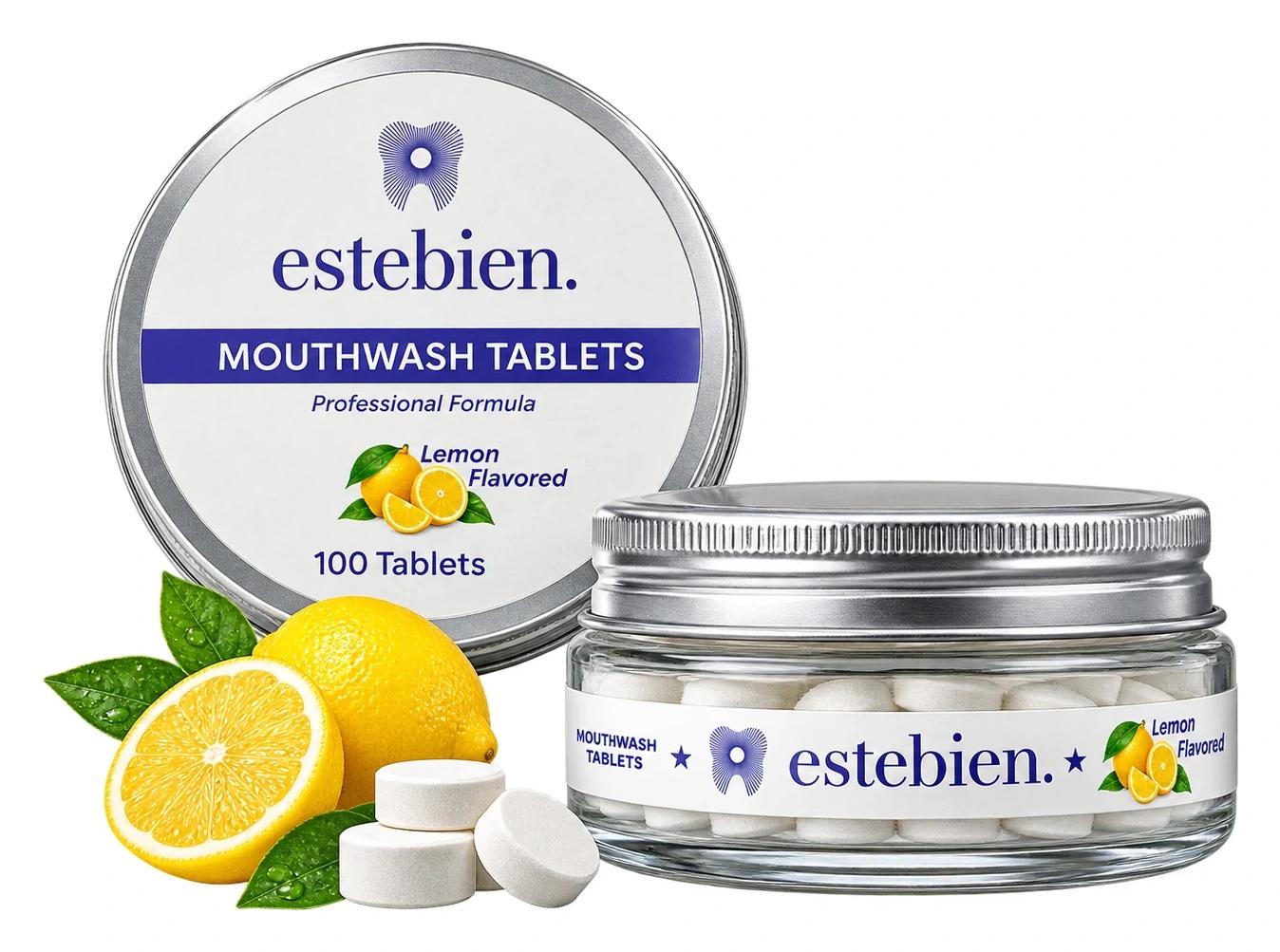
For those who would rather not carry a bottle, Estebien Mouthwash Tablets are mouthwash in tablet form: lemon flavoured, one tablet per dose, sugar free, alcohol free and paraben free. According to the product description they leave long-lasting fresh breath. For how to use them, follow the pack directions. Our guide to mouthwash tablets explains how tablets differ from liquid mouthwash.
How does a dry mouth affect breath?
Saliva is a natural cleanser that washes the mouth around the clock. According to the ADA, when there is not enough of it the mouth is not cleaned as much as it should be; dry mouth can be caused by certain medications, salivary gland problems or simply breathing through the mouth. To keep saliva flowing, the ADA suggests foods that need a lot of chewing, such as carrots or apples, and sugar-free gum. Drinking water regularly during the day is also the simplest way to keep the mouth moist.
When should you see a dentist?
Home care has its limits. According to the ADA, bad breath that will not go away, or a constant bad taste in the mouth, can be a warning sign of advanced gum disease. If the dentist finds your mouth healthy, you may be referred to your doctor, because sinus conditions, gastric reflux, diabetes, and liver or kidney disease can also cause the smell. We cover the gum side separately in our article on gum health.
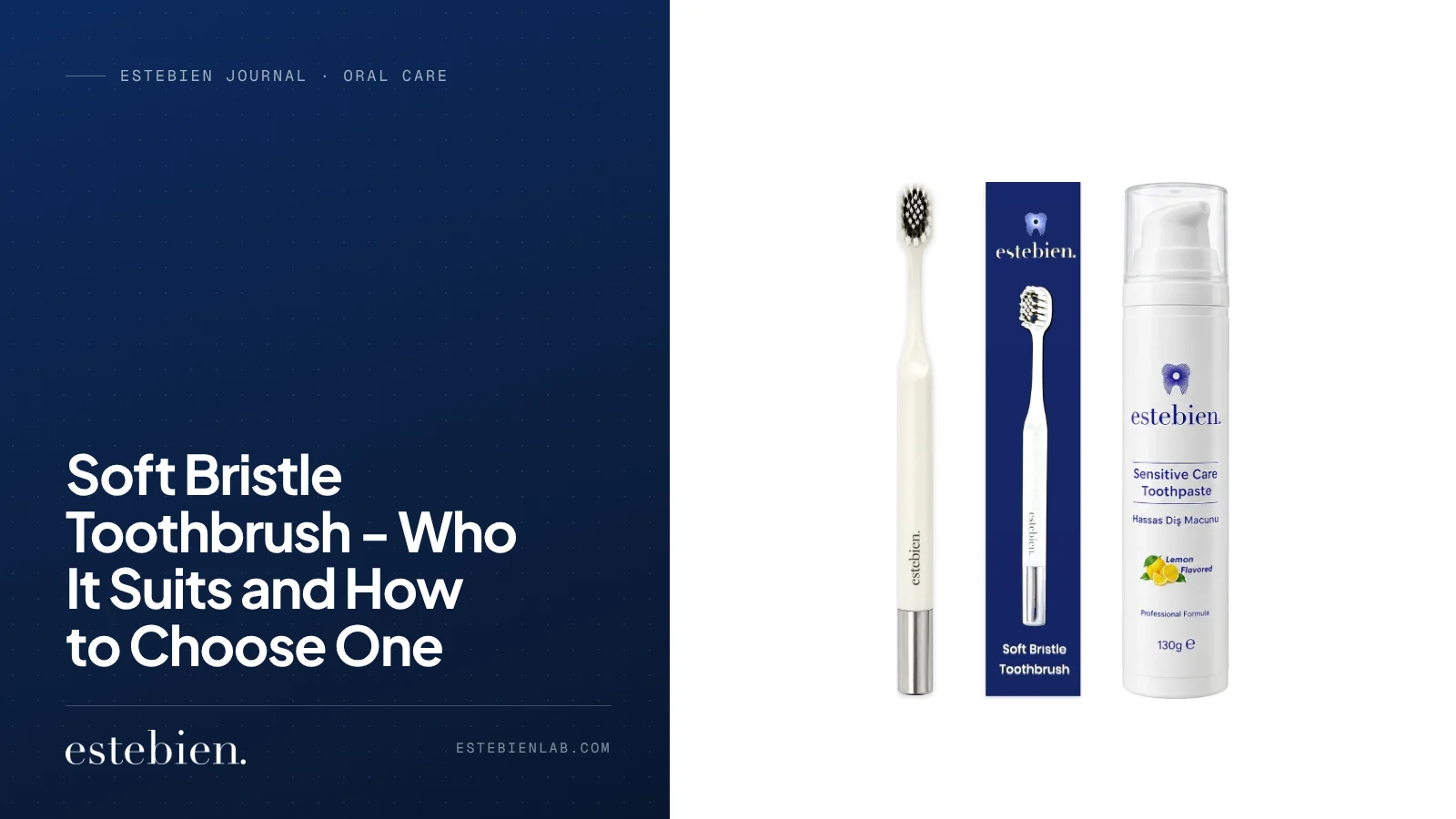
To set up a routine in one go, the toothpaste, brush, oral spray and mouthwash tablets come together in the Estebien Professional Oral Care Kit; to see the products one by one, browse the oral care category.
Frequently Asked Questions
- Can bad breath come from the stomach?
- Acid reflux is among the possible causes listed by the NHS and the ADA. Even so, causes inside the mouth should be assessed by a dentist first; if your mouth is healthy, the dentist may refer you to your doctor.
- Does an oral spray solve bad breath permanently?
- No. An oral spray is a product for freshness during the day; it does not remove the cause of the smell. A lasting solution comes from regular oral care and, where needed, a dental examination.
- How many times a day can I use Estebien Professional Oral Spray?
- Follow the directions on the product packaging for the amount and frequency of use. You point the nozzle into the mouth and spray.
- Is cleaning the tongue really necessary?
- The NHS recommends gently cleaning your tongue once a day with a tongue scraper or cleaner to help with bad breath. Avoid cleaning so hard that your tongue bleeds.
- Does chewing gum help with bad breath?
- The NHS suggests sugar-free gum or mints after strong-smelling food and drink, and the ADA notes that sugar-free gum helps keep saliva flowing. Gum does not replace brushing.
Sources
- Bad breathNHS
- Bad Breath: 6 Causes (and 6 Solutions)American Dental Association (MouthHealthy)
- How to keep your teeth cleanNHS
This article is for general information only and is not a substitute for medical advice. For decisions about your health, consult your doctor or dentist.