What Causes Hair Loss - Most Common Causes in Women and Men
How much daily shedding is normal, what most often causes hair loss in women and men, how a doctor finds the cause and when to see one, from the medical sources we read.
- Reading time
- 11 min read
- Author
- Estebien Editorial Team
In short
- Losing 50 to 100 hairs a day is normal; hair loss happens when new hair does not replace the hair that has fallen out.
- The most common cause worldwide is hereditary hair loss: in women it starts with overall thinning or a widening part, in men with a receding hairline or a bald spot on top.
- Shedding that starts a few months after an illness, childbirth, an operation, heavy stress or rapid weight loss is usually temporary and stops once the trigger has gone.
- See a doctor about sudden, patchy or clearly heavier hair loss than usual; without an accurate diagnosis, treatment is often ineffective.
- Shampoo and spray are cosmetic care products and a hair vitamin is a food supplement, not a medicine; none of them takes the place of a diagnosis or of treatment.
The most common cause of hair loss worldwide is hereditary hair loss, in both women and men. Other common causes are temporary shedding a few months after a feverish illness, childbirth, heavy stress or rapid weight loss, deficiencies such as low iron, thyroid disease, some medicines, hairstyles that pull, scalp conditions and alopecia areata. This guide explains which sign may point to which cause, how a doctor finds the cause and when to see one, based on the medical sources we read.
How many hairs is it normal to lose in a day?
According to the NHS page on hair loss, we can lose 50 to 100 hairs a day, often without noticing. The Mayo Clinic explains why: new hair grows in at the same time. Hair loss happens when new hair does not replace the hair that has fallen out.
The American Academy of Dermatology (AAD) separates hair shedding from hair loss. Shedding significantly more than this every day is excessive shedding, which often stops on its own. When something stops the hair from growing, it is hair loss, and the hair will not grow until the cause stops. Some people have both.
What are the most common causes of hair loss?
According to the AAD's list of causes, the cause determines whether hair falls out gradually or abruptly, whether it can grow back on its own and whether immediate care is needed to prevent permanent loss. The table sums up the most common ones; it is not a diagnostic tool, and one person can have more than one.
| Cause | How it typically looks | Course according to the sources |
|---|---|---|
| Hereditary hair loss | Overall thinning or a widening part in women; a receding hairline or bald spot in men. | Permanent; treatment works better the earlier it starts. |
| Temporary shedding (telogen effluvium) | Heavier shedding a few months after illness, childbirth, an operation or stress. | Stops once the trigger has gone; fullness then usually returns within 6 to 9 months. |
| Nutritional deficiency | Noticeable loss when biotin, iron, protein or zinc is too low. | Hair can grow back once the body gets enough. |
| Thyroid disease | Thinning; sometimes clumps come out when brushing. | Treating the thyroid disease can reverse it. |
| Medicines and cancer treatment | A side effect of some medicines; heavy loss within weeks of chemotherapy. | Hair usually starts to grow back within months of finishing treatment. |
| Hairstyles that pull | Loss where hair is often pulled back tightly. | Can be permanent; changing the habit can prevent it. |
| Alopecia areata | One or more circular bald patches that appear suddenly. | Hair may grow back on its own; if not, treatment may help. |
| Scalp infection | Scaly, sometimes inflamed areas and broken hairs. | Hair tends to grow back once the infection clears. |
What does hereditary hair loss look like in women and men?
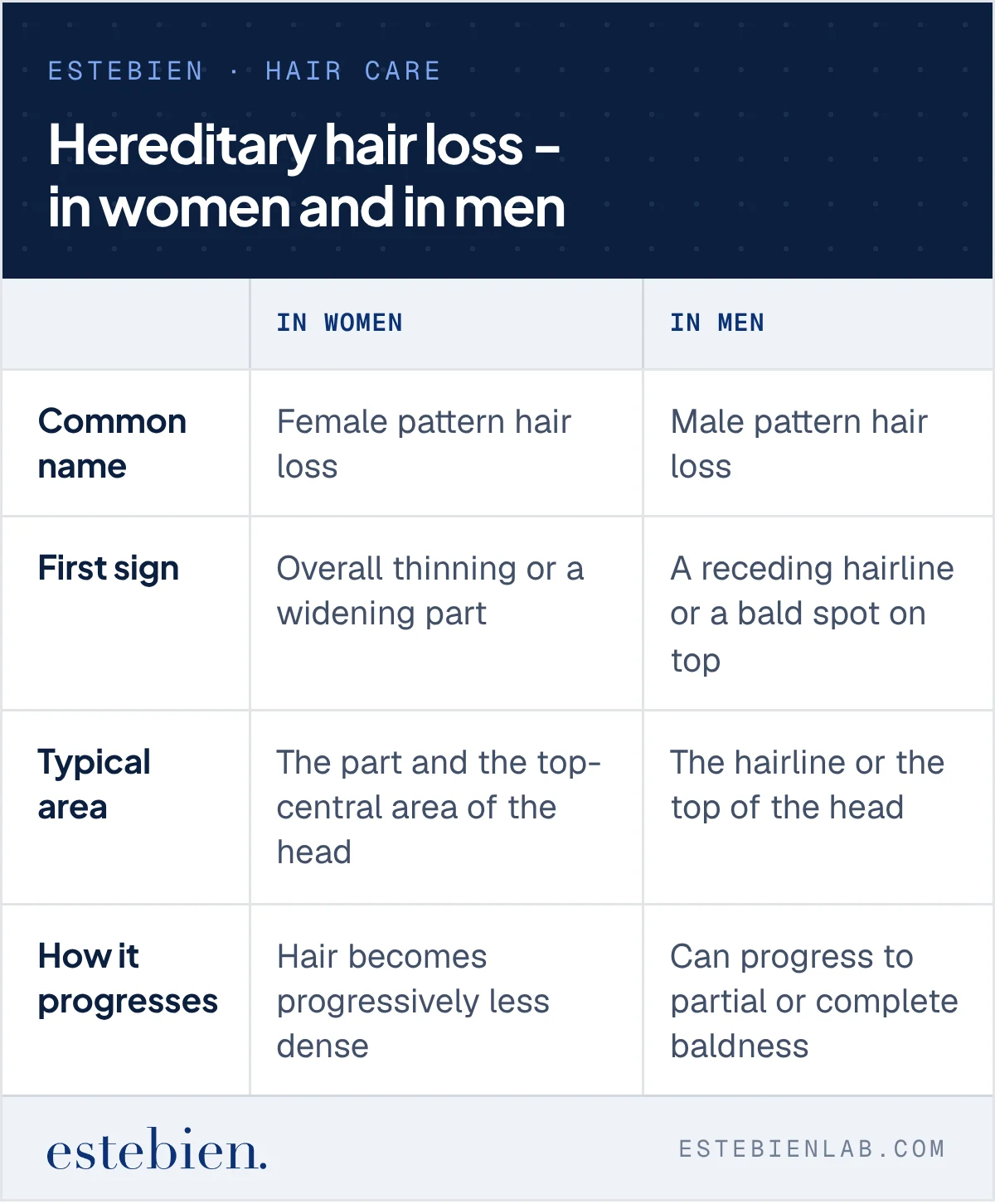
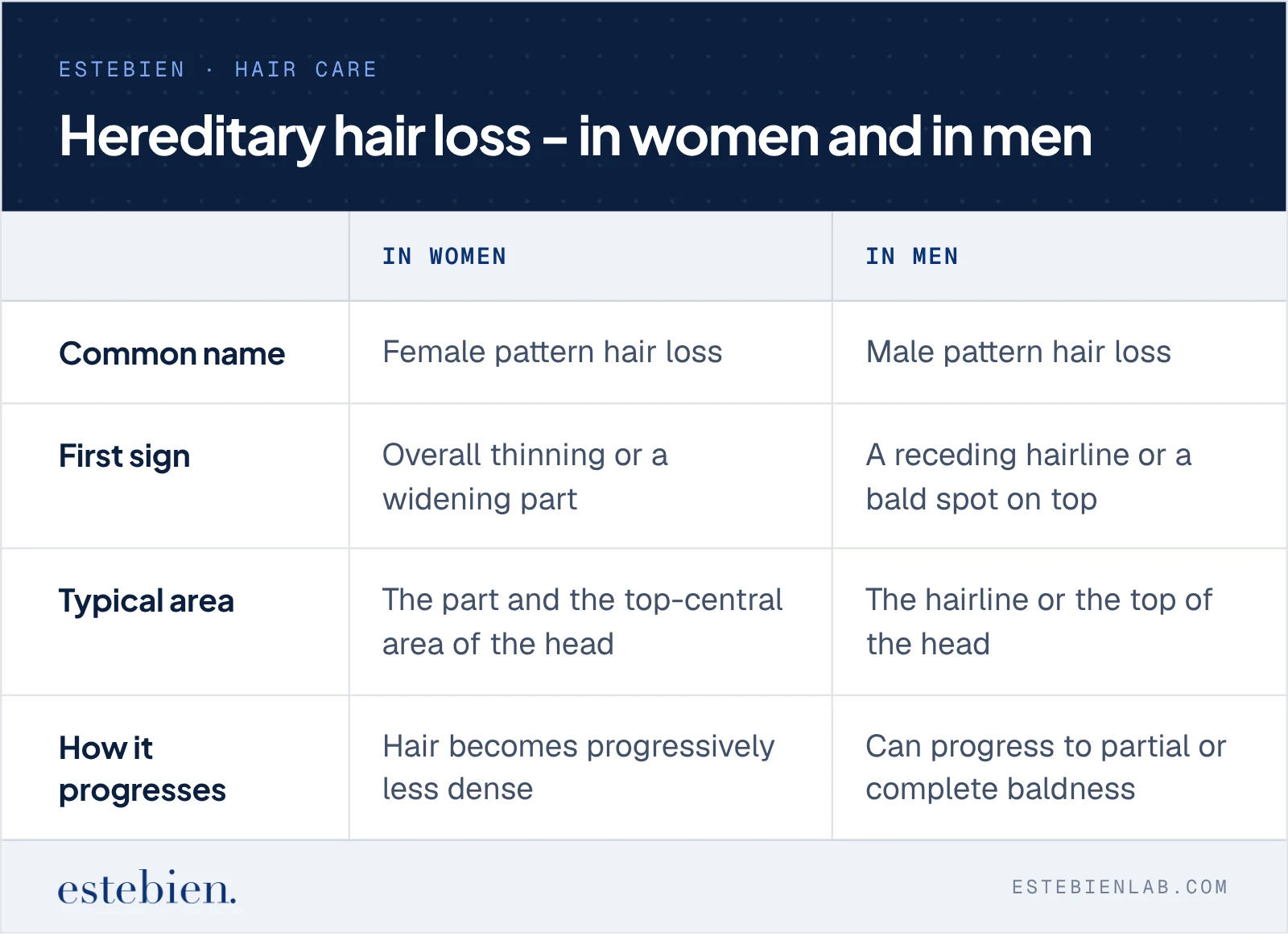
According to the AAD, hereditary hair loss is the most common cause of hair loss worldwide: male pattern hair loss in men, female pattern hair loss in women, medically androgenetic alopecia. Inherited genes make the hair follicles shrink and eventually stop growing hair. This can begin as early as the teens but usually starts later in life.
In women the first sign is usually overall thinning or a widening part; in men it is often a receding hairline or a bald spot on top. The Mayo Clinic notes that this type usually comes on gradually, in predictable patterns, and is not preventable.
The NHS writes that this type is permanent and usually runs in the family. According to the AAD, treatment recommended by a doctor can help slow the loss and works better the earlier it starts; the NHS adds that no treatment is 100% effective. If you are considering a hair transplant, one of the options, see our post hair transplant care guide.
Why does hair shed after illness, stress, childbirth or rapid weight loss?
The medical term is telogen effluvium. According to the AAD it is common in people who have:
- Lost 20 pounds (about 9 kg) or more
- Given birth
- Been under heavy stress, such as a divorce or job loss
- Had a high fever or a feverish illness
- Had an operation
- Stopped taking birth-control pills
The timing is what misleads: most people notice the shedding a few months after the event and do not connect the two. In the AAD's example, a new mother sees it about two months after giving birth and it usually peaks at about four months. This is normal and temporary.
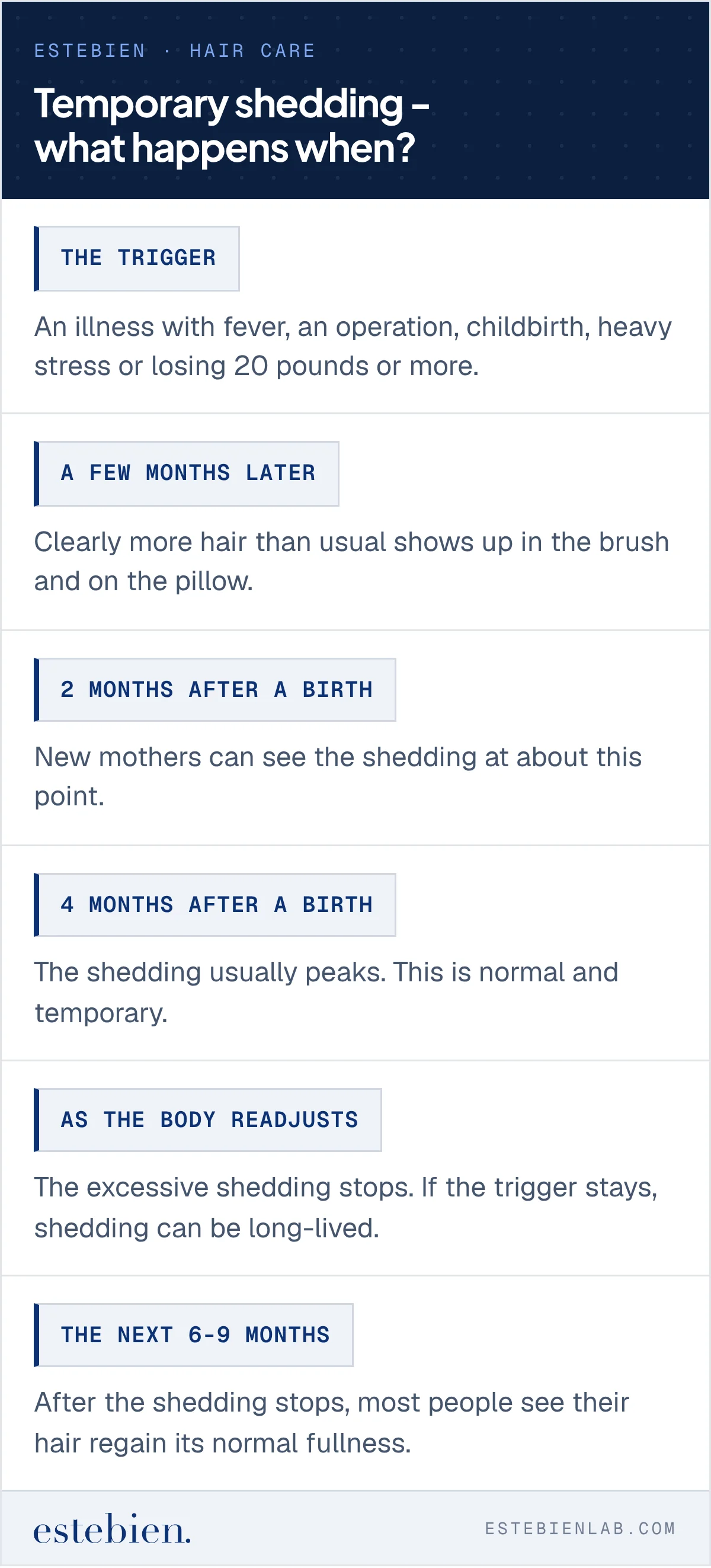
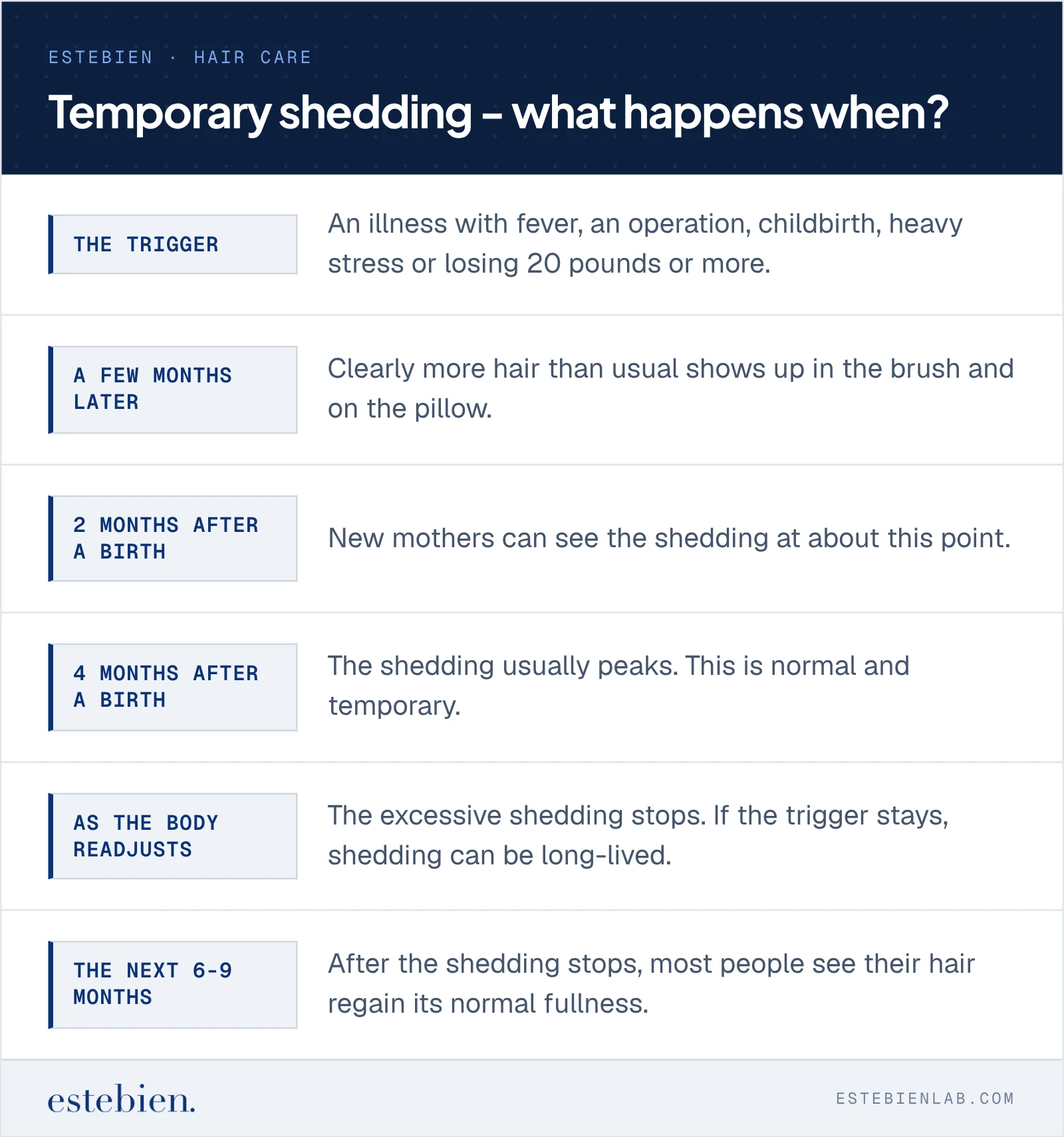
As the body readjusts, the excessive shedding stops, and most people then see their hair regain its normal fullness within 6 to 9 months. If the trigger stays, for example constant heavy stress, the shedding can be long-lived. The NHS also lists illness, stress, weight loss and iron deficiency among the causes of temporary hair loss.
How do deficiencies, thyroid disease and medicines affect hair?
Too little iron, zinc, protein or biotin
According to the AAD, people who do not get enough biotin, iron, protein or zinc can have noticeable hair loss. The key word is deficiency: on its diagnosis and treatment page, the AAD says biotin, iron or zinc should be taken only when a blood test shows a deficiency, and that a supplement can be harmful when levels are normal; too much iron, for example, can cause iron poisoning.
Thyroid disease and hormonal causes
A thyroid problem can lead to thinning hair; according to the AAD, treating the thyroid disease can reverse the hair loss. In women a hormonal imbalance is another cause: the AAD names polycystic ovary syndrome as a common source and adds that stopping some birth-control pills can cause a temporary imbalance. The Mayo Clinic lists pregnancy, childbirth and menopause under the same heading.
Medicines and cancer treatment
Hair loss is a possible side effect of some medicines; the Mayo Clinic's examples are certain drugs for cancer, arthritis, depression, heart problems, gout and high blood pressure. According to the AAD, chemotherapy or radiation to the head or neck can cause the loss of all or most hair within a few weeks, and hair usually starts to grow back within months of finishing treatment.
Can tight hairstyles and styling lead to hair loss?
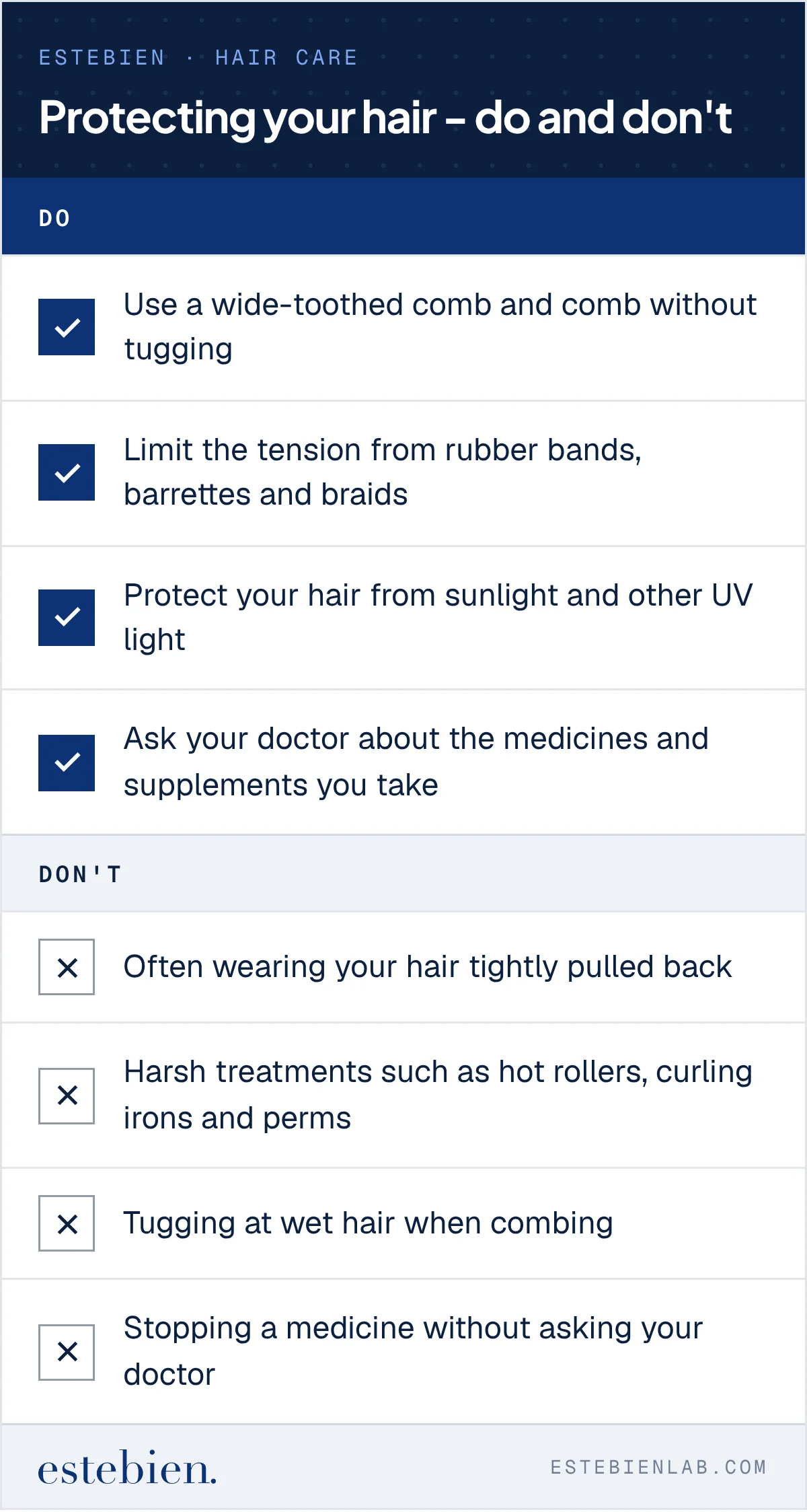
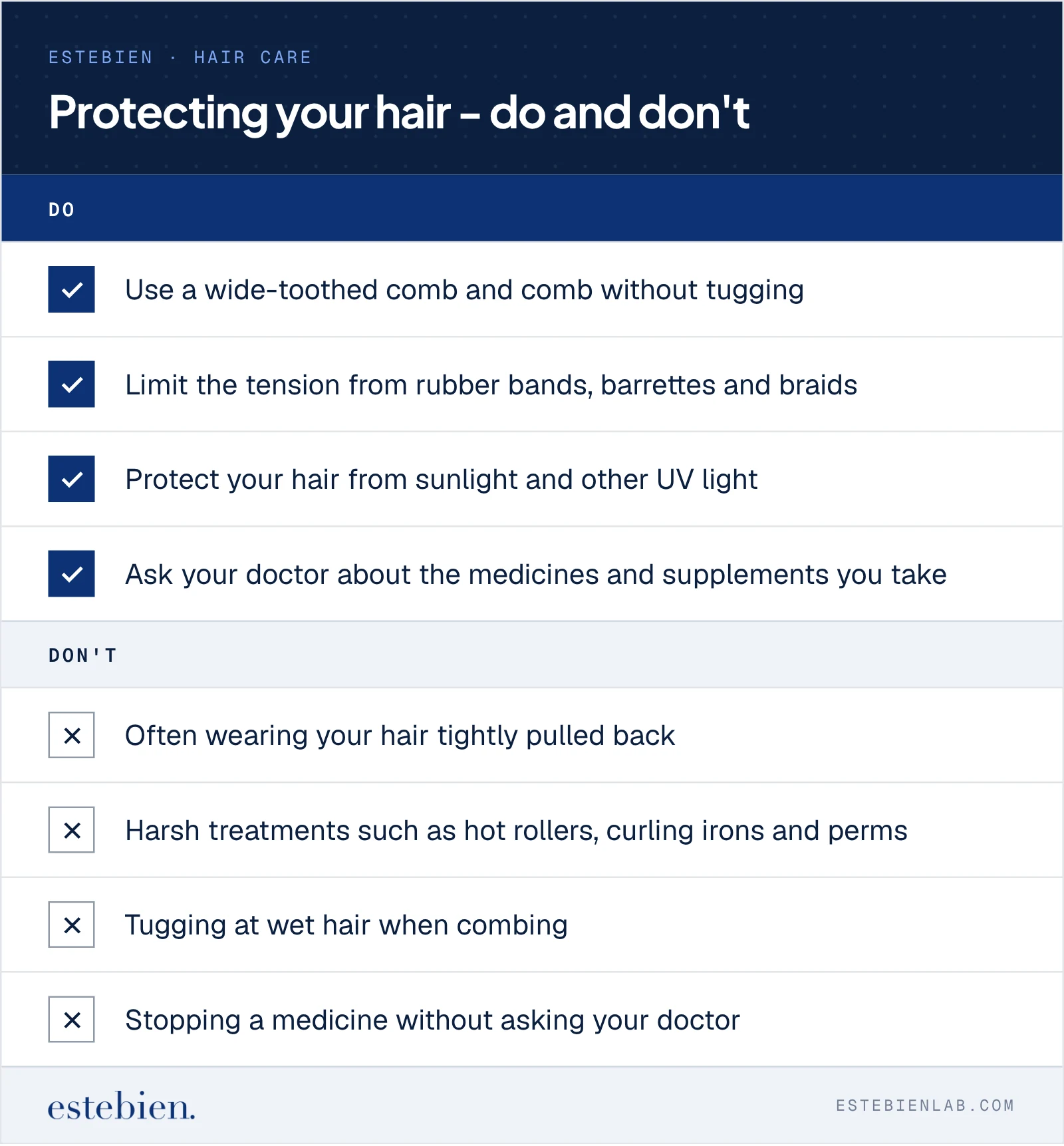
Yes. If you often wear your hair tightly pulled back, the continual pulling can, according to the AAD, lead to permanent hair loss, called traction alopecia. Colouring, perming or relaxing can also cause damage that leads to hair loss over time. Hair cannot grow from a damaged follicle, so the aim is to change the habit before the loss becomes permanent.
The Mayo Clinic's tips for preventable types of hair loss are everyday habits: avoid tugging when you comb, especially wet hair, and use a wide-toothed comb; avoid harsh treatments such as hot rollers, curling irons, hot-oil treatments and permanents; limit the tension from bands, barrettes and braids. The same list includes protecting hair from sunlight.
How do alopecia areata and scalp conditions differ?
Alopecia areata, according to the AAD, develops when the immune system attacks the hair follicles. The Mayo Clinic writes that the loss is sudden and usually starts with one or more circular bald patches that may overlap; the skin may itch or hurt beforehand. The beard, eyebrows and eyelashes can be affected too. Hair may grow back on its own; if it does not, treatment may help.
Conditions of the scalp itself look different. The Mayo Clinic notes that patches of scaling that spread over the scalp are a sign of ringworm, sometimes with broken hair, redness and swelling. Psoriasis can also appear on the scalp and lead to hair loss. According to the AAD, in both cases hair tends to grow back once the problem clears. In scarring alopecia, where inflammation destroys hair follicles, a destroyed follicle cannot grow hair; catching it early can prevent further loss.
None of these is something a cosmetic product will sort out: itching, scaling or a bald patch calls for an examination first. Everyday cosmetic care of a healthy scalp is a separate subject, covered in our scalp care guide.
How does a doctor find the cause of hair loss?
According to the AAD, effective treatment begins with finding the cause, and a dermatologist starts by gathering information:
- Asks questions. How long you have had hair loss and whether it came on quickly both matter.
- Looks closely at your scalp, nails and any other area with hair loss.
- Tests the hair. Gently pulling on it shows how it is growing and whether it is prone to breaking.
- Orders tests if needed. If a disease, vitamin deficiency, hormone imbalance or infection is suspected, you may need a blood test or scalp biopsy.
Sometimes there is more than one cause: in the AAD's example, a woman who had a baby a few months ago may have obvious shedding together with early hereditary loss that is not yet obvious.
When should you see a doctor?
The NHS test is simple: see a GP if you are worried about your hair loss, and do so before thinking about going to a commercial hair clinic. The Mayo Clinic lists what should not wait.
The AAD gives the reasons for going early: the sooner treatment begins the better the outlook, some causes need immediate care to prevent permanent loss, and without an accurate diagnosis treatment is often ineffective.
Where do daily care products fit into this picture?
Everything so far has been about medical causes; this section is only about everyday care. Estebien products do not remove the cause of hair loss, do not treat any disease and do not take the place of a medical examination. Where the cause is medical, cosmetic care does not replace a diagnosis. Care products keep the scalp clean and support hair care; the details below come from the product pages.
| Product | What it is | According to its product page | Use |
|---|---|---|---|
| Anti Hair Loss Strengthening Shampoo | Cosmetic, rinse-off shampoo | Contains biotin, keratin and white lupin seed extract; supports healthy hair growth and helps form strong hair roots resistant to hair loss. | Massaged into wet hair with the fingertips, left on for a few minutes and rinsed; suitable for daily use. |
| Hair Strengthening Spray | Cosmetic, leave-in care spray | Contains panthenol, biotin, niacin and more than twenty plant extracts; helps repair the hair and scalp and supports stronger, more resilient and healthier hair strands. | Twice a day on a clean, dry scalp, 6 sprays between the hair strands; spread with the fingertips, not rinsed off. |
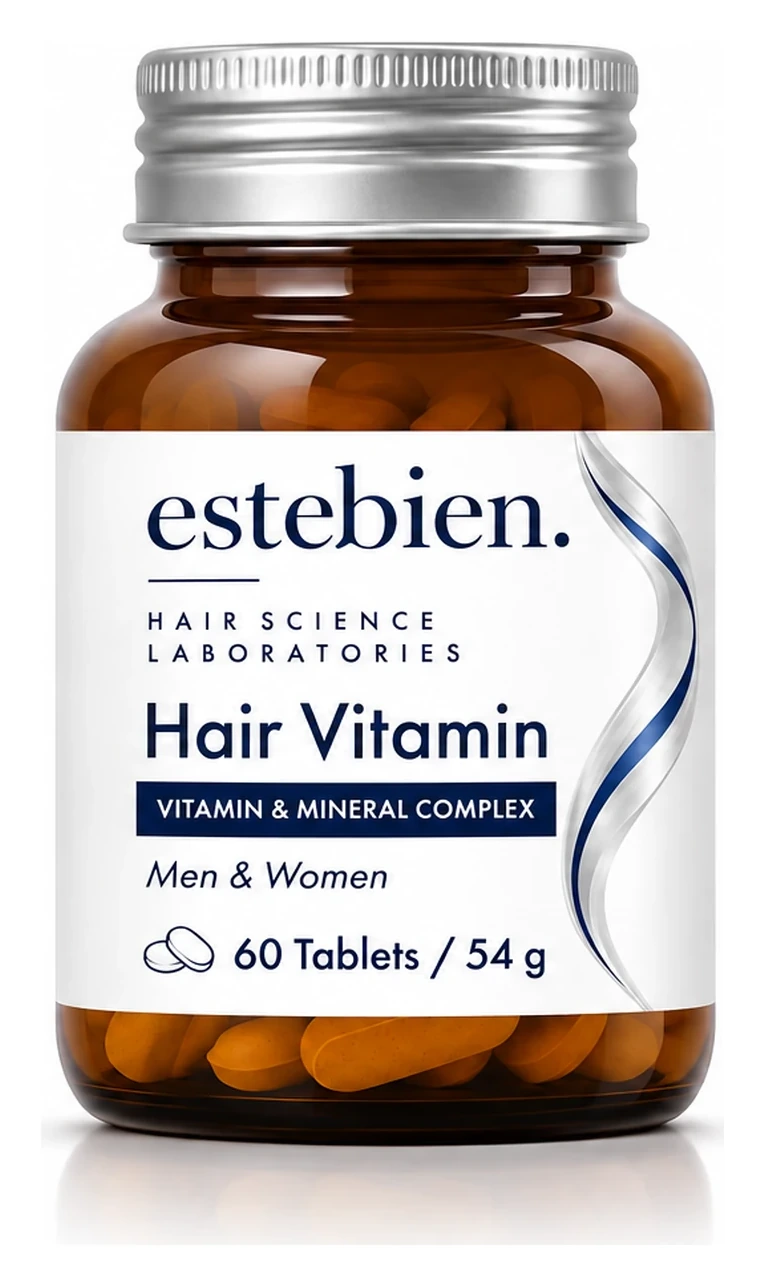
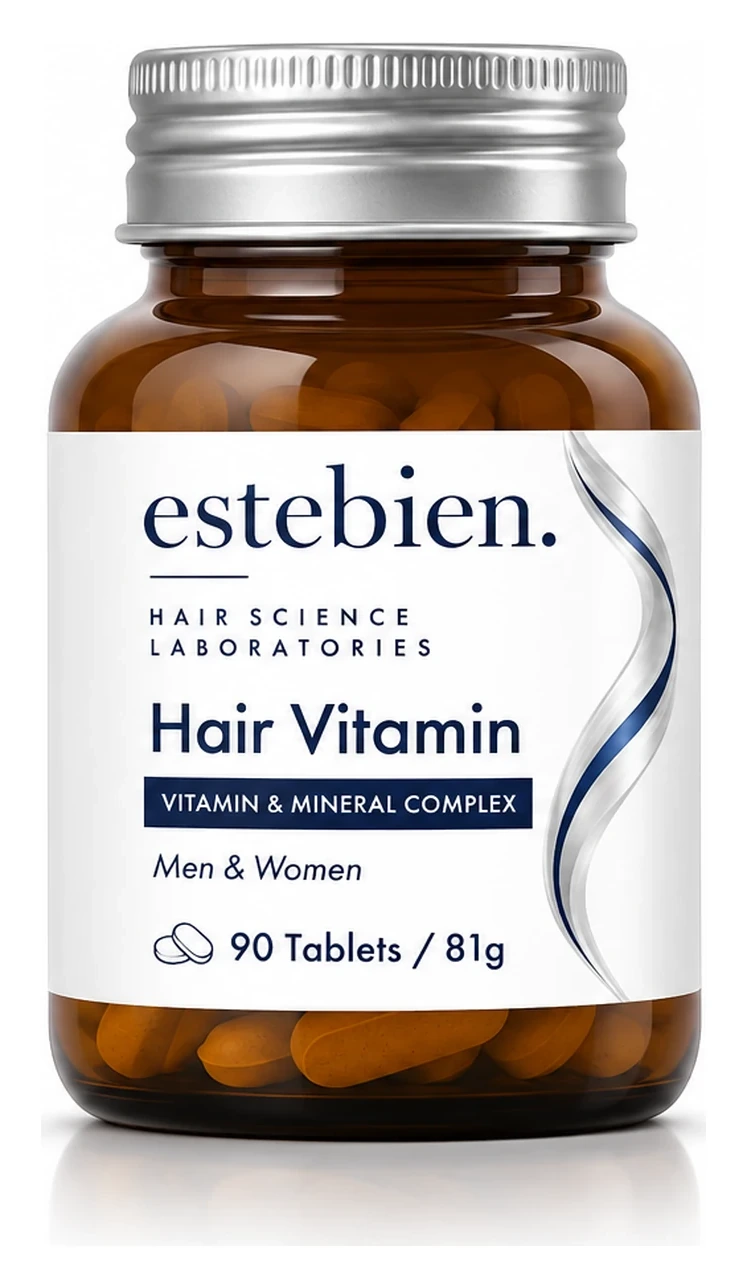
| Hair Vitamin 60 tablets and 90 tablets | Food supplement | Tablets with plant extracts, vitamins and minerals; cannot be used to prevent or treat diseases and do not replace a balanced diet. | 1 tablet a day for adults, preferably after a meal, with water. |
Care from the outside with shampoo and spray
The shampoo is the cleansing step, for women and men and all hair types. Choosing one and washing technique are covered in the anti hair loss shampoo guide; it is listed under shampoos.
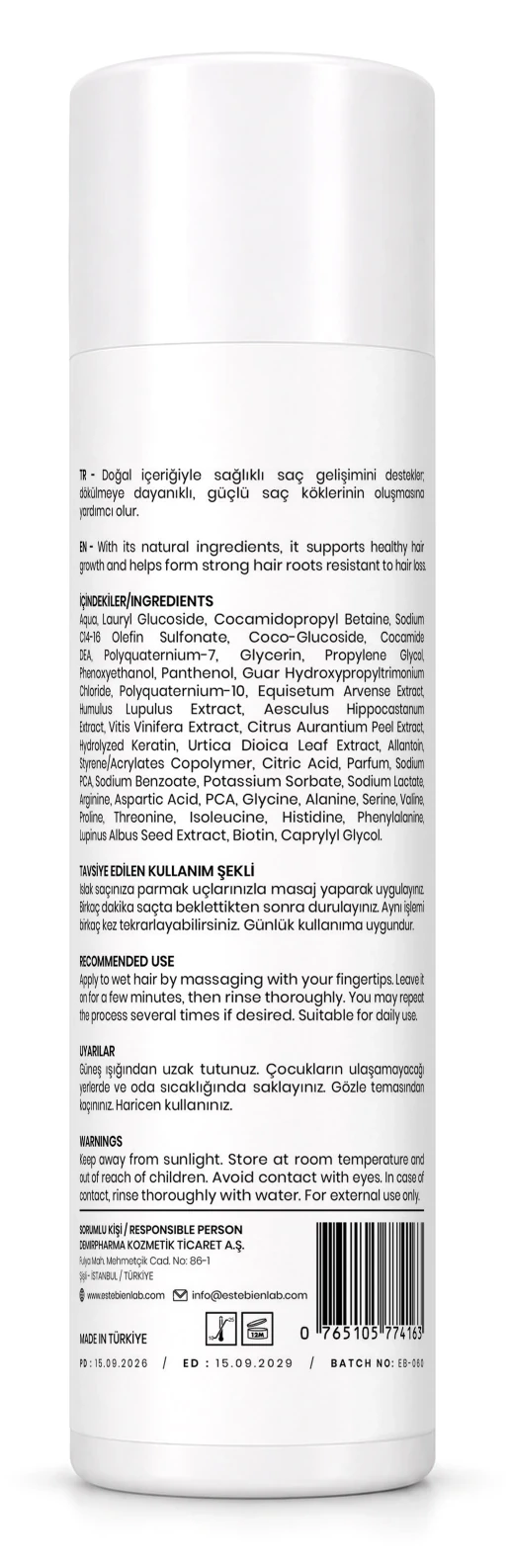
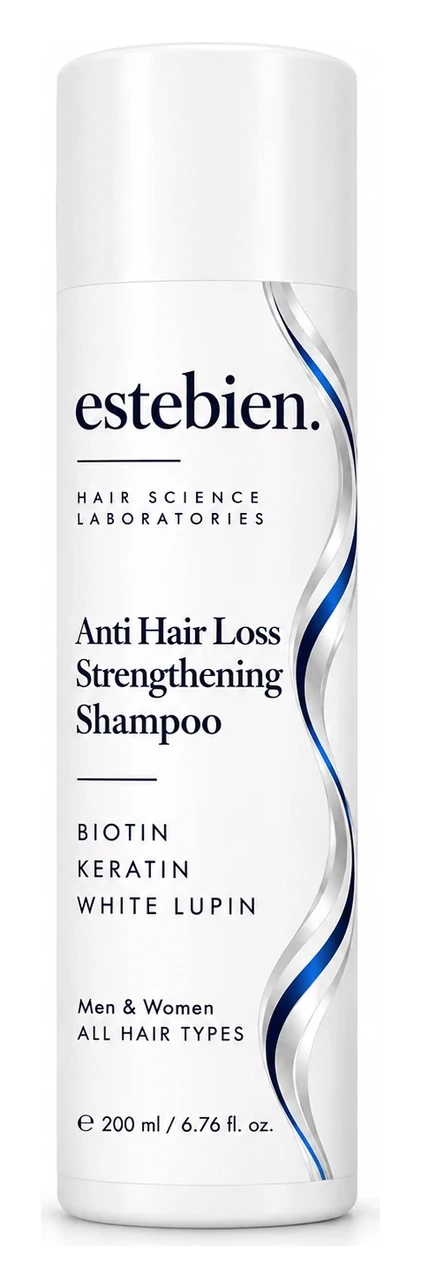 Estebien Anti Hair Loss Strengthening Shampoo 200 mlWith its natural ingredients, it supports healthy hair growth and helps form strong hair roots resistant to hair loss.View product
The spray is a leave-in hair and scalp care product that asks for regular use: two applications a day, 6 sprays each. For how it differs from a serum applied every fifteen days, see the hair serum and hair spray comparison; both are under serums. Both are for external use only and are used within 12 months of opening.
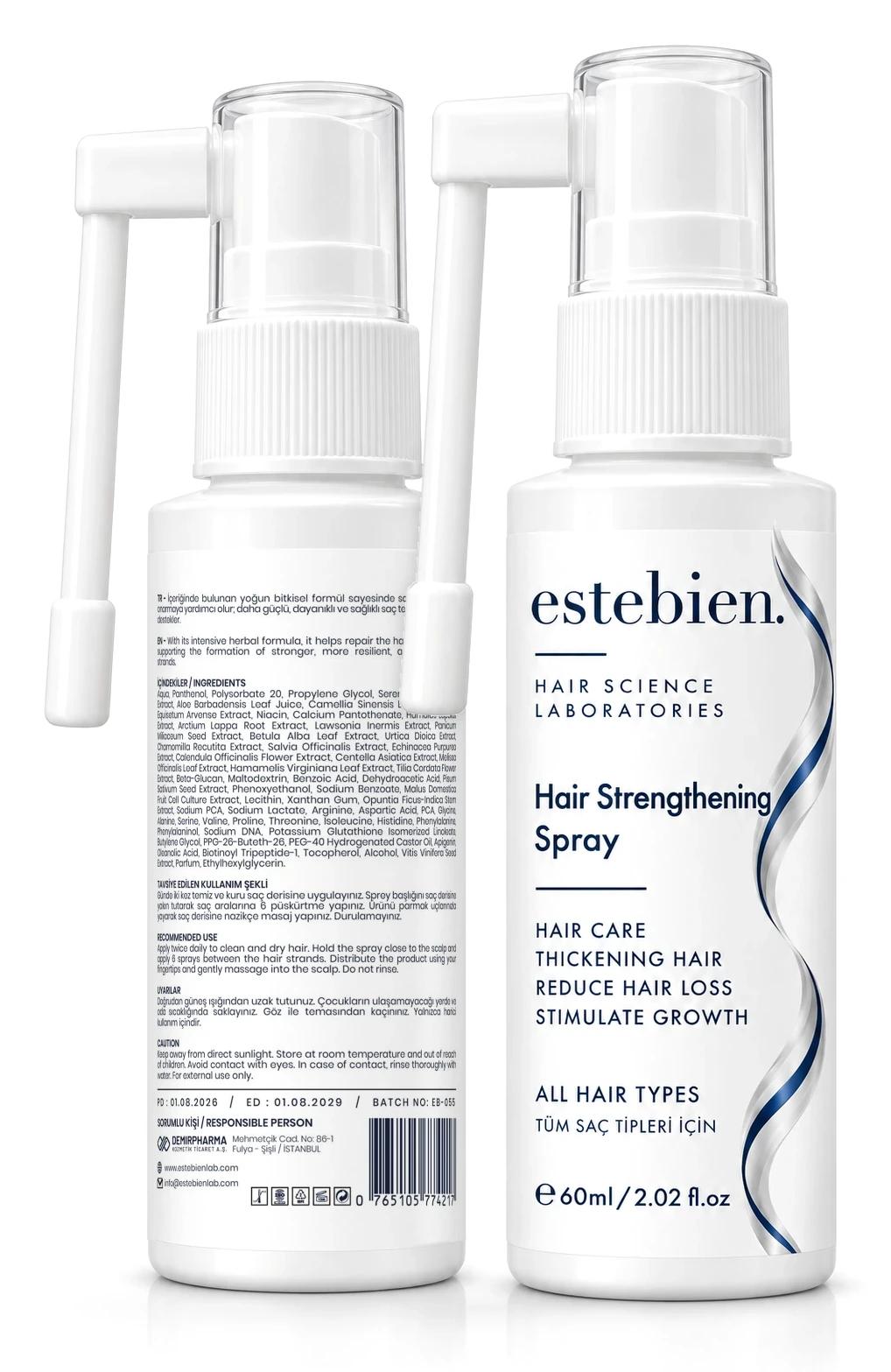
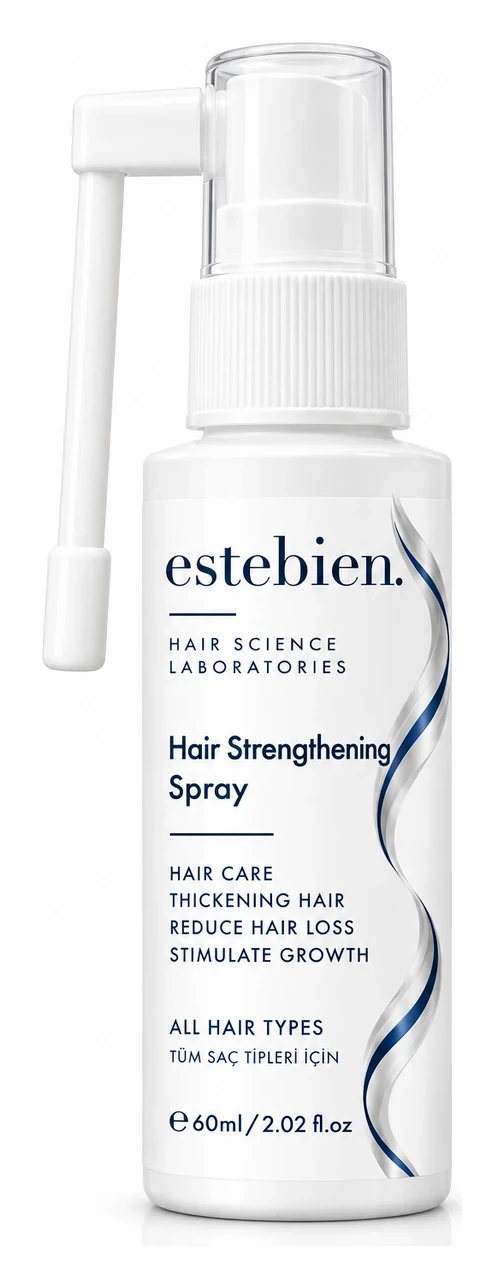 Estebien Hair Strengthening Spray 60 mlWith its intensive herbal formula, it helps repair the hair and scalp while supporting the formation of stronger, more resilient, and healthier hair strands.View product
A hair vitamin is a food supplement, not a medicine
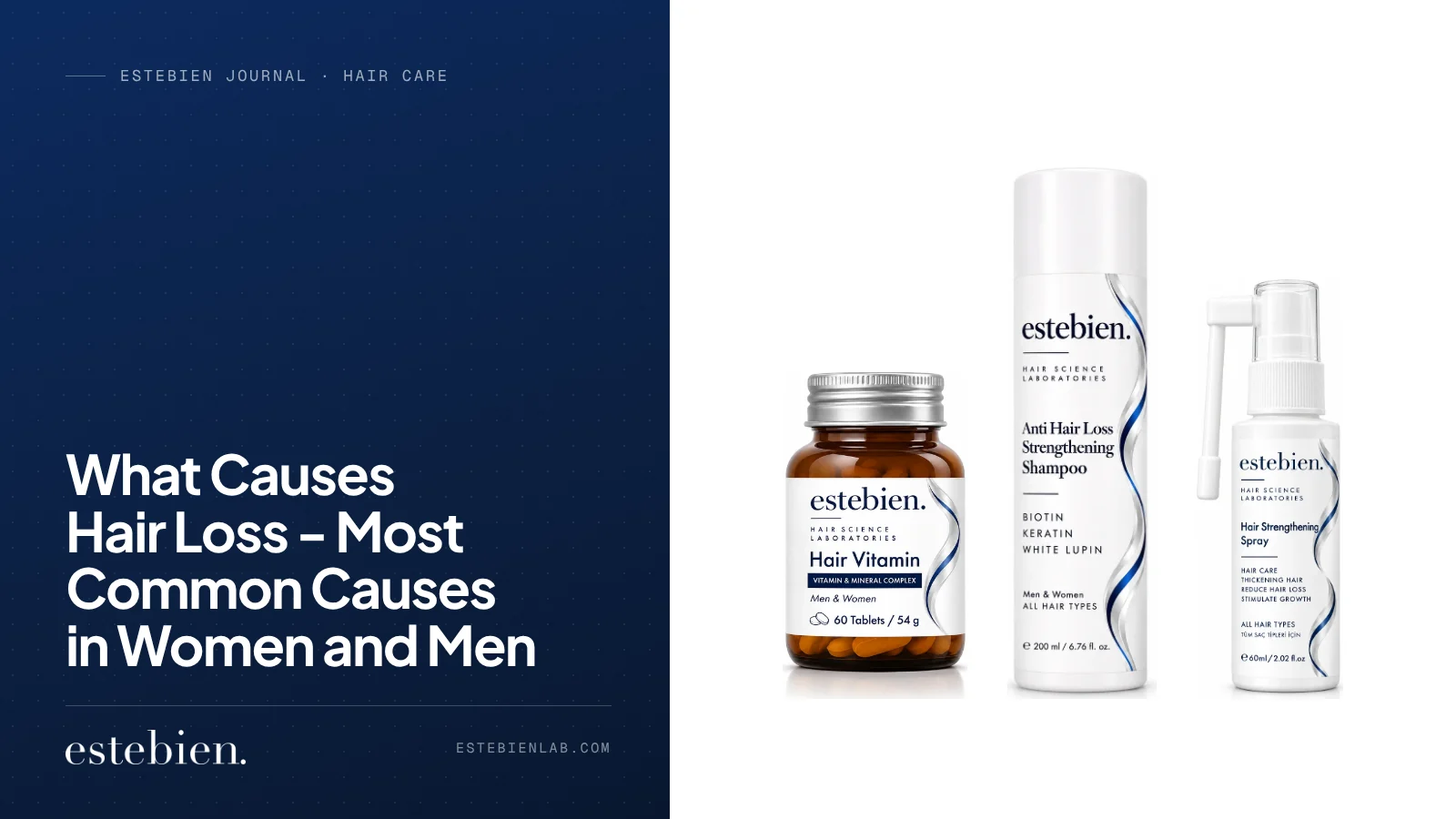
Estebien Hair Vitamin is a food supplement, not a medicine, with saw palmetto extract, L-lysine, L-cysteine, zinc, iron, biotin, folic acid and iodine. It cannot be used to prevent or treat diseases and does not replace a balanced diet; if you are pregnant, breastfeeding, ill or taking medication, consult your doctor first. Because the tablet contains iron, zinc and biotin, the AAD's note above applies here too: if you suspect a deficiency, or the cause of your hair loss is not yet known, talk to your doctor before you start.
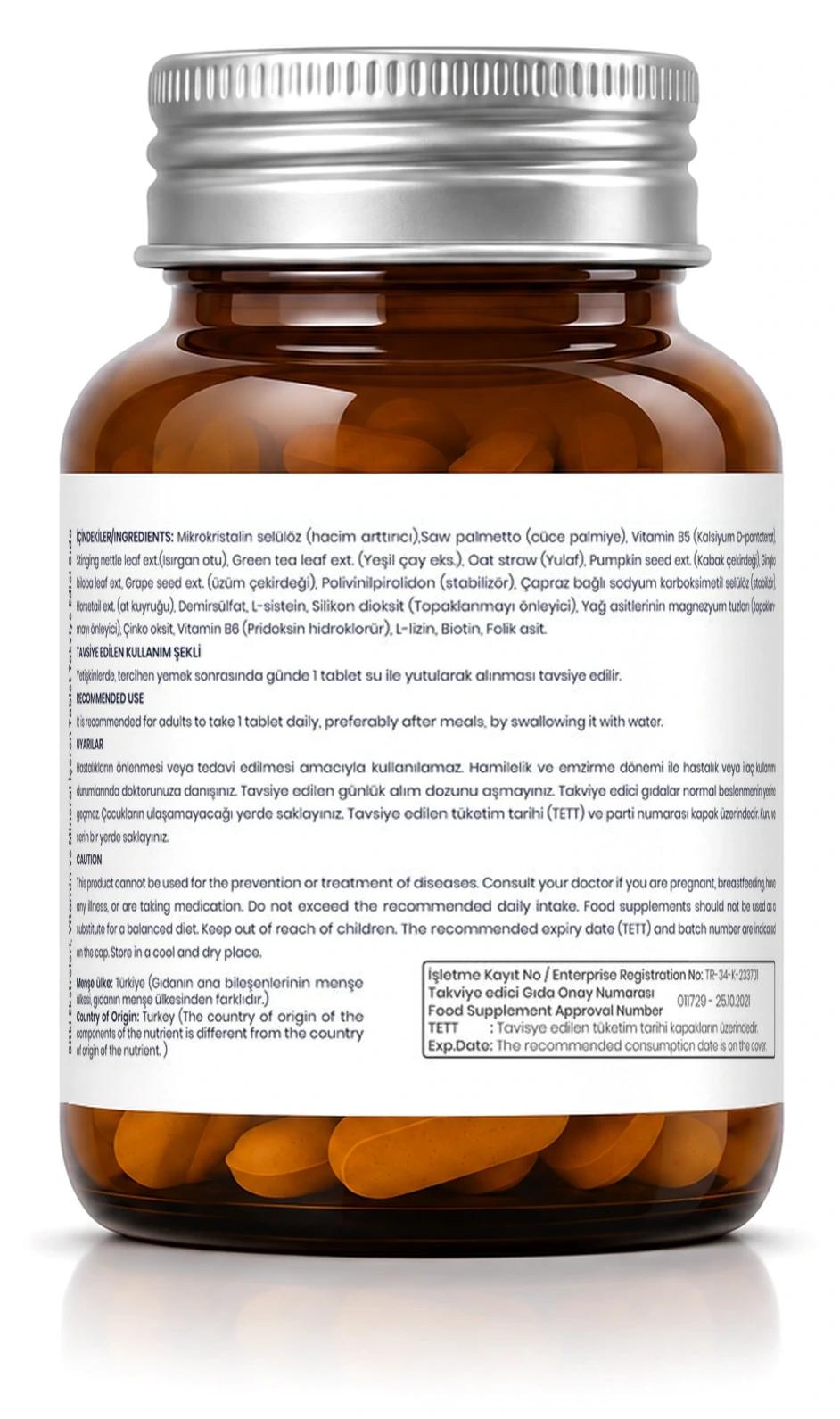
The hair vitamins guide covers the ingredients and realistic expectations; both bottles are under vitamins. In short: first clarify the cause with a doctor, then build your care routine. Read the ingredient lists and warnings on the product pages, and contact us for information.
Frequently Asked Questions
- Is hair loss permanent?
- It depends on the cause. According to the NHS some types, such as male and female pattern baldness, are permanent, while types caused by illness, stress, weight loss or iron deficiency may be temporary.
- Can stress cause hair loss?
- Yes. According to the AAD, heavy stress is one of the triggers of excessive shedding, and most people notice it a few months after the stressful time. When the stress stops, the body readjusts and the excessive shedding stops.
- When does hair shedding start after childbirth?
- According to the AAD, a new mother can see the shedding about two months after giving birth, and it usually peaks at about four months. This shedding is normal and temporary.
- At what age does hereditary hair loss start?
- The AAD says the shrinking of the hair follicles can begin as early as the teens, but it usually starts later in life.
- Which doctor do you see for hair loss?
- The NHS advises seeing a GP first. The AAD adds that a dermatologist, who specialises in the skin, hair and nails, can tell whether you have shedding or hair loss and find the cause.
- Do I need a blood test before starting a hair vitamin?
- The AAD says biotin, iron or zinc should be taken only when a blood test shows a deficiency. If the cause of your hair loss is unknown, or you are ill, pregnant or taking medication, consult your doctor before starting a supplement.
- Are Estebien products a treatment for hair loss?
- No. The shampoo and the spray are cosmetic care products and Hair Vitamin is a food supplement, not a medicine. None of them removes the cause of hair loss or takes the place of a medical examination.
Sources
- Hair lossNHS
- Hair loss: Who gets and causesAmerican Academy of Dermatology (AAD)
- Do you have hair loss or hair shedding?American Academy of Dermatology (AAD)
- Hair loss: Diagnosis and treatmentAmerican Academy of Dermatology (AAD)
- Hair loss - Symptoms and causesMayo Clinic
- Biotin: Fact Sheet for ConsumersNIH Office of Dietary Supplements
This article is for general information only and is not a substitute for medical advice. For decisions about your health, consult your doctor or dentist.