Sensitive Teeth - Causes and How to Choose a Toothpaste
Why teeth become sensitive, what to look for in a sensitive toothpaste and which signs mean you should see a dentist. A plain, sourced guide.
- Reading time
- 6 min read
- Author
- Estebien Editorial Team
In short
- Tooth sensitivity mostly comes from dentine that has been exposed by enamel wear or receding gums.
- The general advice for sensitive toothpastes is regular use: brushing twice a day for about two minutes.
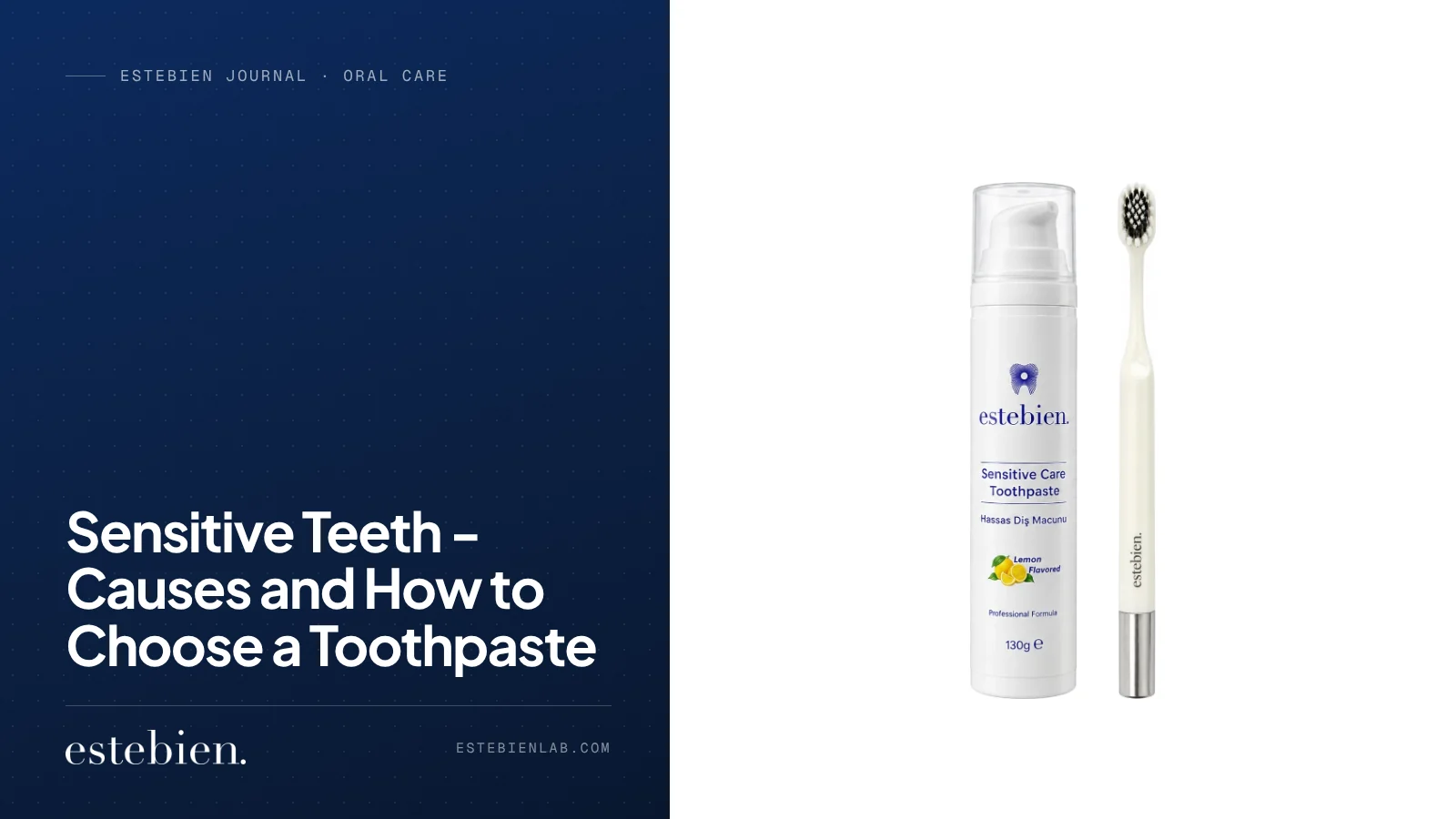
- Estebien Sensitive Care is a lemon-flavoured toothpaste developed for sensitive teeth; its ingredient list is on the packaging.
- A medium or soft brush and brushing without pressure are the basis of daily care for sensitive teeth.
- See a dentist if the pain is concentrated in one tooth, lingers, or does not ease within a few weeks.
Tooth sensitivity usually appears when enamel wears down or gums recede and the dentine underneath is exposed, so cold, heat, touch and air cause a short, sharp twinge. When choosing a sensitive toothpaste, start with a label that says it was developed for sensitive teeth, use it twice a day and brush with less pressure. If the twinge does not ease within a few weeks, or sits in a single tooth, a dentist should find the cause.
What is tooth sensitivity and how does it feel?
Known in dentistry as dentine hypersensitivity, it is a short, sharp twinge that starts with a trigger. A cold drink, hot tea, the touch of a toothbrush or breathing in cold air through the mouth are typical triggers. The American Dental Association (ADA) page on toothpastes notes that dentine hypersensitivity is assessed as sensitivity to touch, temperature and air current, and that it occurs in about 11.5% of patients.
Enamel is the hardest substance in the body, but the dentine beneath it does not have the same protection. According to the ADA, dentine can become exposed when enamel wears down or the gums recede. From that point, cold, heat and touch pass more easily to the inside of the tooth. Sensitivity is therefore a sign of an underlying cause, not a diagnosis in itself, and the right response depends on that cause.
Why do teeth become sensitive?
In everyday life, the usual reasons behind sensitivity are these:
- Enamel wear: Brushing with too much pressure, using a hard-bristled brush and frequent acidic food and drink can thin the enamel over time.
- Receding gums: When the gum pulls back, the root surface, which is not covered by enamel, is exposed. Gum problems and hard brushing can play a part.
- Clenching and grinding: This habit, often unnoticed at night, can wear down the tooth surfaces.
- Another dental problem: Decay, a cracked tooth or a worn filling can cause a similar twinge. In that case the issue is not general sensitivity but that particular tooth.
Several of these can be present at once, and a mirror will not tell you which applies to you. For the gum side of the story, see our guide to gum health.
Is it sensitivity or something else?
The table below does not diagnose anything. It only helps you tell when home care is a reasonable start and when to book an appointment without waiting.
| What you feel | What it may point to | What to do |
|---|---|---|
| A twinge with cold or heat that fades at once and is felt in several teeth | May be consistent with dentine sensitivity | Gentle brushing and a sensitive toothpaste; mention it at your next check-up |
| Pain in one tooth that lingers after the trigger has gone | Could be decay, a crack or a problem with a filling | Book a dental appointment without waiting |
| Bleeding, swollen or painful gums | Could be a gum problem | See a dentist |
| A twinge that does not ease after a few weeks of careful care | The cause needs to be identified | Have an examination; do not just switch toothpastes |
How do you choose a sensitive toothpaste?
According to the ADA, toothpastes may contain, in addition to fluoride, ingredients intended to lessen tooth sensitivity. A 2023 systematic review cited on the same page concludes that twice-daily use of toothpastes with stannous, potassium or arginine can be recommended for reducing dentine hypersensitivity pain; the review also notes that studies in this field need more standardised methods. This is general category knowledge: only the ingredient list on a product's own packaging tells you what that toothpaste contains.
In practice, a sensitive toothpaste is a habit product: it makes sense with regular use, not a single use. At the shelf, these four steps make the decision easier.
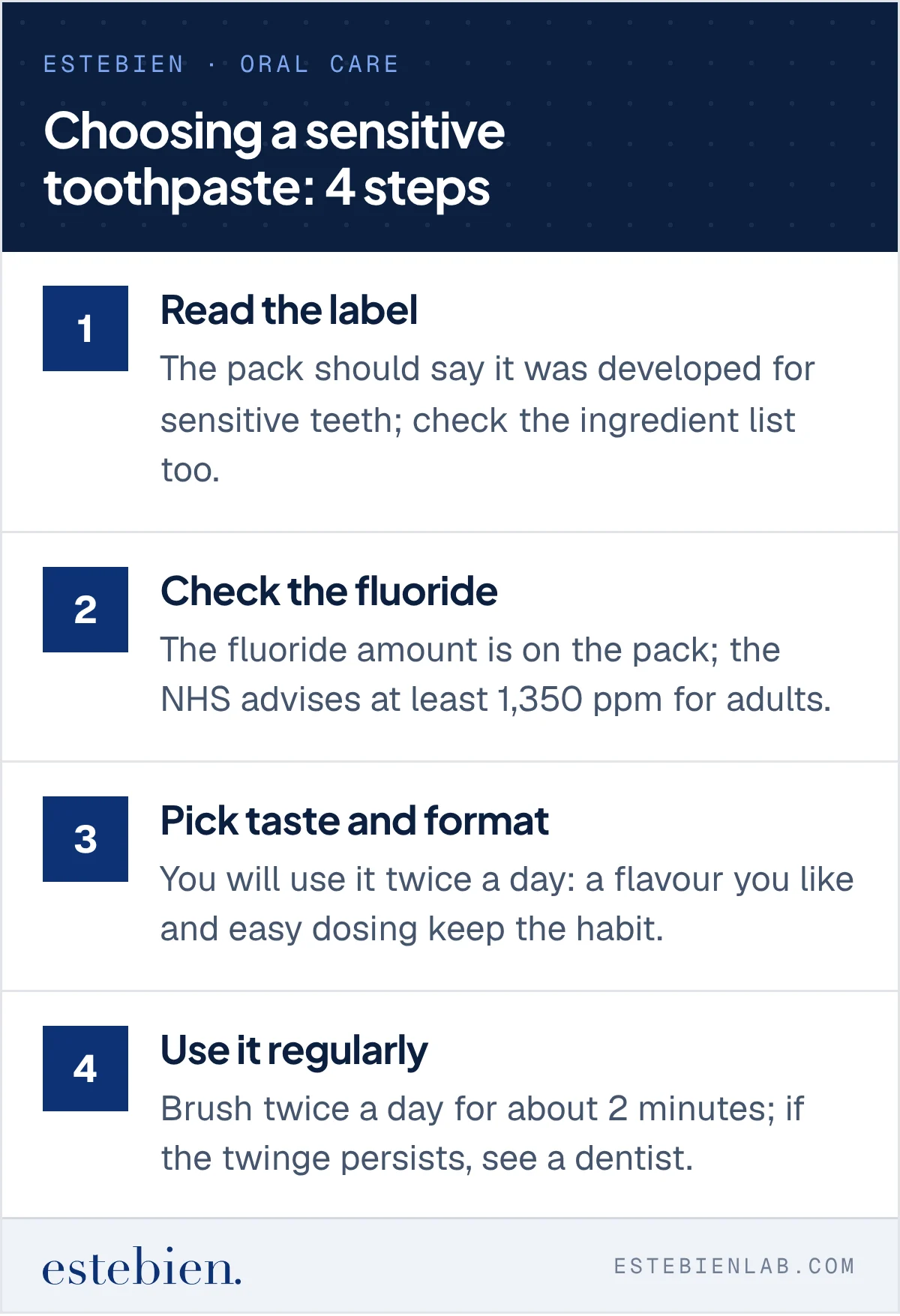
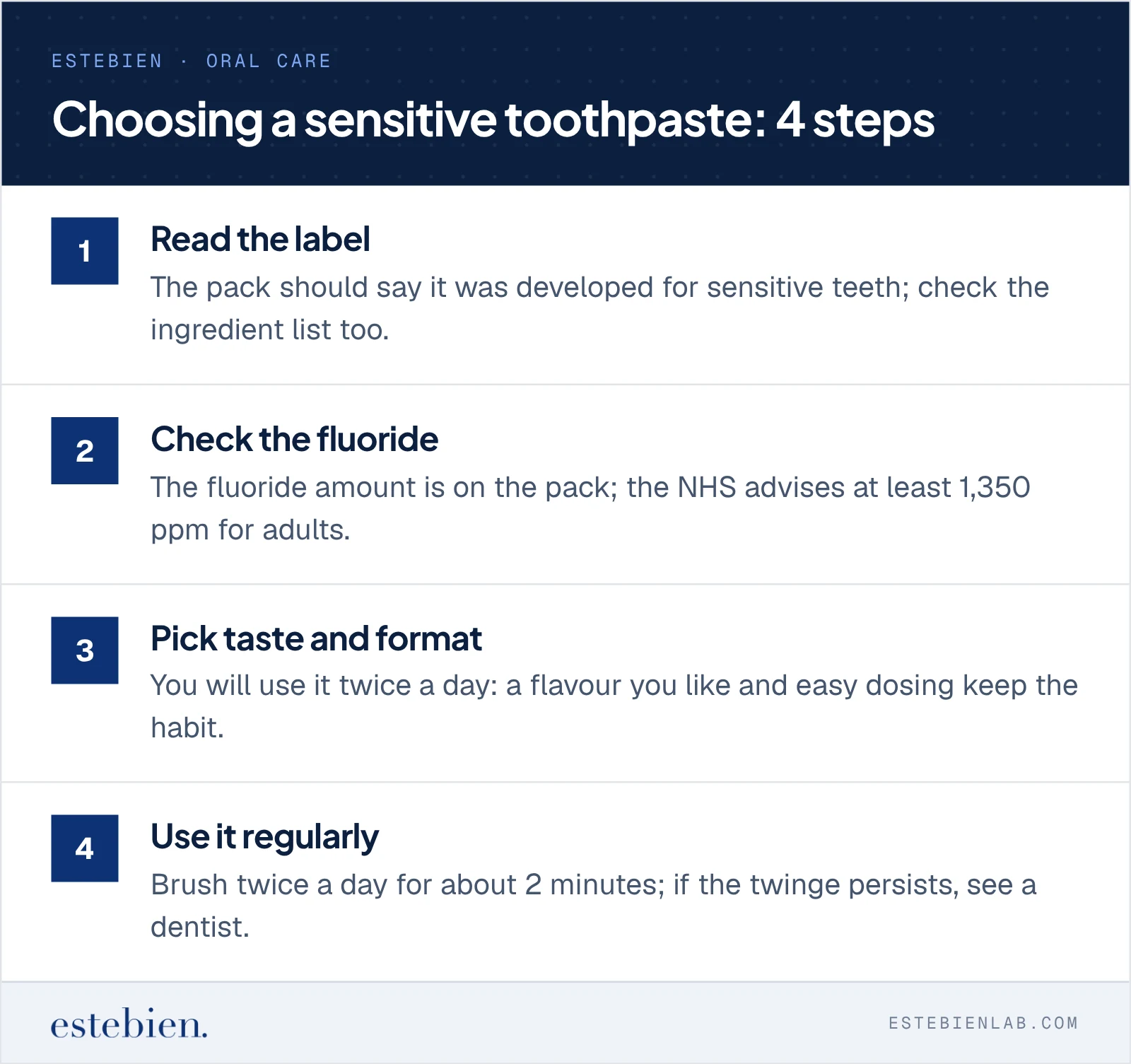
- Label: The first criterion is a clear statement that the product was developed for sensitive teeth.
- Fluoride: The NHS advises adults to use a toothpaste with at least 1,350 ppm fluoride and to check the amount on the packaging.
- Abrasivity: According to the ADA, toothpastes with a relative dentin abrasivity (RDA) of 250 or less are considered safe, and the value should not be used to rank them. Focus on technique, not numbers.
- Taste and packaging: You are choosing something you will use twice a day. A flavour you like and easy dosing make the routine easier to keep.
What kind of toothpaste is Estebien Sensitive Care?
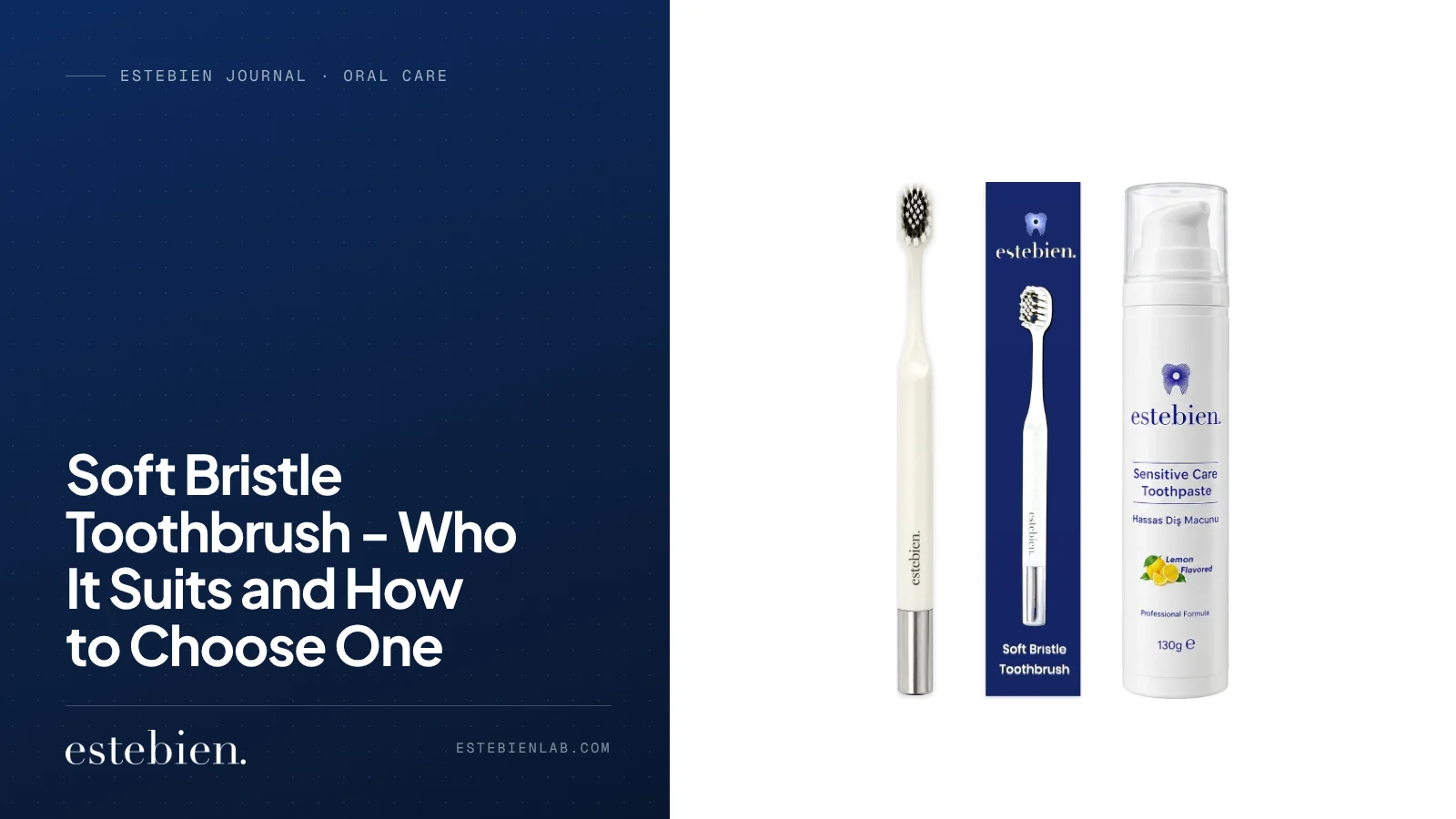
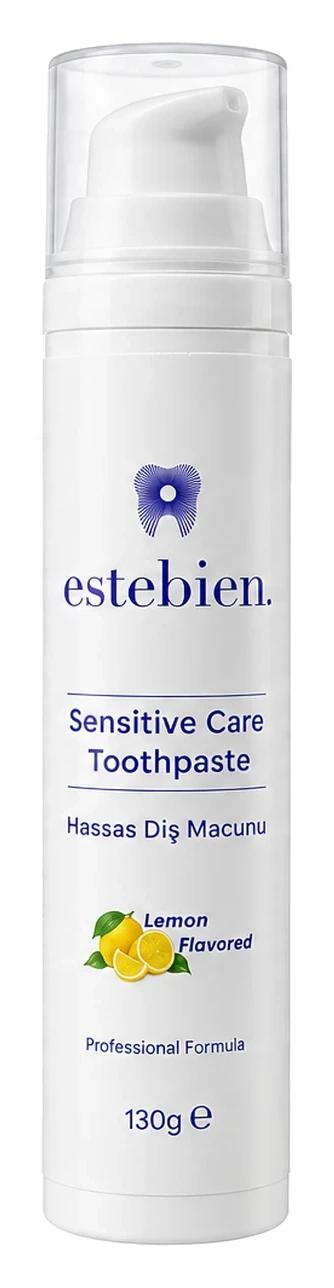
Estebien Sensitive Care Toothpaste is a lemon-flavoured toothpaste with a professional formula, developed for sensitive teeth. It comes in a 130 g pump dispenser, and the pump makes dosing easy at every use. Using it is simple: dispense a sufficient amount onto your toothbrush and brush your teeth. Do not swallow it, and keep it out of reach of children.
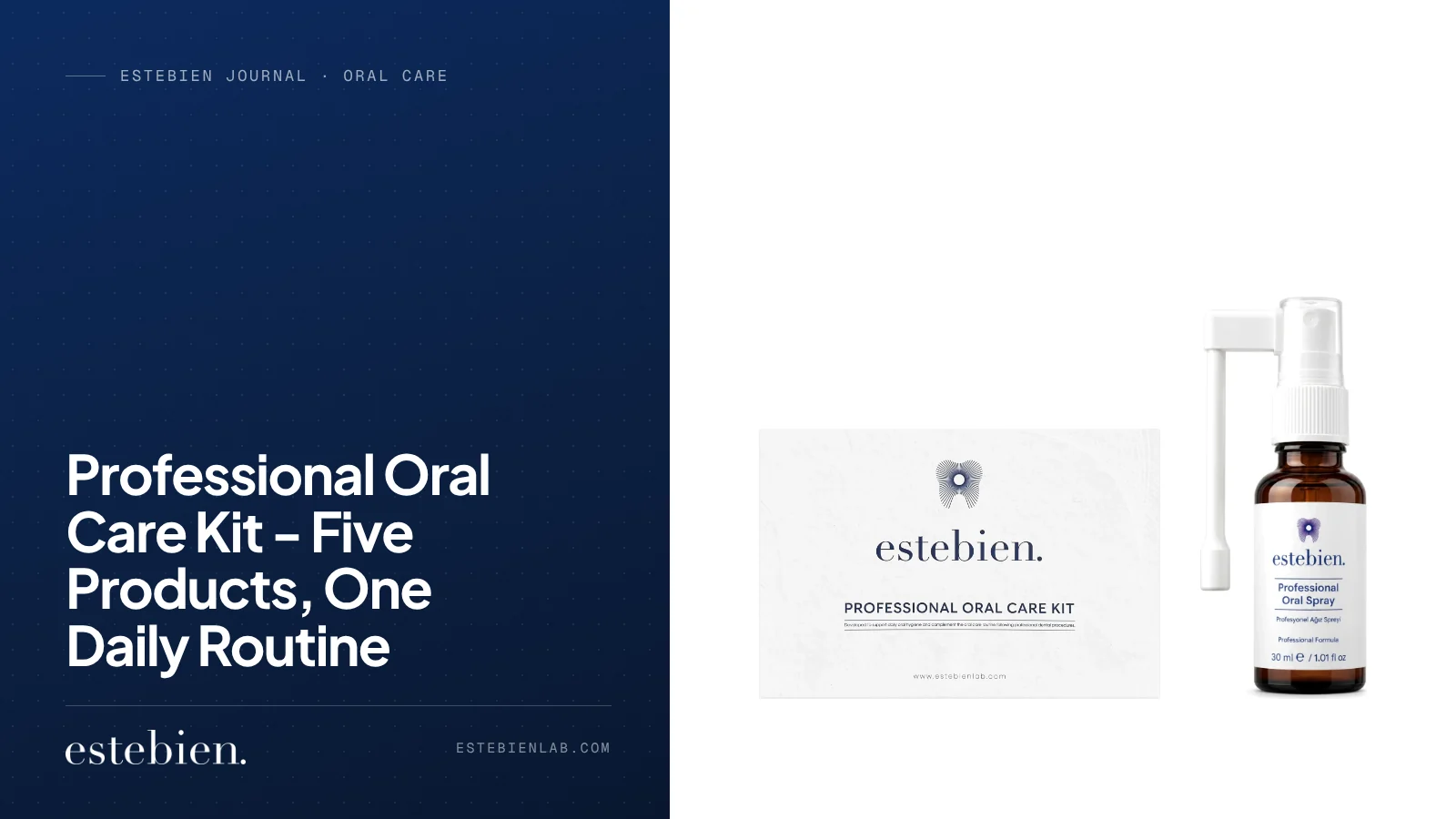
The full ingredient list and warnings are on the product packaging. Because no ingredient list is published on our site, this article says nothing about what the toothpaste contains. If you are looking for a particular ingredient, or avoiding one, read the pack and show it to your dentist when in doubt. The toothpaste is available on its own in the toothpaste category, or with the brush, spray and mouthwash tablets in the Estebien Professional Oral Care Kit.
Estebien Sensitive Care Toothpaste Lemon Flavored 130 gLemon-flavoured sensitive care toothpaste with a professional formula, in a 130 g pump dispenser.View product How should sensitive teeth be brushed?
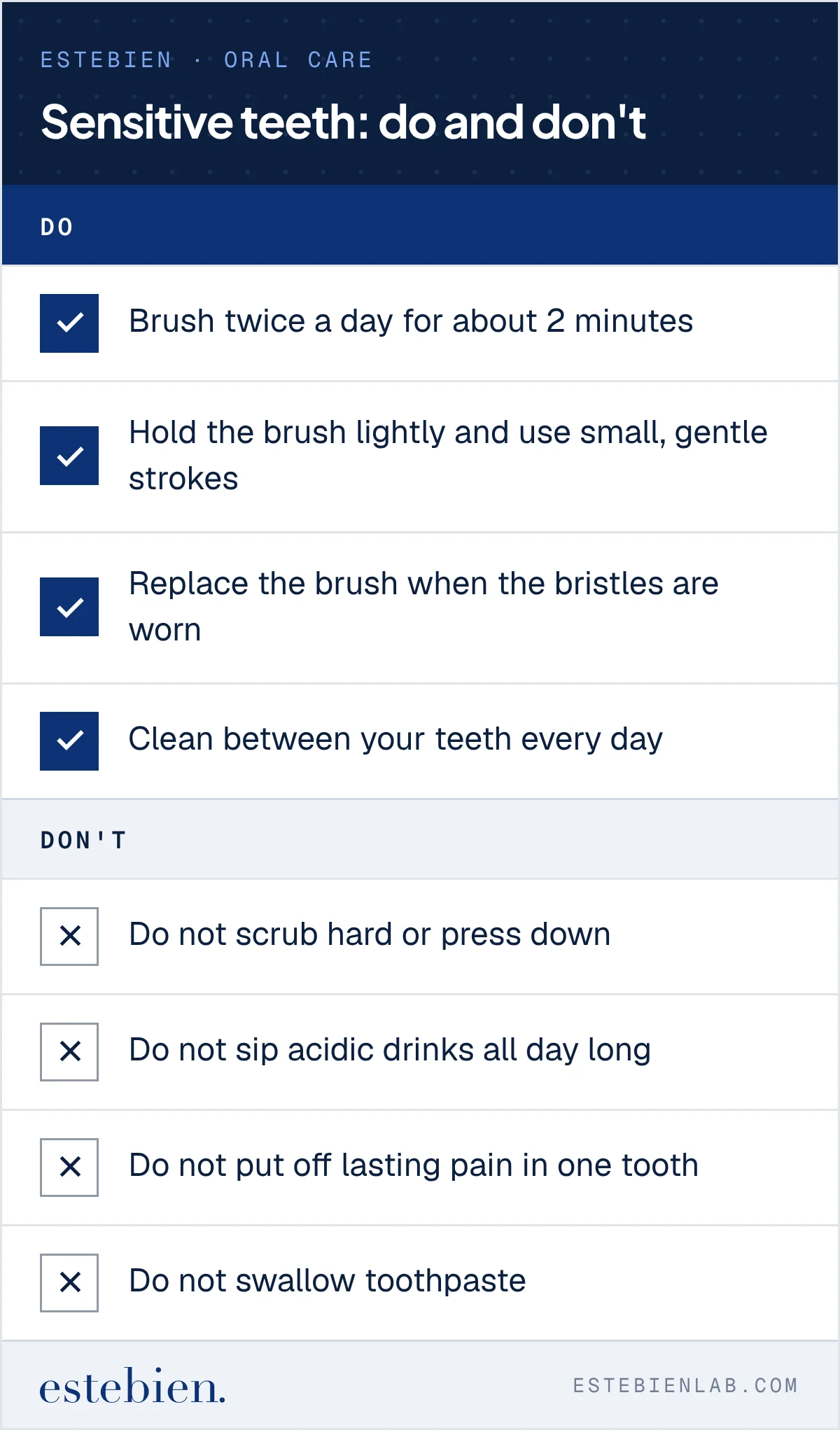
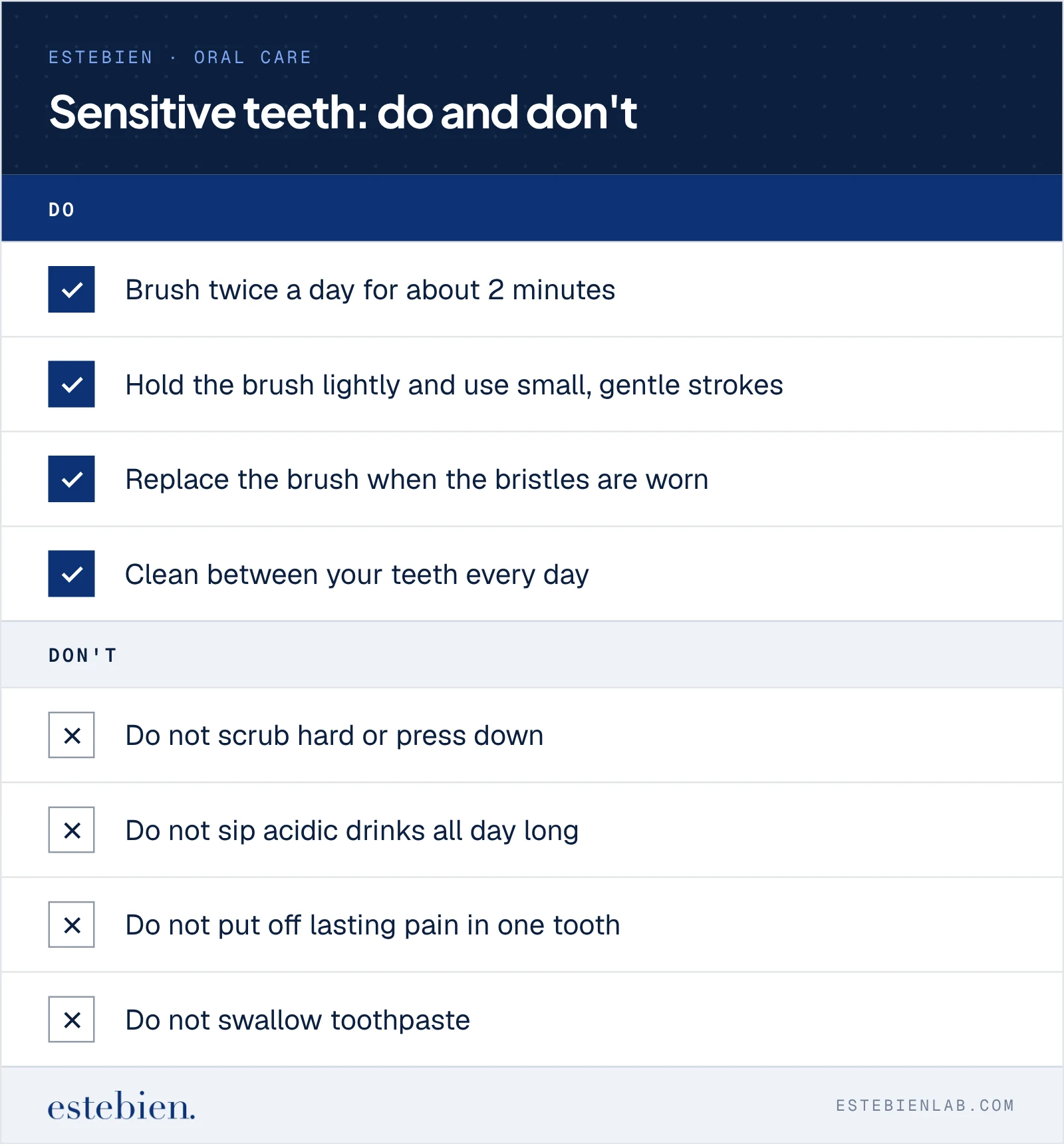
How you brush matters as much as the paste. The NHS guide to keeping your teeth clean advises brushing twice a day for about 2 minutes: last thing before bed and on one other occasion. According to the same guide, a brush with a small head and medium or soft bristles suits most adults, and electric and manual brushes are equally good as long as every surface is cleaned.
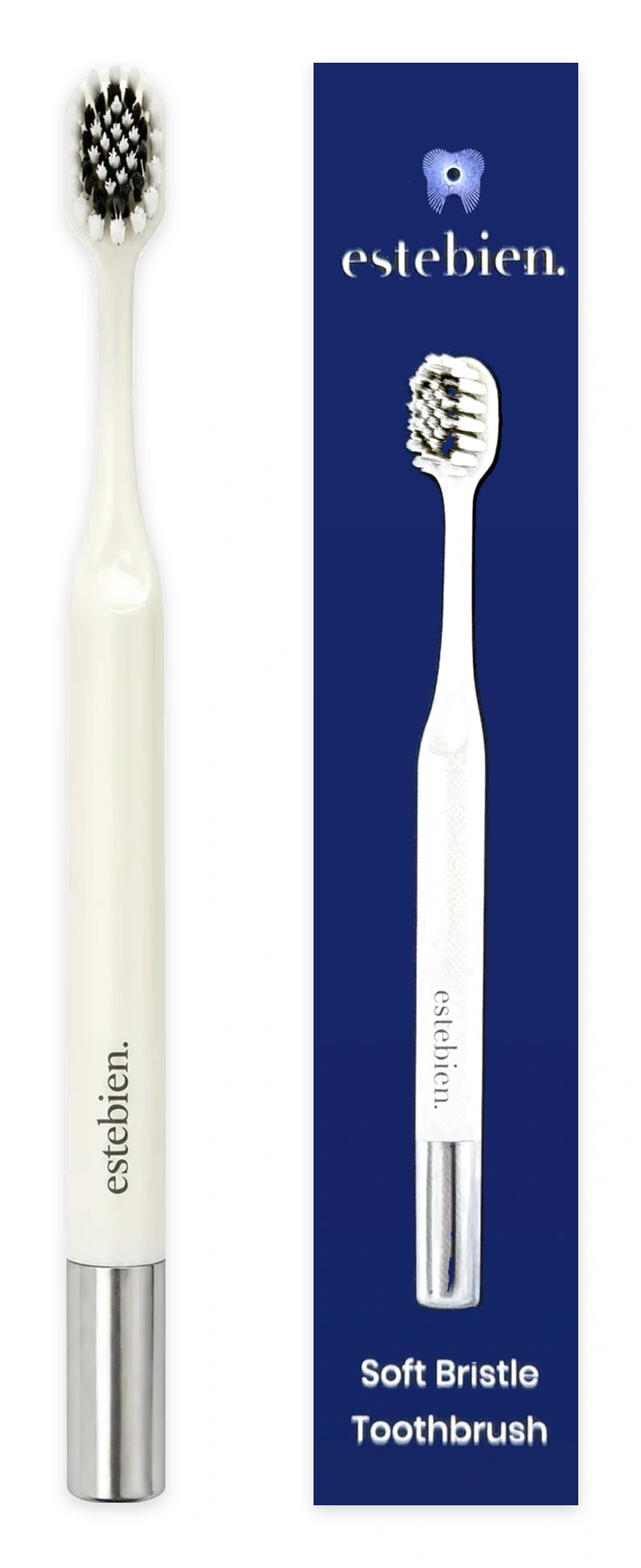
With sensitive teeth, add one more rule: reduce the pressure. Hold the brush lightly, as you would a pen, and use small, gentle strokes instead of hard back-and-forth scrubbing. The directions for the Estebien Soft Bristle Toothbrush follow the same line: at least twice a day, for about two minutes. After use, rinse the brush, leave it upright to dry and replace it when the bristles are worn. For the technique in detail, see our guide to brushing your teeth properly.
What else matters in the daily routine?
- Clean between your teeth every day with floss or interdental brushes; the NHS suggests flossing before you brush.
- If you use mouthwash, use it at a different time from brushing, not straight afterwards; the NHS gives after lunch as an example.
- Keep up regular dental check-ups and always mention your sensitivity during the examination.
For every step in one flow, our daily oral care routine walks through morning and evening. The toothbrush, oral spray and mouthwash tablets are in the oral care category.
Frequently Asked Questions
- How long does a sensitive toothpaste take to make a difference?
- It varies from person to person and with the cause of the sensitivity, so giving a fixed time would not be right. The general advice is regular use, twice a day. If nothing has changed after a few weeks, see a dentist.
- Can I use an electric toothbrush on sensitive teeth?
- According to the NHS, electric and manual brushes are equally good as long as all tooth surfaces are cleaned. Whichever you choose, keep the pressure low, and ask your dentist if you are unsure.
- Can sensitivity be a sign of tooth decay?
- Decay, a crack or a worn filling can cause a twinge that feels like sensitivity. A dentist should tell them apart, especially when the pain is in one tooth and lingers.
- What flavour and size is Estebien Sensitive Care?
- It is lemon flavoured and comes in a 130 g pump dispenser.
Sources
This article is for general information only and is not a substitute for medical advice. For decisions about your health, consult your doctor or dentist.