What Are Mouthwash Tablets? Tablets vs Liquid Mouthwash
What mouthwash tablets are, how they differ from liquid mouthwash, when to use them and how to store them, explained in plain terms.
- Reading time
- 6 min read
- Author
- Estebien Editorial Team
In short
- Mouthwash tablets are mouthwash in solid, single-dose form: one tablet is one dose.
- The main difference from liquid mouthwash is the format: nothing to measure, no liquid, no spills and easy to carry.
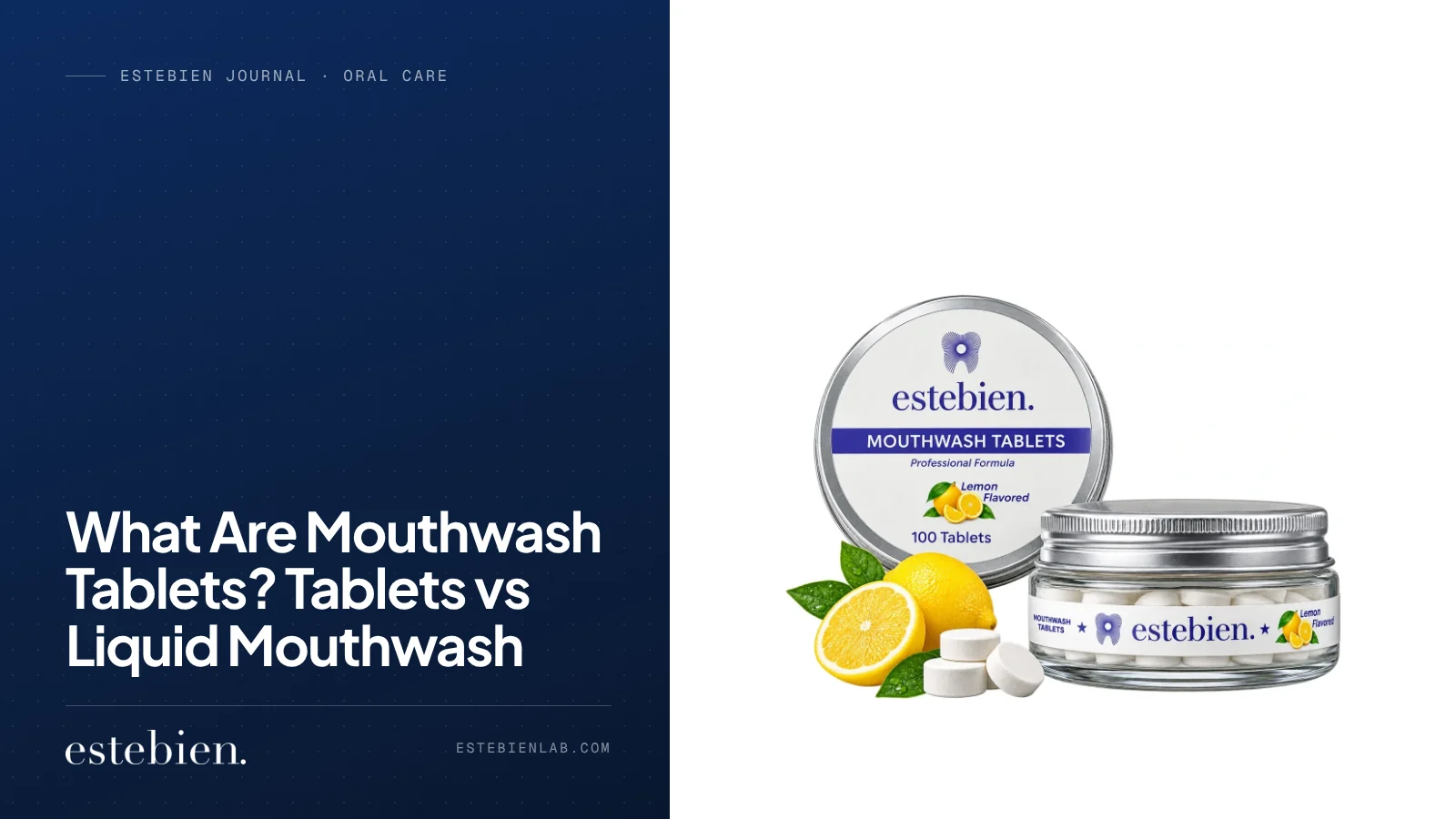
- Estebien Mouthwash Tablets are lemon flavoured, sugar free, alcohol free and paraben free, with 90 tablets in a jar.
- The NHS advises using mouthwash at a different time of day, not straight after brushing.
- No mouthwash replaces brushing or cleaning between the teeth.
Mouthwash tablets are mouthwash in solid, single-dose form: each tablet is one dose, and because there is no liquid, nothing spills and the jar travels easily in a bag. The main difference from liquid mouthwash lies in the format, not the purpose; there is no dose to measure and no bottle to carry. Neither replaces brushing or cleaning between the teeth. Both complement them.
What are mouthwash tablets?
As the name suggests, a mouthwash tablet is mouthwash in tablet form. Instead of a bottle of liquid, you have small, solid tablets, each a single dose. With no liquid, the packaging is smaller, carrying is easier and the risk of spills disappears. Its place in oral care is the same as that of liquid mouthwash: an extra step that complements brushing and cleaning between the teeth.
As a category, the way mouthwash tablets are used can differ from product to product, so the directions on the product's own packaging always decide. For Estebien Mouthwash Tablets the framework is clear: a fast-dissolving formula, and one tablet is one dose.
How do they differ from liquid mouthwash?
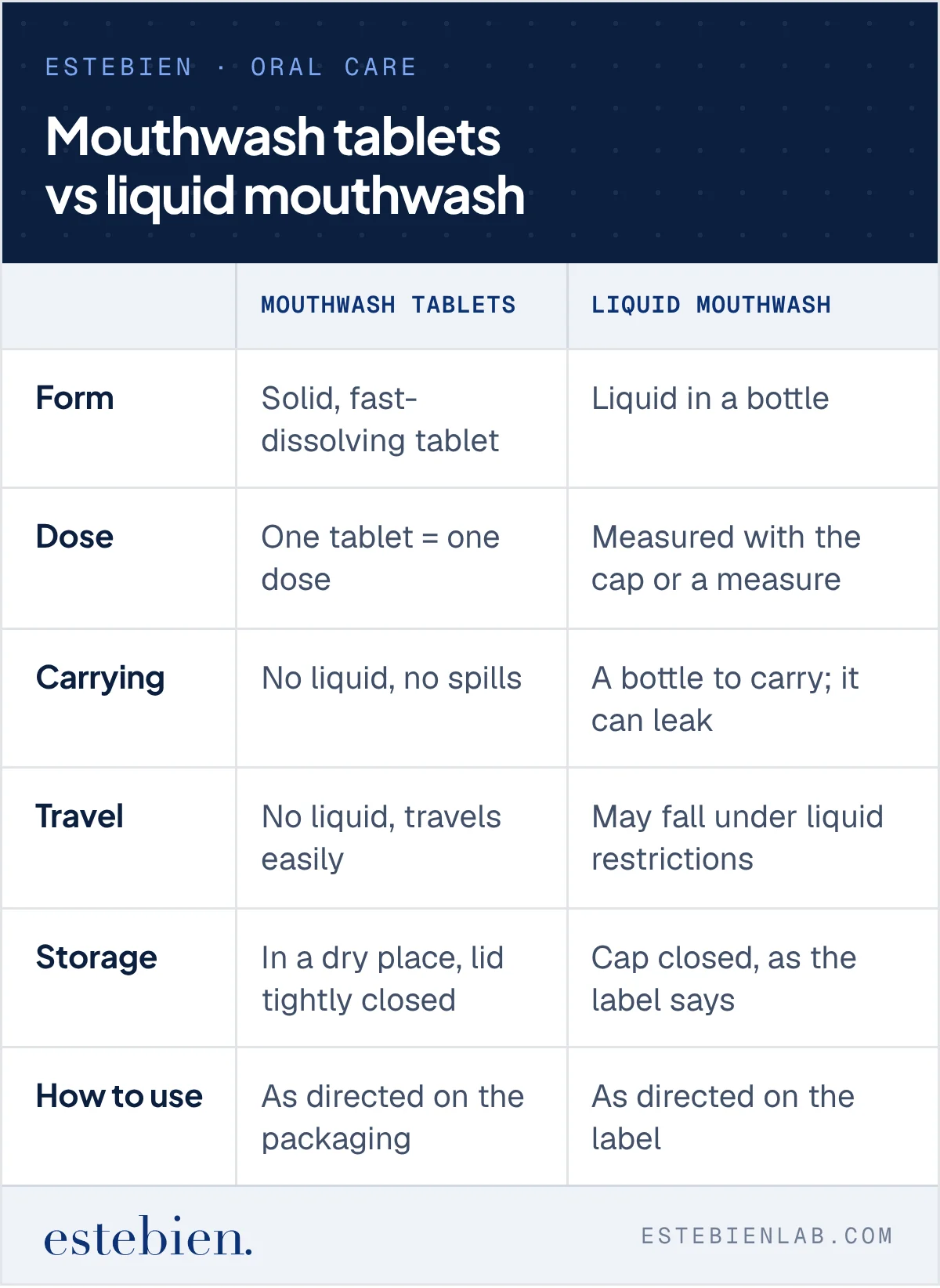
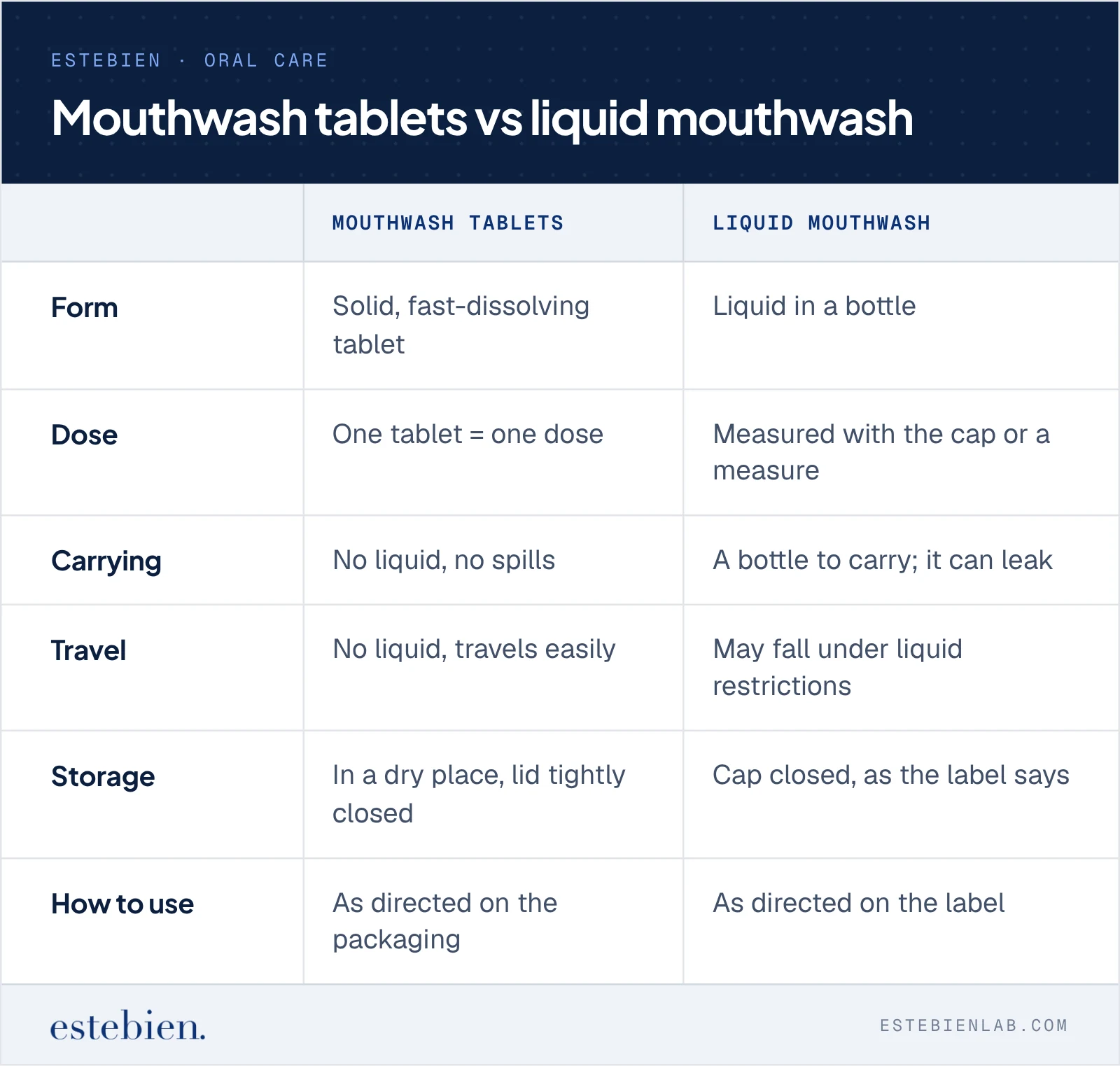
Both formats serve the same need; the difference is in how they are used. With liquid mouthwash you measure the dose yourself, the bottle usually lives in the bathroom, and you have to make sure it does not leak when you travel. With tablets the dose is ready, there is no liquid and the jar fits in a bag.
On ingredients, no generalisation is possible. Some liquid mouthwashes contain alcohol and some do not, and tablets also differ from brand to brand. When comparing two products, look beyond the format at each label. The comparison below covers format differences only.
Which format is more practical in which situation?
Which format suits you depends on where and how you use mouthwash. The table below brings together the most common situations.
| Your need | More practical format | Why |
|---|---|---|
| I travel often | Tablets | No liquid, no spills, easy to carry |
| I want to use mouthwash at work or school, after lunch | Tablets | No bottle to carry; one tablet is one dose |
| I do not want to measure the dose | Tablets | The dose is ready: 1 tablet per use |
| I only use mouthwash at home | Either | The choice comes down to habit and taste |
| I am looking for an alcohol-free product | Check the label | Estebien Mouthwash Tablets are alcohol free, sugar free and paraben free |
| My dentist recommended a specific mouthwash | The recommended product | Professional advice comes before format preference |
Once the format is decided, check these four points on the label, whichever brand you choose:
- Sugar and alcohol: The label says whether the product is sugar free and alcohol free.
- Dose and count: Check whether one tablet is one dose and how many tablets are in the jar; that tells you how many uses you are buying.
- Directions: How a tablet is used can differ between products; read the steps on the pack.
- Warnings: See the pack for any age limit, storage conditions and the ingredient list.
What are the features of Estebien Mouthwash Tablets?
Estebien Mouthwash Tablets are lemon-flavoured mouthwash tablets, with 90 tablets in a jar. With their fast-dissolving formula, each tablet is one dose. They are sugar free, alcohol free and paraben free. According to the product description they help protect gums and maintain oral health, reach areas brushing may miss and leave long-lasting fresh breath. With no liquid, they travel easily.
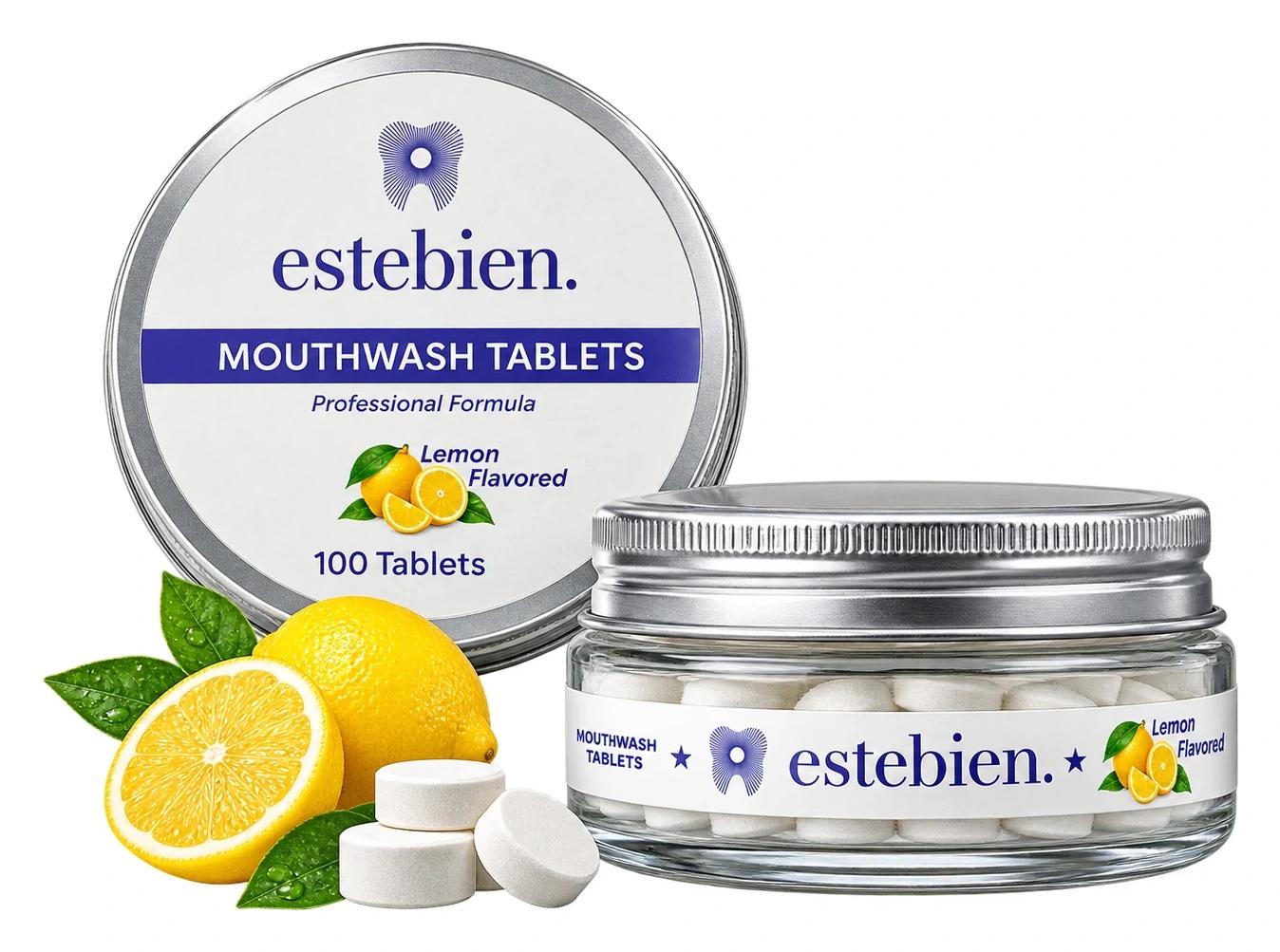
The full ingredient list and warnings are on the product packaging; because no ingredient list is published on our site, this article says nothing about what the tablets contain. The tablets are also part of the Estebien Professional Oral Care Kit, together with the toothpaste, toothbrush, oral spray and support tablets; you can see the set in the dental sets category.
Estebien Mouthwash Tablets Lemon Flavored 90 TabletsLemon-flavoured mouthwash tablets: one tablet is one dose. Sugar free, alcohol free and paraben free; no liquids, easy to carry.View product How and when do you use mouthwash tablets?
The directions for Estebien Mouthwash Tablets come down to two sentences: use 1 tablet per use, and follow the directions on the packaging for how to use it. The packaging determines how the tablet is used, how many times a day it may be used and which warnings apply; this article does not replace it.
On timing, there is a general principle. The NHS guide to keeping your teeth clean advises against using mouthwash straight after brushing, because it washes away the concentrated fluoride left on the teeth by the toothpaste. Choose a different time of day instead, for example after lunch. This is exactly where the tablet format is convenient: lunch is often eaten away from home, and a jar of tablets travels in a bag with nothing to spill.
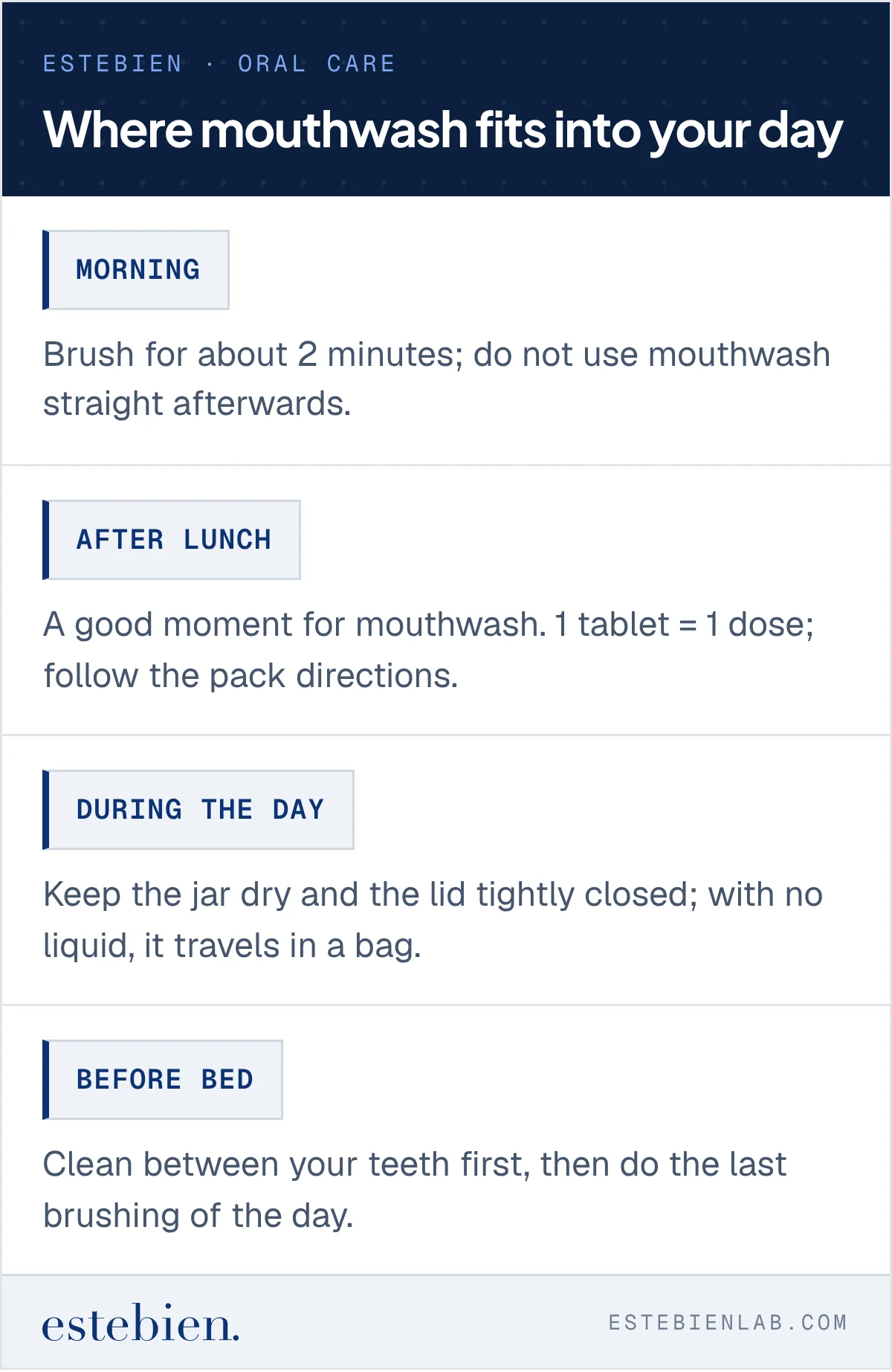
The easiest way to build the habit is to tie the tablet to a fixed moment. Keep the jar in your work or school bag and lunch becomes the reminder. At home, put the jar somewhere dry where it will be at hand at the time you plan to use it.
How are mouthwash tablets stored and carried?
The tablets should be protected from moisture. According to the product warnings they are stored in a dry place, with the lid tightly closed and out of reach of children. So take care not to let water drip into the jar or leave the lid open; keeping the jar on a dry shelf instead of the edge of the basin is a good habit. When you first open the jar, read the storage conditions and warnings on the pack once from start to finish.
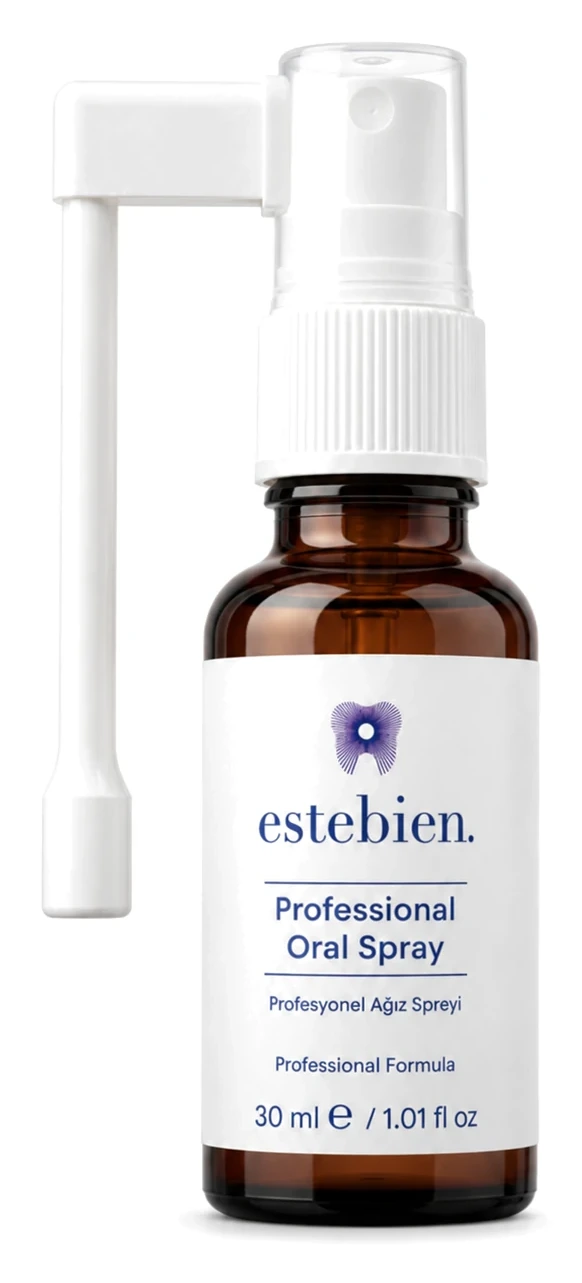
When you travel the advantage is obvious: no liquid, no spills. On flights there is no bottle to fall under cabin-baggage liquid restrictions, though it is worth confirming the current rules with your airline. For fresh breath on the road, Estebien Professional Oral Spray is a 30 ml companion that also fits in a bag; you can find both, and the other products, in the oral care category.
Does mouthwash replace brushing?
No. The basic NHS advice stays the same: brush twice a day for about 2 minutes with fluoride toothpaste, and clean between your teeth every day with floss or interdental brushes. Mouthwash, whether tablet or liquid, is a third step added to these two. The American Dental Association's MouthHealthy page likewise notes that mouthwash is only a temporary solution for bad breath, and that the smell returns unless residue is removed with a brush and floss.
For the brushing side, see our guide on how to brush your teeth properly; for where mouthwash sits between the morning and evening steps, see the daily oral care routine. If bad breath is your reason for considering mouthwash, the causes come first, and our guide to bad breath starts there.
Frequently Asked Questions
- Do mouthwash tablets contain sugar or alcohol?
- Estebien Mouthwash Tablets are sugar free, alcohol free and paraben free. For other brands, check the product's own label.
- How many tablets are in a jar and how long do they last?
- There are 90 tablets in a jar and each tablet is one dose. How long a jar lasts depends on the frequency of use stated on the packaging.
- Can I use a mouthwash tablet straight after brushing my teeth?
- As a general rule, the NHS advises not using mouthwash straight after brushing and choosing a different time of day, for example after lunch. For your product, follow the directions on the packaging.
- Can I take mouthwash tablets in hand luggage on a plane?
- The tablets contain no liquid, so there is no bottle of liquid to carry. Rules can vary by airport and airline, so confirm them before you travel.
- Can children use mouthwash tablets?
- Check the product packaging for any age limit and warnings, and ask your dentist if you are unsure. Keep the product out of reach of children.
- What flavour are Estebien Mouthwash Tablets?
- They are lemon flavoured.
Sources
- How to keep your teeth cleanNHS
- Bad Breath: 6 Causes (and 6 Solutions)American Dental Association (MouthHealthy)
This article is for general information only and is not a substitute for medical advice. For decisions about your health, consult your doctor or dentist.