PRP or Mesotherapy - The Differences and How Clinicians Decide
The differences between PRP and mesotherapy in plain terms, with a comparison table: what is injected, how sessions are planned and how the decision is made.
- Reading time
- 8 min read
- Author
- Estebien Editorial Team
In short
- The basic difference is what is injected: PRP uses platelet-rich plasma prepared from your own blood, mesotherapy a mixture of vitamins, nutrients or medicines chosen by the physician.
- PRP requires a blood draw and a centrifuge; mesotherapy does not involve drawing blood. Both are medical procedures done with needles and both need repeated sessions.
- There is no strong comparison showing which is more effective; a 2022 review notes that studies comparing mesotherapy with other treatments are insufficient.
- Neither method has a standard protocol and results vary from person to person; no result can be guaranteed for either.
- The choice is not a matter of taste but a physician's decision based on a diagnosis; whether the two are combined is also for the physician to decide.
The basic difference between PRP and mesotherapy is the liquid at the tip of the needle. In PRP it is platelet-rich plasma prepared from your own blood; in mesotherapy it is a mixture chosen by the physician, containing vitamins, nutrients or medicines. Both are medical procedures that a physician carries out with a needle, both need repeated sessions, and with both the results vary from person to person. Which one suits you can only be decided by the physician who assesses the cause of your hair loss or skin concern. This article sets the differences side by side so that you can go to that consultation prepared.
What is the basic difference between PRP and mesotherapy?
With PRP, the material comes from you. According to the Cleveland Clinic page on PRP, healthcare providers process blood drawn from your arm in a centrifuge to separate the platelets and concentrate them in the plasma; the resulting liquid is injected back during the same visit. With mesotherapy no blood is drawn. The DermNet page on mesotherapy writes that the combination injected depends on what the practitioner prepares and may contain minute quantities of plant extracts, vitamins, enzymes, nutrients, hormones and medications.
That difference brings others with it. In PRP the content depends on your own blood and therefore on your platelet level. In mesotherapy the content depends on the physician's choice and can differ from clinic to clinic. If you would like to read about each method separately, the PRP guide and the hair mesotherapy guide give the detail.
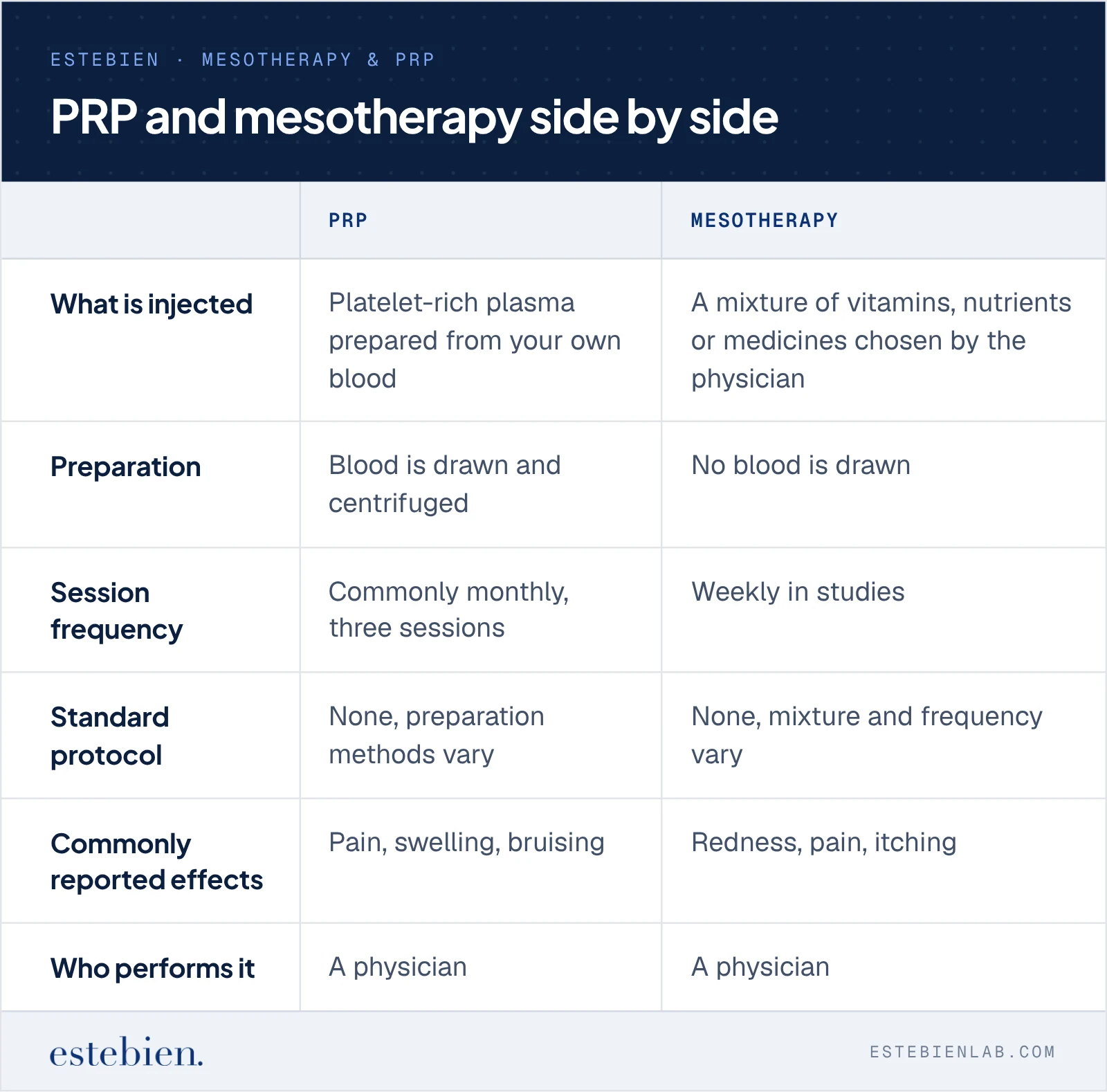
How do PRP and mesotherapy sessions differ?
A PRP session starts with a blood draw; you wait while the blood is centrifuged and then the injections are given. A mesotherapy session has no preparation stage, so it moves straight to the injections. As far as the needle goes the two are alike: on its PRP page, the International Society of Hair Restoration Surgery (ISHRS) describes the plasma being injected very superficially into the scalp in small quantities. A systematic review published in the journal Cureus likewise reports that in mesotherapy many small injections are made with fine needles to a depth of about 1 to 4 mm.
The real distinction is in how often sessions take place. On its page about hair loss treatments, the American Academy of Dermatology (AAD) writes that for PRP most patients return once a month for three months and then once every three to six months. Mesotherapy sessions are generally more frequent: DermNet speaks in general of 3 to 15 sessions at two-week intervals, and in the hair loss studies reported by the Cureus review, sessions were given once a week for 10 to 12 weeks. Neither method has a standard timetable; these figures show common plans and research protocols.
On which points do PRP and mesotherapy differ?
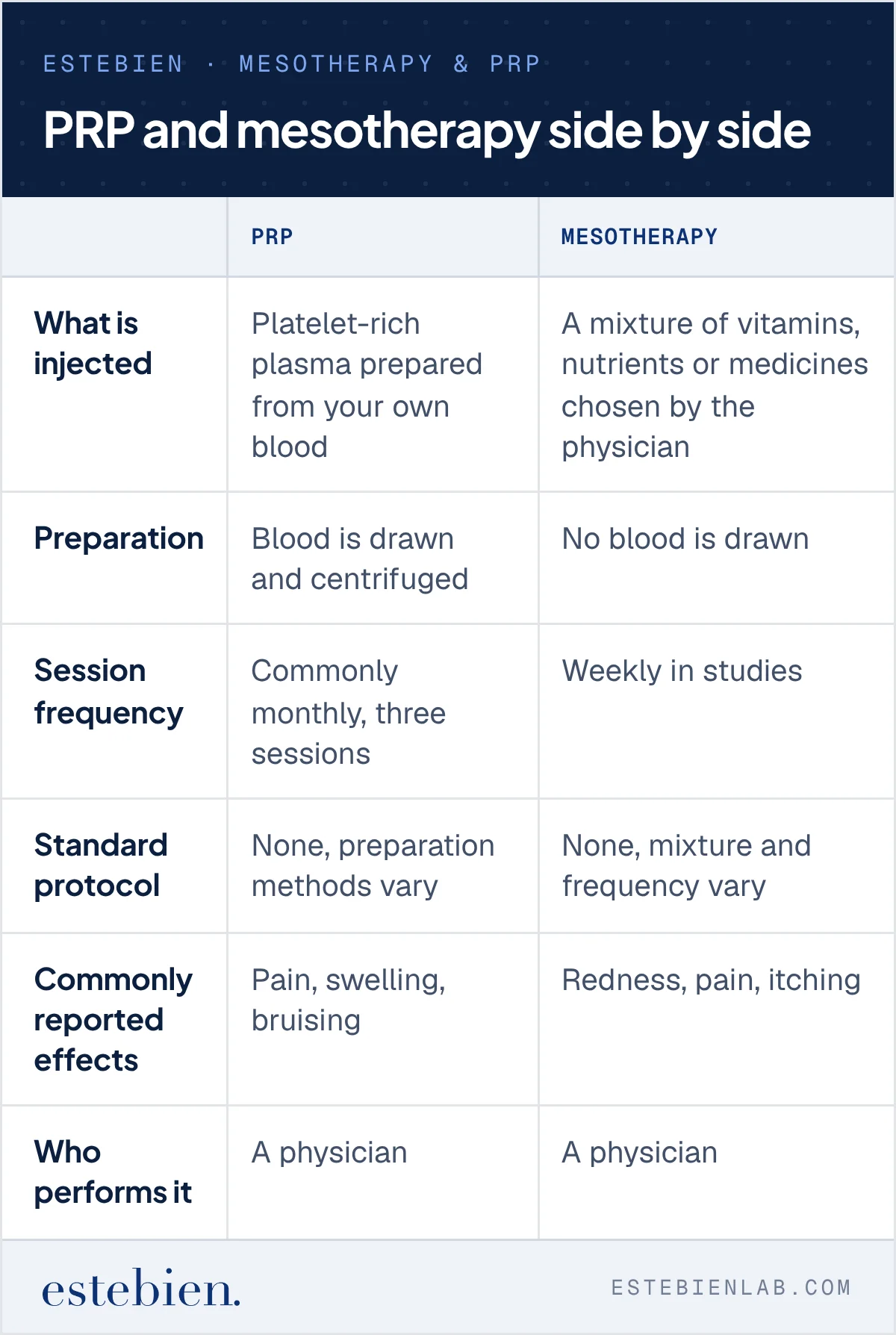
The table below compares the two methods on nine points. The information comes from the sources listed at the end of this article and is for general information.
| Point | PRP | Mesotherapy |
|---|---|---|
| What is injected | Platelet-rich plasma prepared from the person's own blood | A mixture chosen by the physician, containing vitamins, nutrients or medicines |
| Preparation | Blood is drawn from the arm and centrifuged | No blood is drawn |
| Common session plan | Once a month for three months, then every three to six months (AAD) | Once a week for 10 to 12 weeks in studies |
| Standardisation | The preparation method is not standardised | The mixture, quantities and frequency are not standardised |
| State of the evidence | Some studies show benefits, others do not (ISHRS) | Studies are positive but few and small |
| Commonly reported effects | Pain, swelling and bruising at the injection site | Redness, pain, itching, swelling, bruising, headache |
| Allergic reaction | The risk is low because your own blood is used (Johns Hopkins) | Reported in response to the injected solutions (DermNet) |
| When it may not be suitable | Certain blood conditions, use of blood thinners, skin cancer in the area (AAD) | Depends on what is in the mixture; the physician assesses it |
| Who performs it | A physician | A physician |
Which is more effective, PRP or mesotherapy?
On current evidence there is no definite answer to this question. A systematic review published in the Journal of Cosmetic Dermatology in 2022 reports that mesotherapy showed positive efficacy to a certain extent in all 12 studies it assessed, but it also states plainly that the samples were not big enough and that studies comparing mesotherapy with other treatments are insufficient. In other words, the comparative data needed to rank the two methods reliably does not yet exist.
The picture is mixed on the PRP side too. ISHRS notes that some published studies have demonstrated benefits while others have not, and that this is not surprising given the wide variability of protocols. Cleveland Clinic writes that research on PRP is still at a relatively early stage, that some people benefit while others do not, and that providers cannot predict the outcome with certainty. For mesotherapy, DermNet says there is very little scientific or clinical evidence.
So instead of asking which method is more effective, it makes more sense to ask which one better suits your diagnosis and your health. Neither method comes with a guaranteed result, and any statement that promises otherwise deserves caution.
How do clinicians decide between PRP and mesotherapy?
The decision rests not on a single point but on several pieces of information that come together at the examination. The points the sources highlight are these:
- The diagnosis. The AAD stresses that effective treatment begins with finding the cause of the hair loss and that no one treatment works for everyone. In some types of hair loss the hair regrows on its own and no procedure is needed.
- Blood values and medicines. PRP relies on your own platelets. In its article on PRP for the skin, the AAD does not recommend PRP in conditions such as blood cancer, hepatitis C, HIV and cardiovascular disease that requires a blood thinner. ISHRS also notes that people with naturally high platelet levels have an advantage.
- Allergy history. Johns Hopkins Medicine writes that because PRP is made up of your own cells and plasma, the risk of an allergic reaction is much lower than with other injectable medications. DermNet notes that with mesotherapy, immediate or delayed allergic reactions to the injected solutions have been reported.
- The stage of the hair loss. According to ISHRS, with almost all non-surgical treatments the best candidates are those with thinning hair rather than complete baldness, and those whose hair loss is more recent.
- Fit with daily life. PRP sessions are further apart, while mesotherapy sessions are more frequent in most plans. PRP requires a blood draw, which is why Johns Hopkins Medicine advises making sure you are hydrated and have eaten beforehand.
- Other treatments in use. Cleveland Clinic notes that PRP is generally offered as an adjunct therapy and not on its own. The physician looks at the whole plan, including the other treatments you are using.
Can PRP and mesotherapy be combined?
Some clinics offer the two procedures within the same treatment plan. However, the sources we read for this article contain no evidence that giving PRP and mesotherapy together, or in the same session, produces a better result than giving each on its own. What the sources say is more general: ISHRS writes that PRP is often administered along with microneedling and can be an adjunctive treatment for patients having surgery or taking medication, and Cleveland Clinic describes PRP as an adjunct therapy.
The decision to combine them, the order of the procedures and the time between them are therefore entirely a matter for the physician's judgement. Having the two procedures in the same period can also make it harder to tell which one a side effect comes from; raise this openly with your physician.
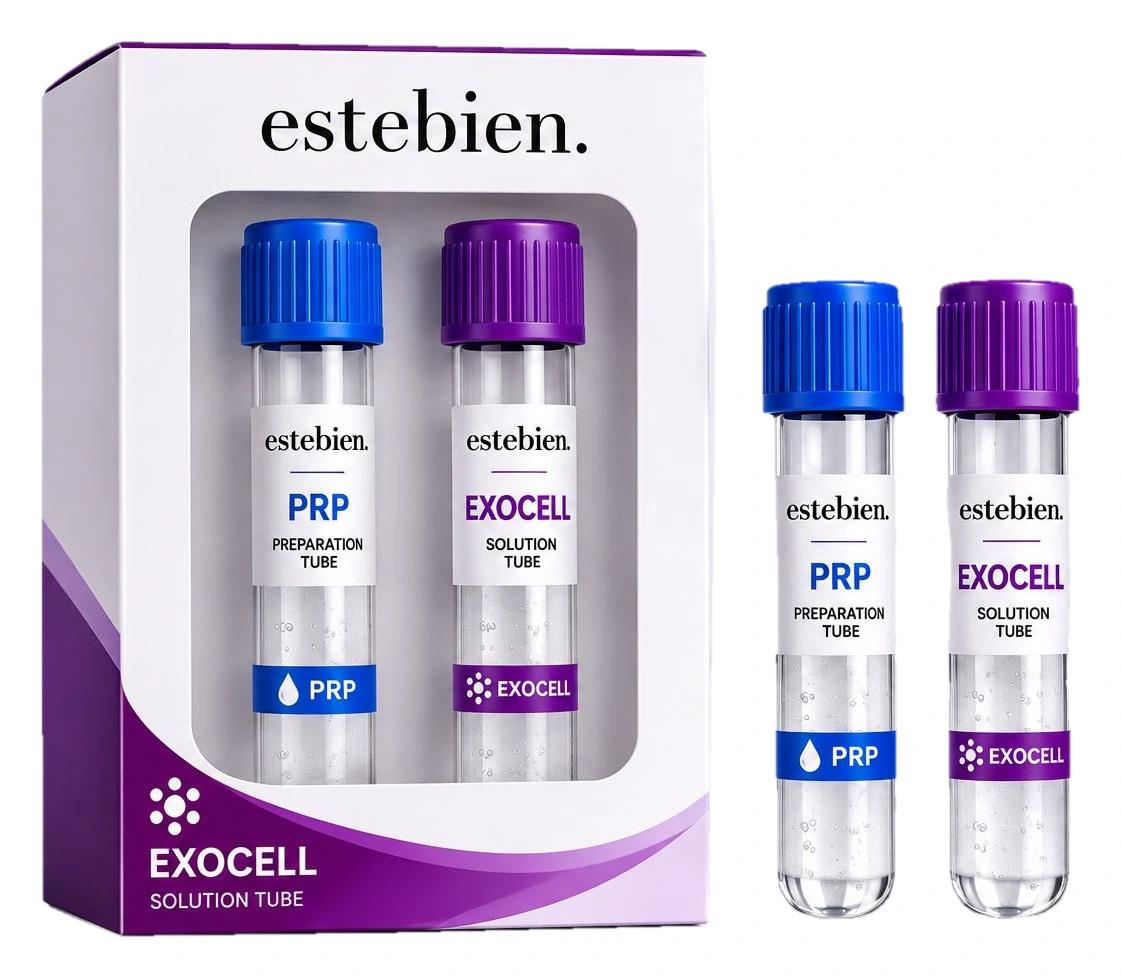
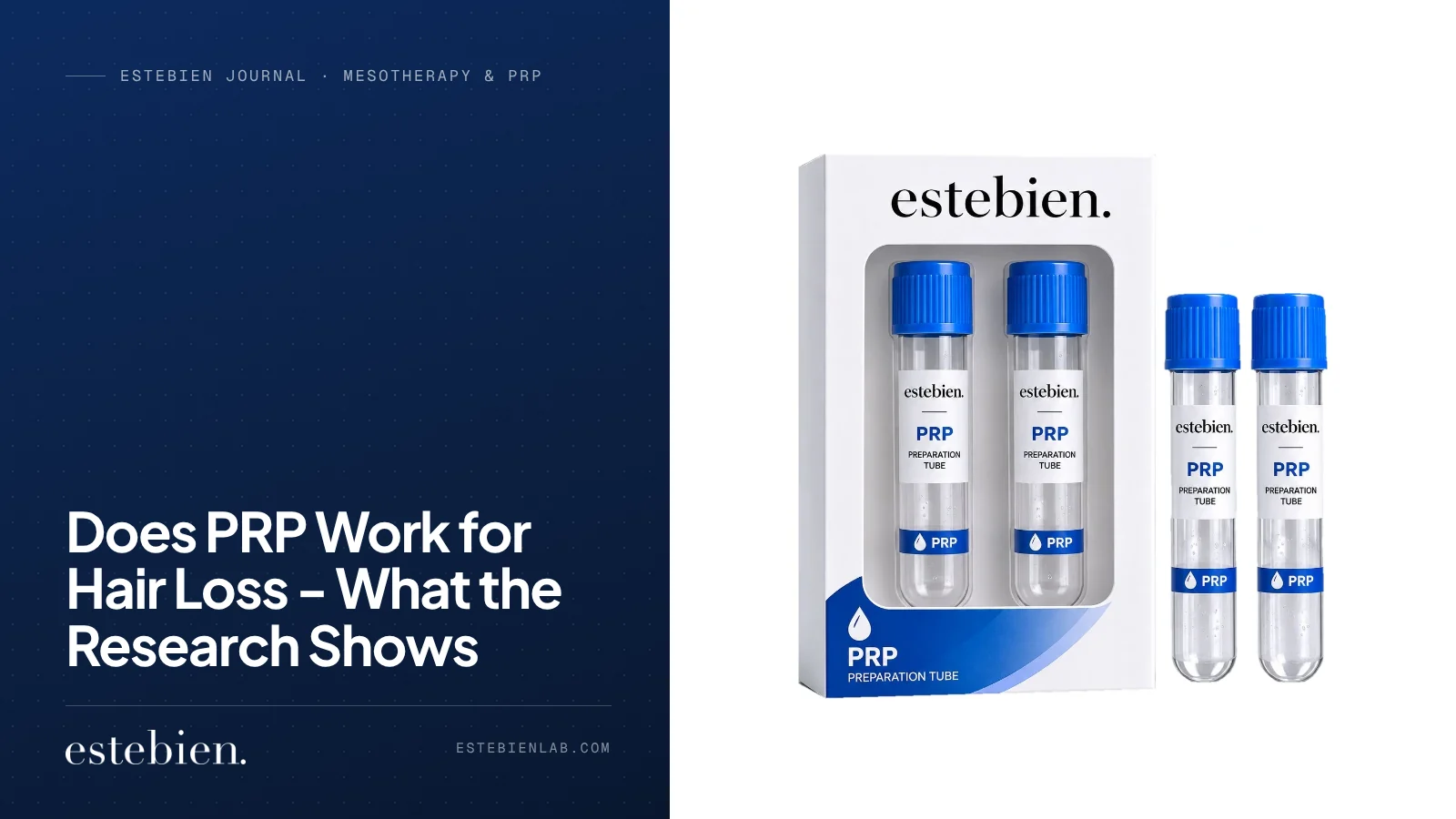
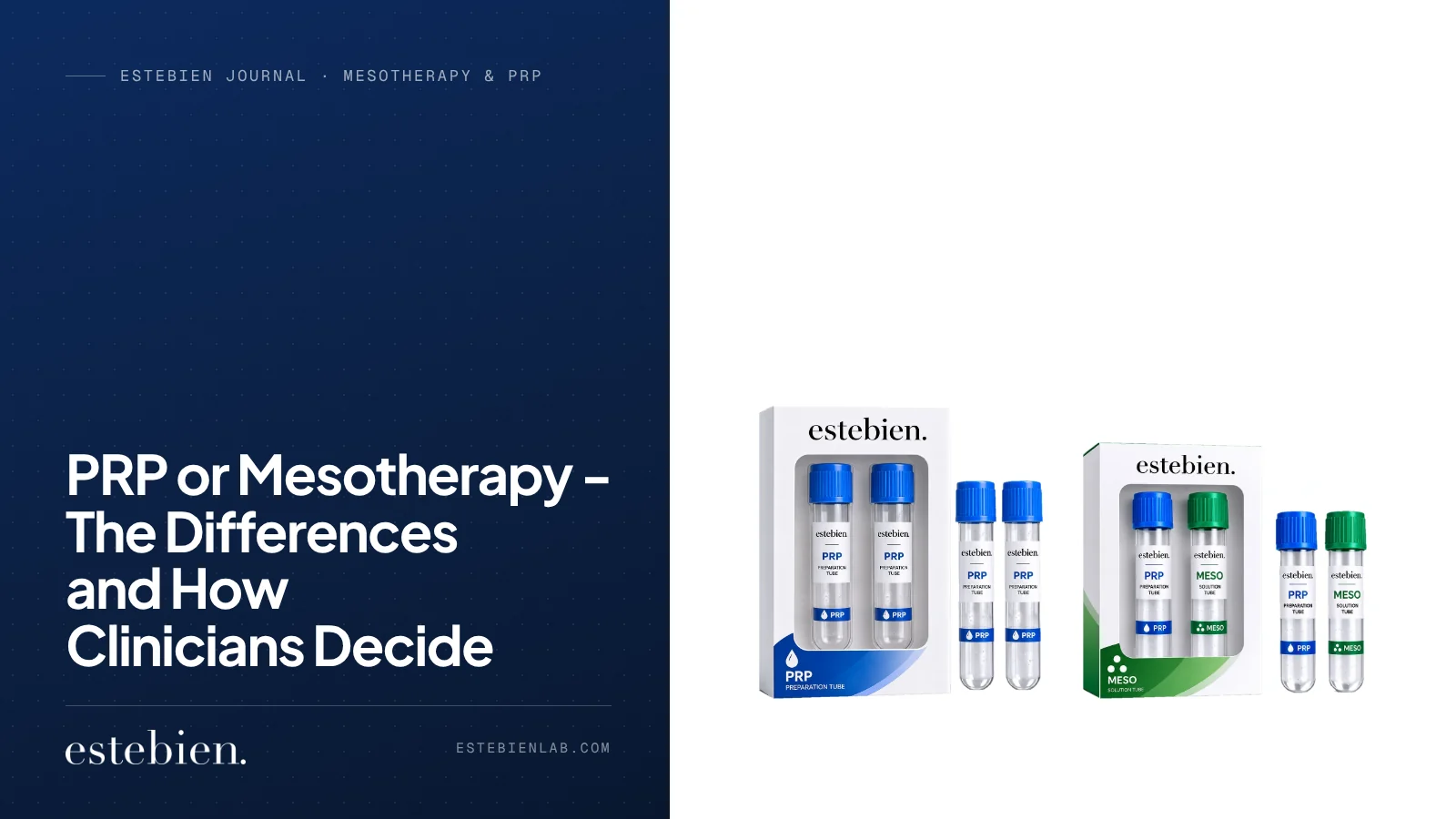
For clinics and healthcare professionals, Estebien's Mesotherapy & PRP line consists of three boxes. The PRP Preparation Tube box holds two blue-capped PRP Preparation Tubes, the Meso Solution Tube box holds one PRP Preparation Tube and one green-capped Meso Solution Tube, and the Exocell Solution Tube box holds one PRP Preparation Tube and one purple-capped Exocell Solution Tube. The products are for professional use only; directions for use and technical information are given on the packaging, and they are offered on a quotation basis.
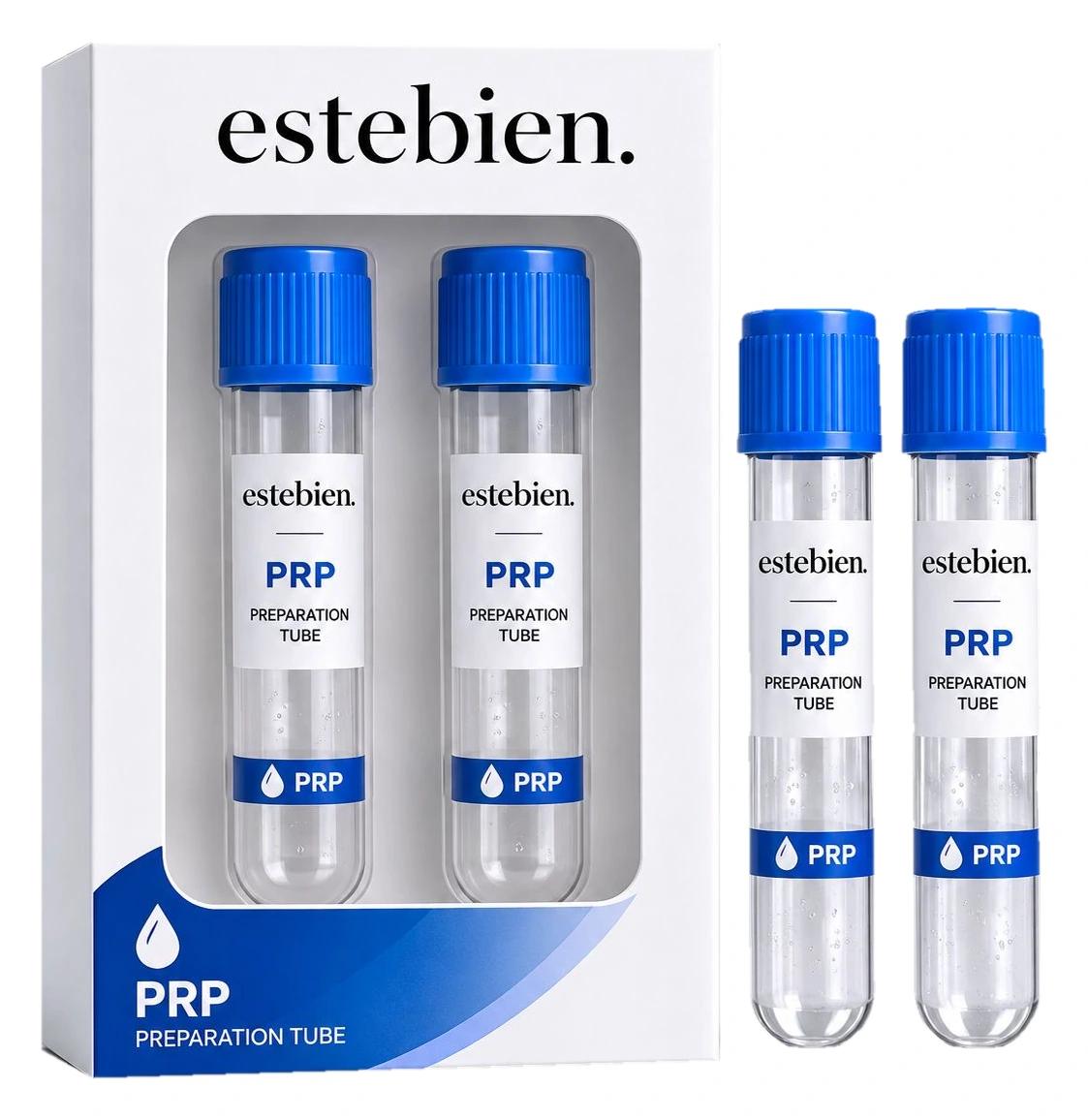 Estebien PRP Preparation TubeThe box contains two blue-capped PRP Preparation Tubes. Part of the Estebien Mesotherapy & PRP line; for professional use only.View product
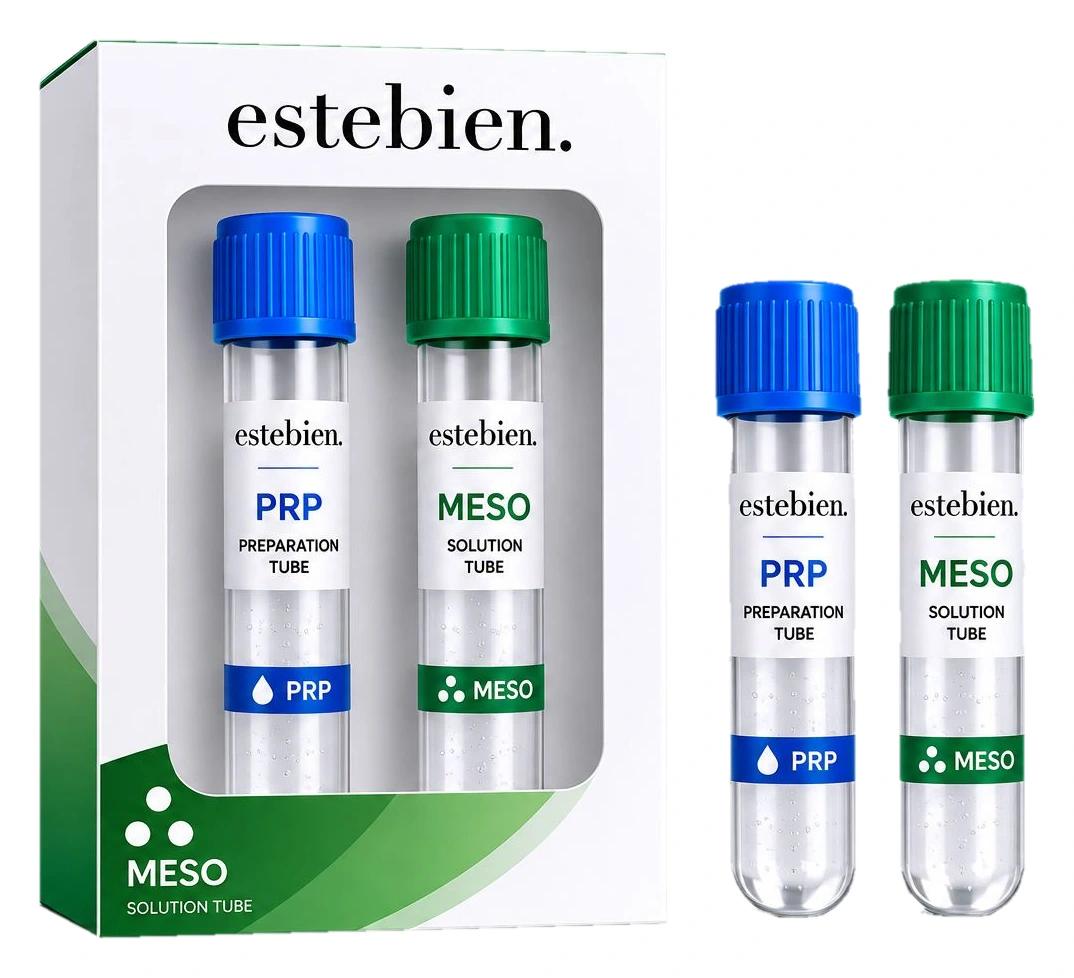 Estebien Meso Solution TubeThe box contains one PRP Preparation Tube and one green-capped Meso Solution Tube. Part of the Estebien Mesotherapy & PRP line; for professional use only.View product
How do you prepare for the consultation?
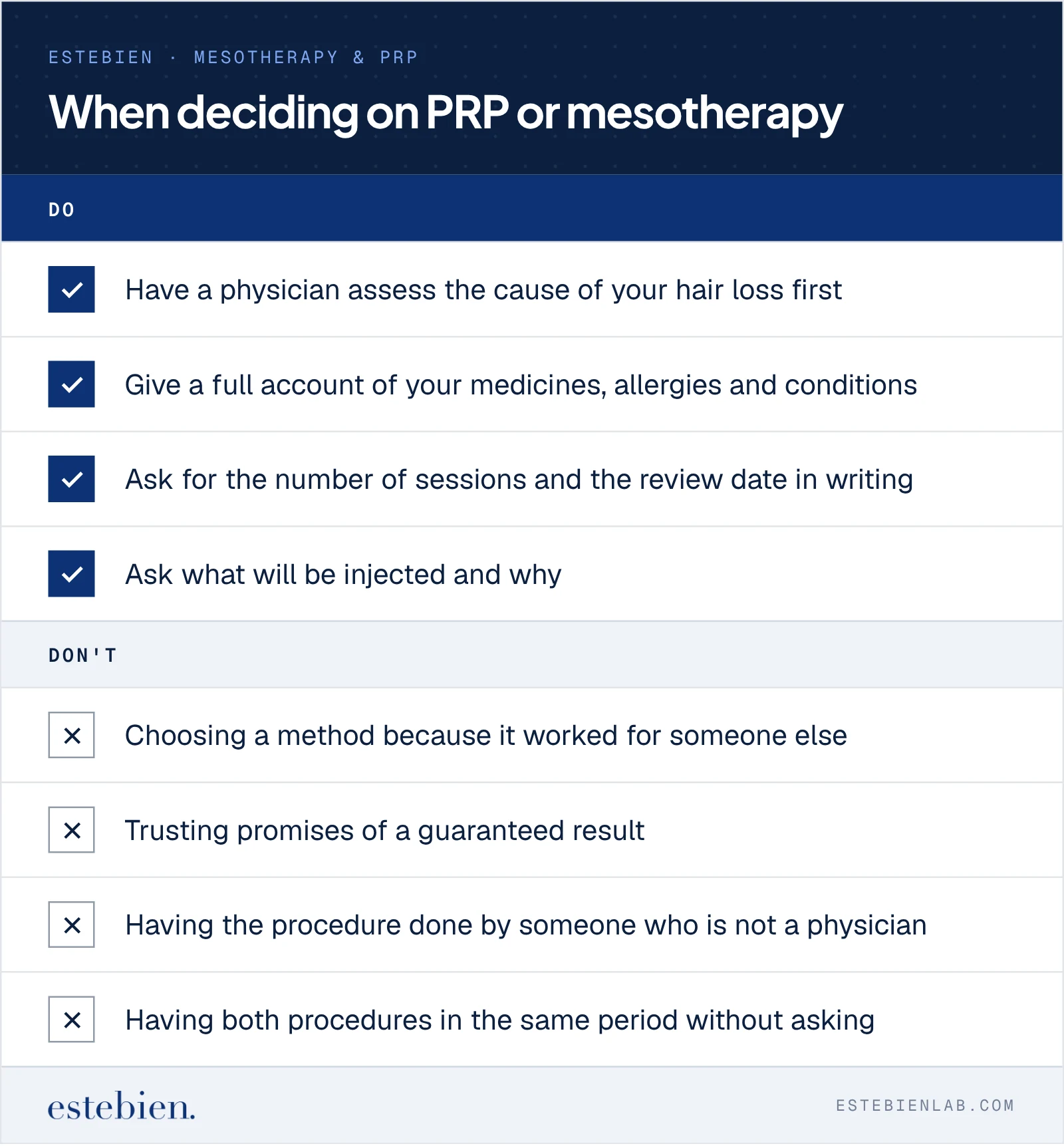
A good consultation starts with giving the physician the right information and asking the right questions. Before you go, prepare a list of the medicines and supplements you take, any earlier test results and your notes on when the hair loss began. Ask the physician why they do or do not recommend each method, how many sessions they foresee and when they will assess the result.

Whichever procedure is chosen, clinics give similar advice for the first days after a session; we have collected it in the article on PRP and mesotherapy aftercare. The everyday care you keep up at home is a separate matter and does not replace a procedure: the hair vitamins guide and the derma roller guide cover that side. If you have had a hair transplant, your surgeon decides the timing; the general calendar is in the post hair transplant care guide.
Frequently Asked Questions
- Is PRP or mesotherapy more effective?
- Current evidence is not enough to rank the two methods reliably. A 2022 systematic review notes that studies comparing mesotherapy with other treatments are insufficient. Your physician decides which one suits you.
- What is the difference between PRP and mesotherapy?
- In PRP, platelet-rich plasma prepared from your own blood in a centrifuge is injected; in mesotherapy, a mixture chosen by the physician containing vitamins, nutrients or medicines. PRP requires a blood draw, mesotherapy does not.
- Can PRP and mesotherapy be done in the same session?
- Only the physician can decide that. The sources we read contain no evidence that giving the two procedures together produces a better result; the order and the intervals depend on the physician's judgement.
- Which needs more sessions?
- In common plans, mesotherapy sessions are more frequent. According to the AAD, most PRP patients return once a month for three months and then every three to six months; in mesotherapy studies, weekly sessions were given for 10 to 12 weeks.
- After a hair transplant, is it PRP or mesotherapy?
- The surgeon who operated on you decides whether any procedure on the transplanted area is needed and when. Johns Hopkins Medicine notes that PRP is also used to help stimulate hair growth after hair transplants. For the general calendar, see the post hair transplant care guide.
- For the skin, is PRP or mesotherapy preferred?
- The evidence is limited for both. The AAD writes that PRP for the skin is still an unproven treatment, and DermNet that there is very little scientific evidence to support mesotherapy. Consult a dermatologist who can assess your skin.
Sources
- Hair loss: Diagnosis and treatmentAmerican Academy of Dermatology (AAD)
- Is platelet-rich plasma the secret to younger-looking skin?American Academy of Dermatology (AAD)
- Platelet-Rich Plasma (PRP Injection)Cleveland Clinic
- PRP for Hair Loss: Procedure, Benefits & CostsInternational Society of Hair Restoration Surgery (ISHRS)
- Platelet-Rich Plasma (PRP) InjectionsJohns Hopkins Medicine
- MesotherapyDermNet
- Current application of mesotherapy in pattern hair loss: A systematic reviewJournal of Cosmetic Dermatology (PubMed)
- Mesotherapy as a Promising Alternative to Minoxidil for Androgenetic Alopecia: A Systematic ReviewCureus (PubMed Central)
This article is for general information only and is not a substitute for medical advice. For decisions about your health, consult your doctor or dentist.