How to Brush Your Teeth Properly - Technique, Time and Brush
Twice a day, about 2 minutes, every surface: a step-by-step guide to brushing technique, common mistakes and choosing a toothbrush.
- Reading time
- 6 min read
- Author
- Estebien Editorial Team
In short
- Brush twice a day for about 2 minutes each time, and make one of those sessions the last thing you do before bed.
- Clean the outer, inner and chewing surface of every tooth with small movements and without pressing hard.
- Clean between your teeth once a day with floss or interdental brushes, ideally before you brush.
- Whether the brush is manual or electric matters less than reaching every surface, every time.
- Replace the brush when its bristles are worn and never share your toothbrush.
To brush your teeth properly, brush twice a day for about 2 minutes each time, with one session last thing before bed. Use light pressure and small, gentle movements from the gum line, covering the outer, inner and chewing surfaces of every tooth. Clean between your teeth once a day and the basic routine is complete.
How often and for how long should you brush?
The UK's National Health Service (NHS) recommends brushing twice a day for about 2 minutes: last thing before you go to bed and on one other occasion. The reasoning is simple. Plaque is a film of bacteria that coats your teeth when they are not brushed properly, and it contributes to gum disease and tooth decay. Regular brushing stops plaque from building up.
Two minutes is longer than most people assume, so use the stopwatch on your phone or play a two-minute song. Do not skip the night-time session: the NHS singles it out as important, and it means you do not go to sleep with the day's plaque and food debris on your teeth. Your dentist may give you further advice based on your own dental health and needs.
How do you brush your teeth step by step?
Good technique comes from order and patience, not force. Divide your mouth into four areas (upper right, upper left, lower right, lower left) and share the two minutes equally between them. Start at the same point and follow the same order every time so that no tooth is missed. The six steps below cover one full session.
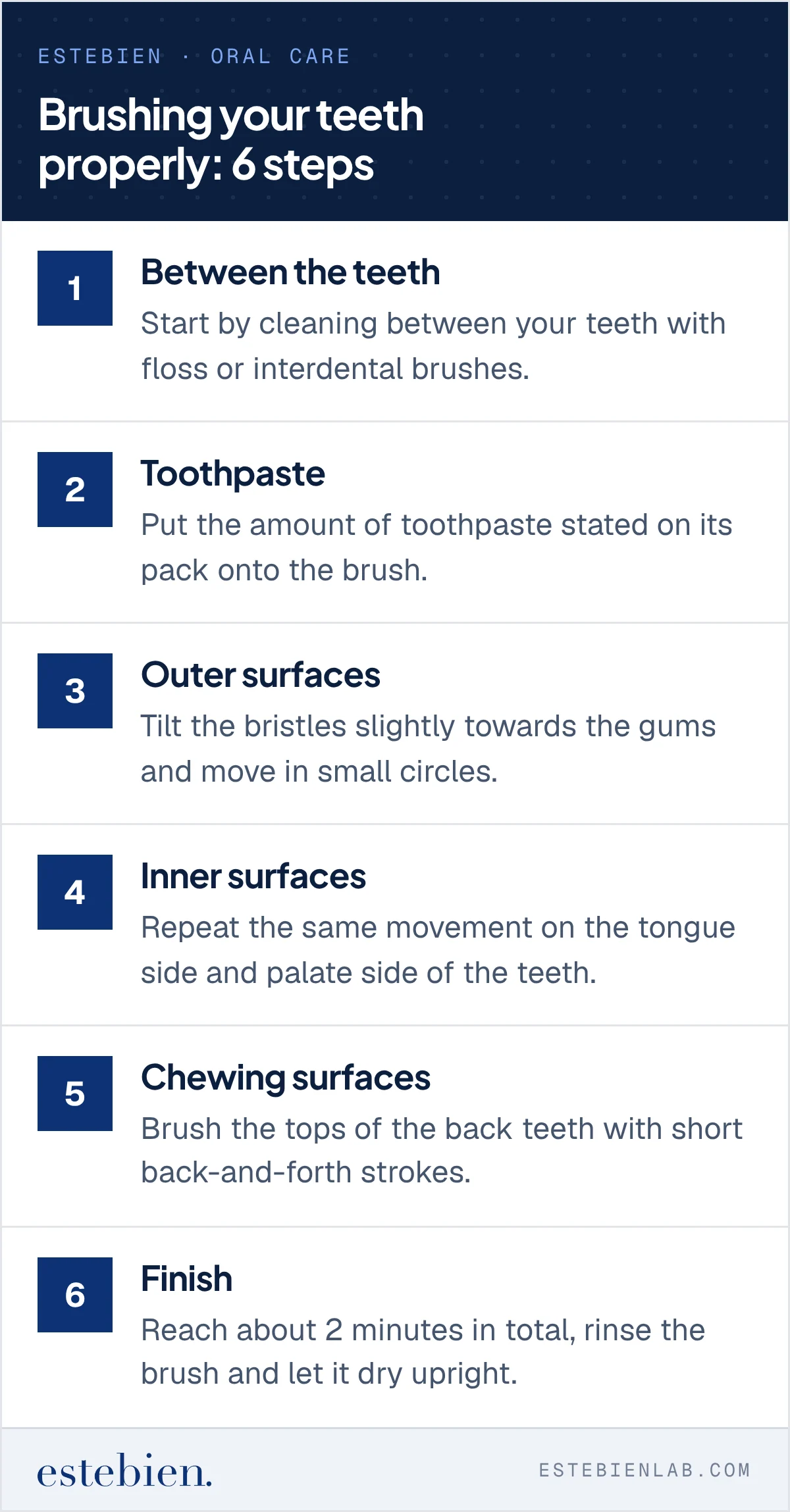
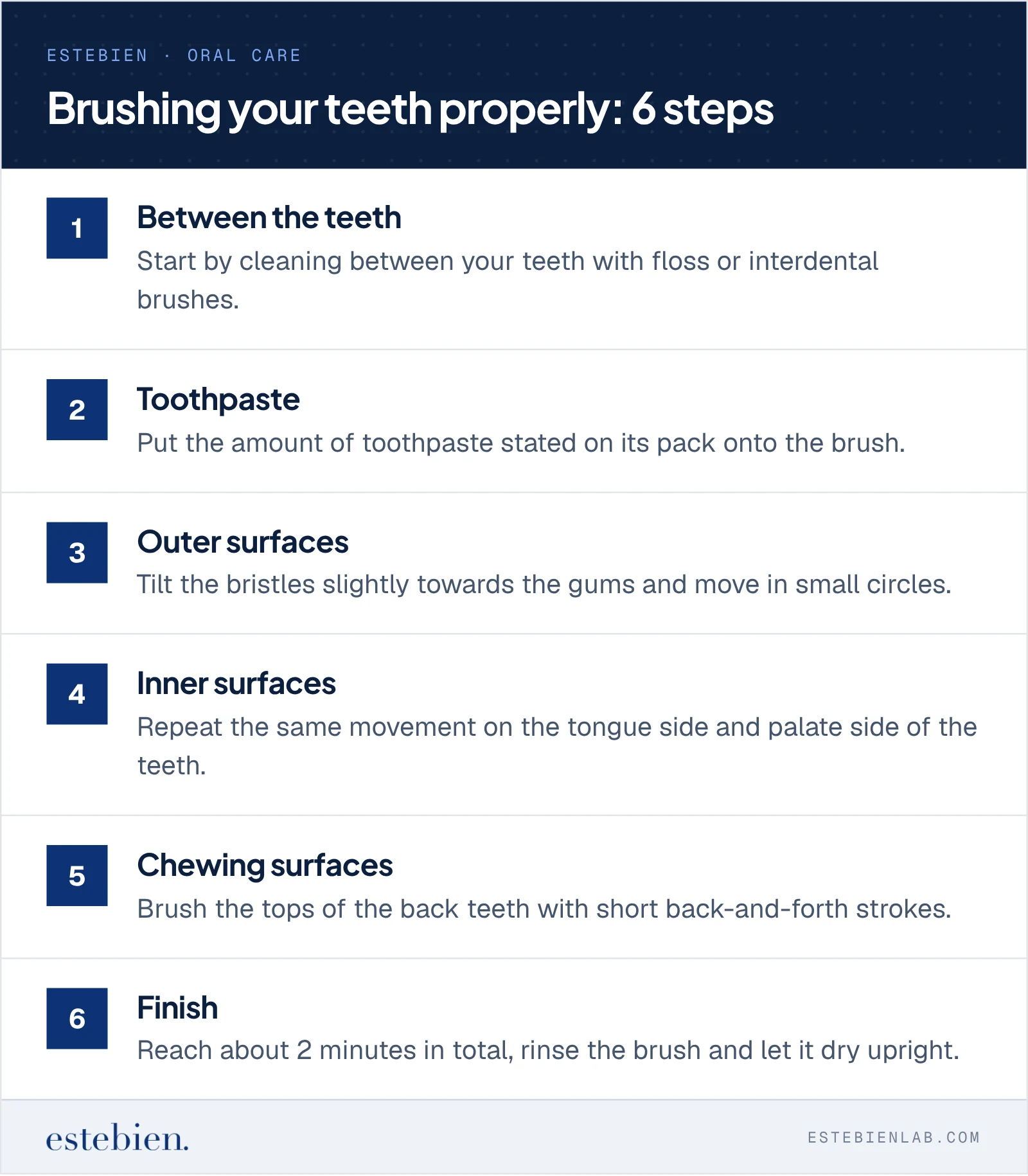
- Clean between your teeth first. The NHS notes that it is best to floss before brushing. You can use interdental brushes instead of floss.
- Put toothpaste on the brush. Use the amount stated on its pack. Pump dispensers make dosing easier at every use.
- Start with the outer surfaces. Tilt the bristles slightly towards the gum line and move in small circles, covering two or three teeth at a time.
- Move to the inner surfaces. Repeat the same movement on the side facing your tongue and palate. Behind the front teeth, hold the brush upright and work up and down with its tip.
- Brush the chewing surfaces. Use short back-and-forth strokes on the grooved tops of the back teeth.
- Finish and let the brush dry. Spit out the excess toothpaste, rinse the brush with water and leave it upright to dry.
What are the most common brushing mistakes?
Most brushing mistakes start with good intentions: pressing hard to get things cleaner, cutting the time short to save a minute, or brushing only the front surfaces you can see in the mirror. Use the list below to review your own habits.
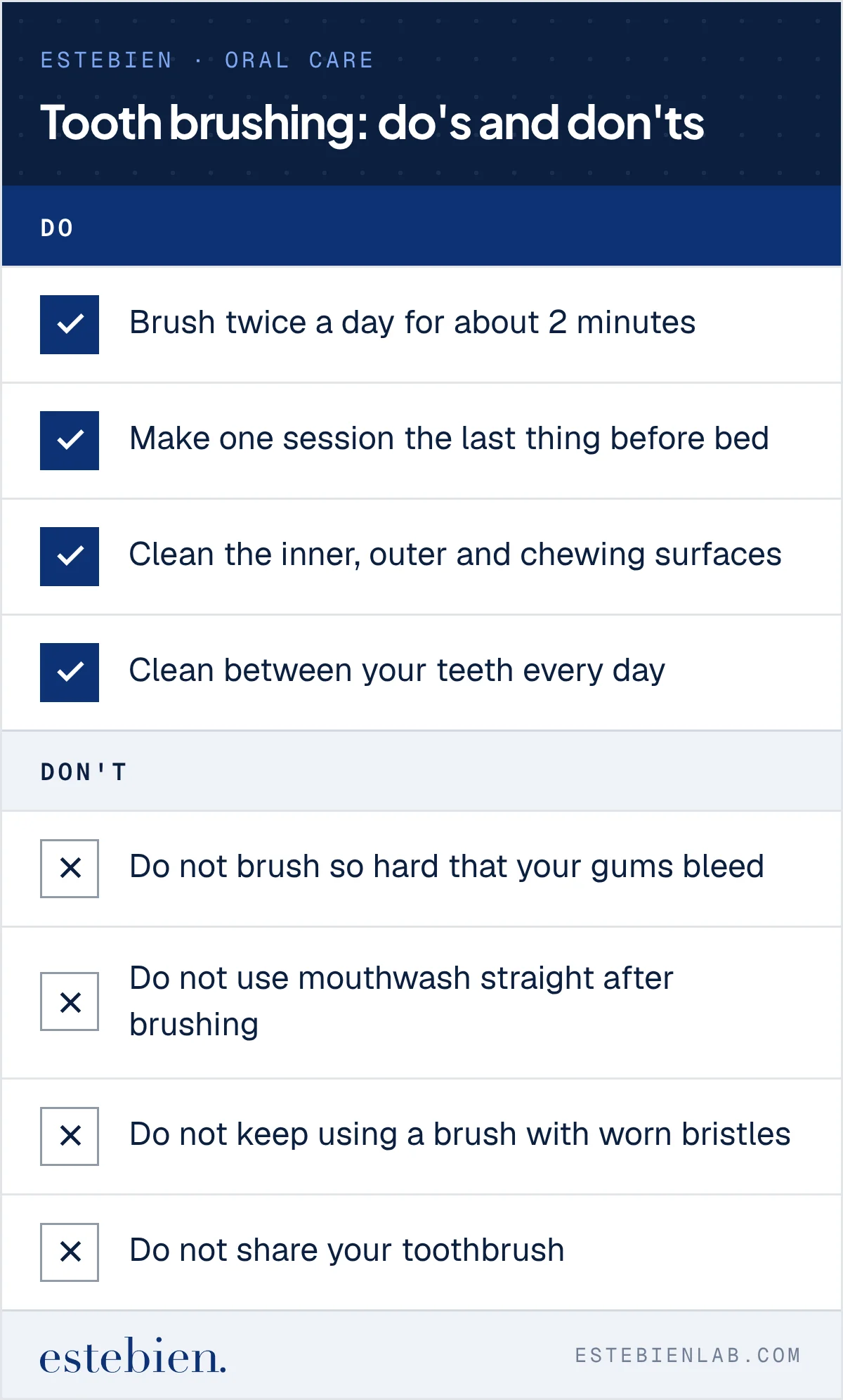
Pressing hard. The bristle tips do the cleaning, not the strength of your arm. The NHS advises against brushing so hard that your gums or tongue bleed. Holding the brush with your fingertips, like a pen, instead of in your fist reduces the pressure naturally.
Skipping the inner surfaces and back teeth. The NHS description is clear: clean the inside, outside and chewing surfaces of all your teeth. The surfaces you cannot see in the mirror are the easiest to neglect, so starting your sequence there is a good habit.
Using mouthwash straight after brushing. After brushing with a fluoride toothpaste, the NHS advises spitting out the excess, not rinsing with water straight away, and using mouthwash at a different time from brushing. That advice applies to fluoride toothpastes. Whichever toothpaste you use, follow the directions on its pack and ask your dentist about anything you are unsure of.
How do you choose a toothbrush?
According to the NHS, a brush with a small head and a compact, angled arrangement of long and short round-end bristles is fine for most adults, and medium or soft bristles are best for most people. Manual and electric brushes are equally good as long as you clean every surface. What counts most is not the type of brush but brushing thoroughly at least twice a day.
| Feature | General advice | Practical note |
|---|---|---|
| Head size | A small head for most adults (NHS) | Check that you can comfortably reach your back teeth. |
| Bristle firmness | Medium or soft for most people (NHS) | If in doubt, ask your dentist. |
| Bristle arrangement | Long and short round-end bristles (NHS) | Once the bristle tips splay out, it is time for a new brush. |
| Manual or electric? | Both are equally good (NHS) | Some people find it easier to clean thoroughly with an electric brush. |
| Hygiene | Personal use only | Rinse after use, dry upright and do not share the brush. |
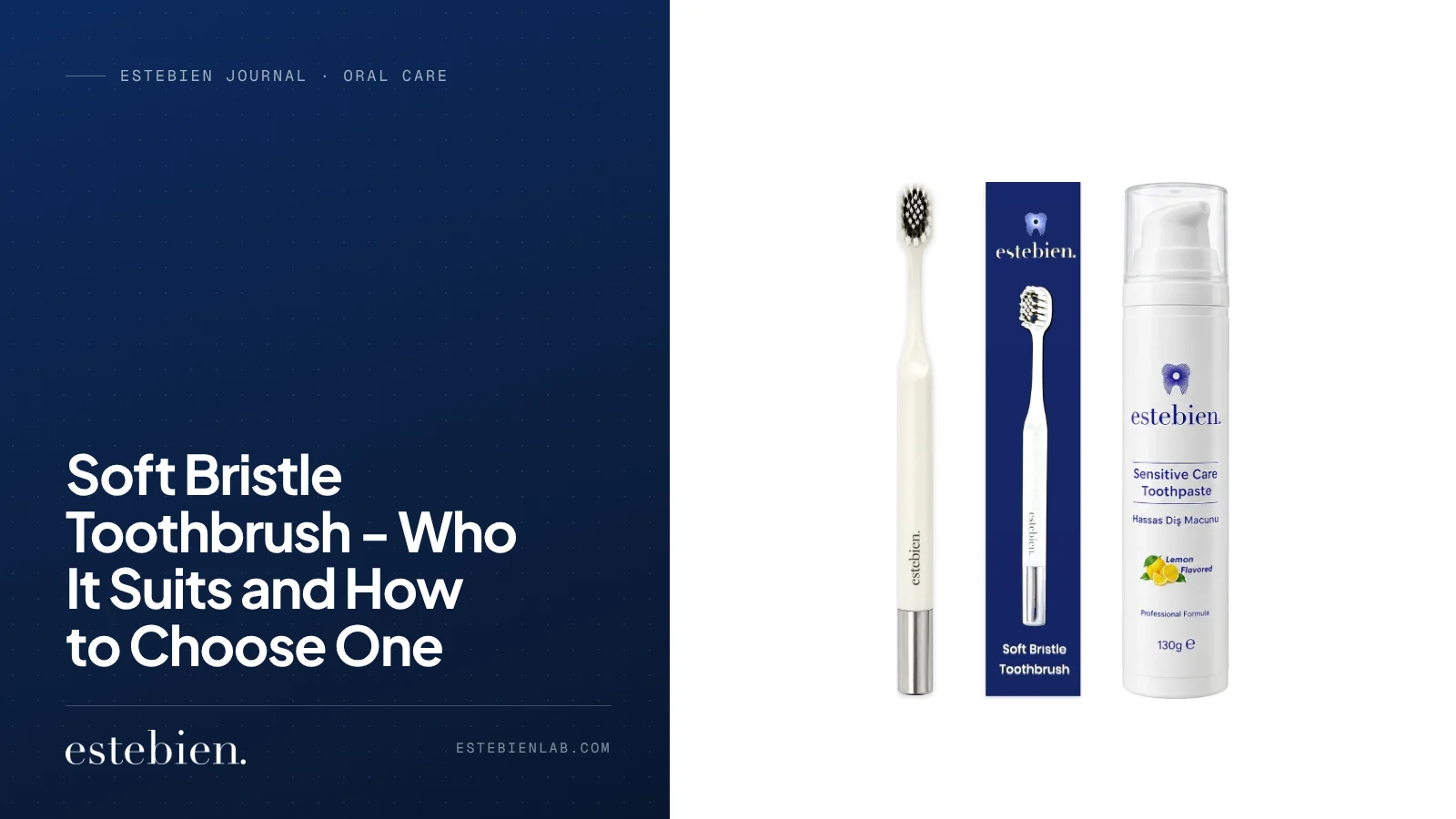
The Estebien Soft Bristle Toothbrush is the toothbrush of the Estebien oral care line, with an off-white handle, a metal end cap and black-and-white two-tone bristles. The directions on its product page match the principles above: brush at least twice a day for about two minutes, rinse the brush after use, leave it upright to dry and replace it when the bristles become worn. It is for personal use only and should not be shared. It is sold on its own and, with other oral care products, in the Estebien Professional Oral Care Kit.

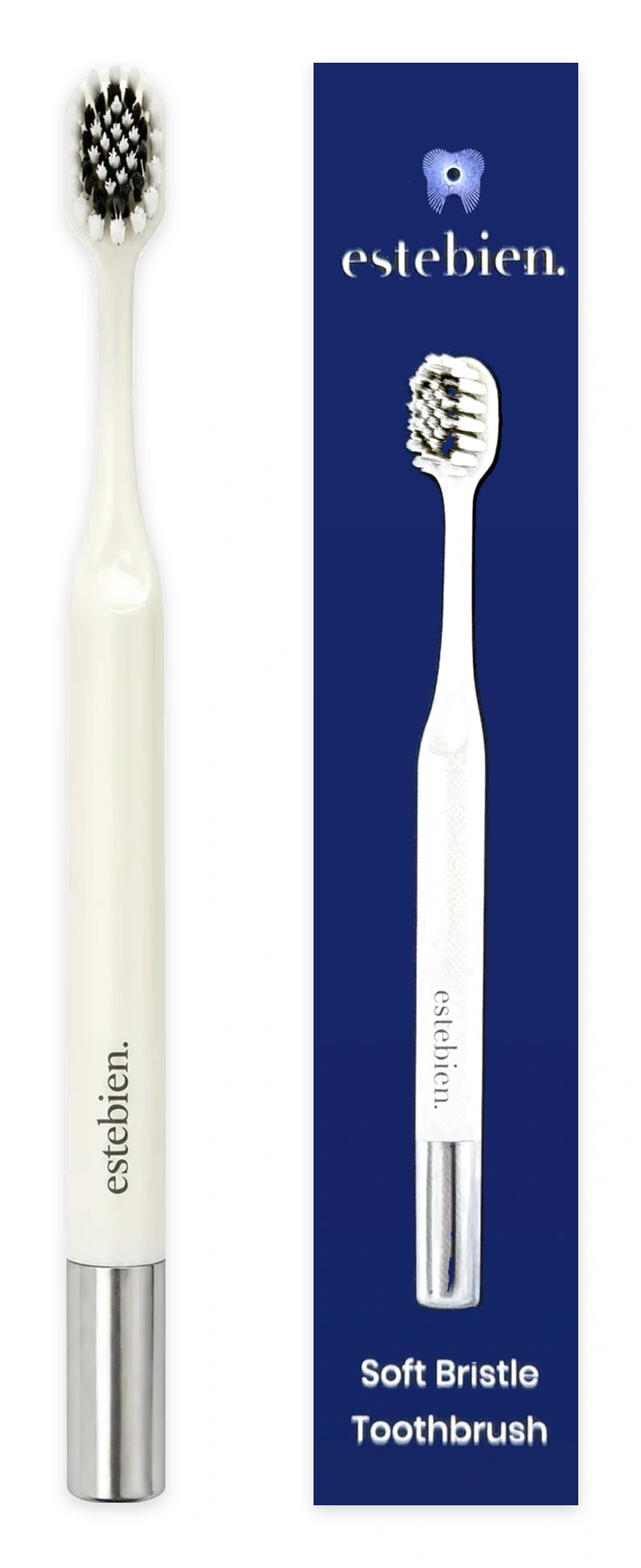 Estebien Soft Bristle ToothbrushThe Estebien toothbrush with an off-white handle, a metal end cap and two-tone bristles.View product
How should you brush if your teeth are sensitive?
If your teeth twinge with cold, hot or sweet foods, the first reflex is to avoid brushing that area. But plaque keeps building up wherever you skip. Instead, ease the pressure, make the movements smaller and keep the full two minutes.
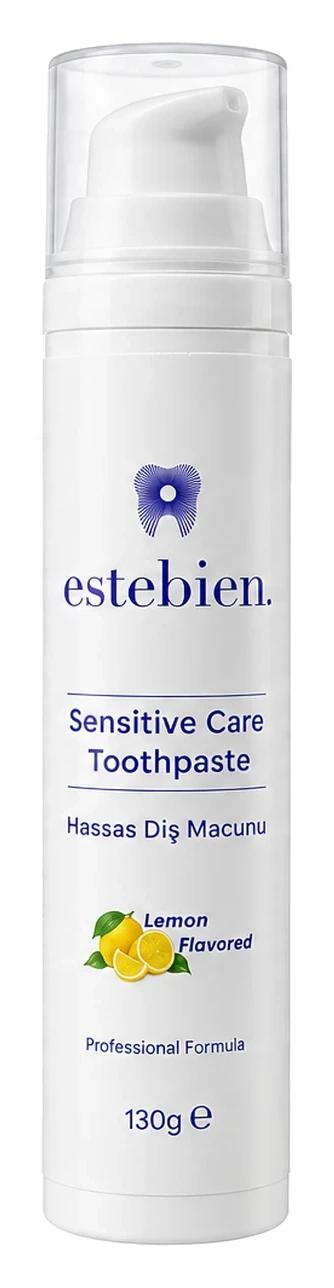
On the toothpaste side, you can choose a product developed for sensitive teeth. Estebien Sensitive Care Toothpaste is lemon flavoured, developed for adults with sensitive teeth and comes in a 130 g pump dispenser. The directions on its product page are: dispense a sufficient amount onto your toothbrush and brush your teeth; do not swallow. The full ingredient list and warnings are on the pack. Our guide to toothpaste for sensitive teeth covers the possible causes of sensitivity and how to choose, and the toothpastes category lists other options.
What completes the routine after brushing?
A toothbrush cannot fully reach the surfaces where teeth face each other. That is why the NHS recommends cleaning between your teeth every day with floss or an interdental brush; interdental brushes can be the better fit if you have gaps between your teeth. Wooden toothpicks are not advised because they may damage your gums. Your dentist can show you the method that suits you best.
Do not forget your tongue: the NHS suggests gently cleaning it once a day with a tongue scraper or cleaner. If you use mouthwash, pick a different time from brushing, such as after lunch. Our mouthwash tablets guide covers mouthwash in tablet form, and our daily oral care routine article shows how all the steps fit into a day.
Frequently Asked Questions
- Does an electric toothbrush clean better than a manual one?
- According to the NHS both are equally good; what matters is that you clean all the surfaces of all your teeth. Some people find it easier to clean thoroughly with an electric brush.
- When should you replace your toothbrush?
- Replace it when the bristles become worn, that is, when the tips start to splay out. The directions for the Estebien Soft Bristle Toothbrush say the same.
- Should you floss before or after brushing?
- The NHS says it is best to floss before brushing your teeth. If there are gaps between your teeth, you can use interdental brushes instead of floss.
- My gums bleed when I brush. What should I do?
- Gums that bleed during brushing are among the symptoms of gum disease. The NHS advises seeing a dentist in that case, so book an examination rather than waiting it out.
- Can children brush their teeth on their own?
- According to the NHS, children need to be helped or supervised when brushing until they are at least 7 years old. Ask your dentist about a suitable brush and toothpaste for your child.
Sources
This article is for general information only and is not a substitute for medical advice. For decisions about your health, consult your doctor or dentist.